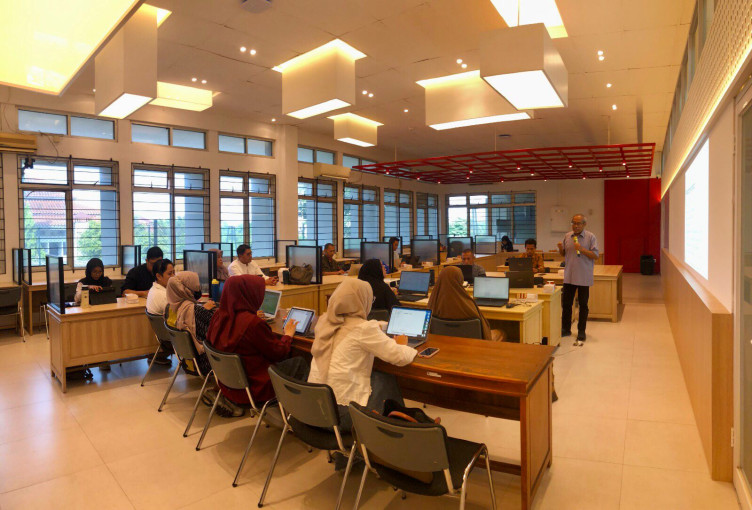
The Doctorate Program in Architecture focuses on developing architectural theories and paradigms that integrate the values of locality, culture, and community, alongside advances in engineering technology. Students are guided to conduct in-depth research to address spatial issues through scientific reasoning informed by sustainable development. Our curriculum encourages students to produce original work of academic excellence and to provide tangible solutions to enhance the quality of life globally.

Graduates of this program will hold a Doctoral (Dr.) degree and possess comprehensive competencies as educators, researchers, practitioners, and professionals in architecture or urban design. Our key strengths lie in our international networks and a curriculum that emphasizes the management of cultural values and community well-being. Each graduate is prepared to emerge as a thought leader, capable of disseminating knowledge and making a significant impact on the evolution of civilization and the built environment at both national and international levels.

Key Strengths

  • Multidisciplinary Research Synergy: The curriculum integrates advanced engineering principles with social sciences to address the multifaceted complexities of architectural issues.
  • Focus on Locality and Sustainability: Research excellence is driven by a focus on ten strategic areas: (1) Culture; (2) Environment and Behavior; (3) Appropriate Technology; (4) Information Systems and Modeling; (5) Urban and Regional Design; (6) Heritage and Conservation; (7) Housing and Settlements; (8) Tourism and Creative Industries; (9) Community-Based Development; and (10) Sustainable Development.
  • Research-Oriented Curriculum: The program offers a flexible educational system featuring independent study modules specifically tailored to strengthen the candidates’ dissertation topics.
  • Residency and Workspace: Students are provided with dedicated residency spaces equipped with essential workstations, high-speed internet, and meeting utilities, ensuring a conducive environment for both independent research and collaboration.
  • Advanced Laboratory Facilities: A diverse range of specialized laboratories supports empirical research, including: (1) Spatial and Numerical Lab; (2) Settlements Lab; (3) Urban and Regional Planning Lab; (4) Architectural Design Lab; (5) History and Architectural Development Lab; and (6) Building Technology Lab.
  • Library and Digital Access: Students benefit from extensive access to departmental, faculty, and university libraries. These reading rooms offer optimized lighting and climate control, alongside digital catalogs for accessing physical collections, research reports, and international journals.
  • The Thursday Forum (Forum Kamisan): A dedicated scholarly platform that facilitates rigorous academic discourse among doctoral candidates. This forum serves as an intellectual space for students to refine their research perspectives, engage in critical peer reviews, and broaden their theoretical horizons under the guidance of experts.
  • Student Publication Grant Program: To uphold high standards of academic excellence and ensure timely completion of programs, the department provides strategic financial incentives for scholarly publications. This grant is specifically allocated to support the dissemination of student research in reputable international journals (indexed in Q1-Q3), thereby enhancing the global impact of their findings and accelerating their progress toward their doctoral degrees.
  • Doctoral Gatherings: The program organizes regular non-academic gatherings designed to strengthen professional networking and foster a spirit of collaboration. These sessions provide a platform for doctoral candidates to exchange research perspectives and share academic experiences within a more informal and supportive environment.

Career Prospects

The graduate profile of the Doctorate Program in Architecture is categorized into four distinct roles: (1) educators, (2) researchers, (3) practitioners, and (4) professionals specializing in architecture or urban design. Graduates are equipped with comprehensive academic and professional competencies, characterized by a solution-oriented approach to enhancing the quality of life both in Indonesia and globally. By synthesizing contextual understanding with a specialized focus, graduates are prepared to make significant contributions to addressing spatial and societal challenges efficiently and effectively.

Accreditation

The program has achieved the “Unggul” (Excellent) accreditation status from the National Accreditation Agency for Higher Education (BAN-PT). This premier rating is valid from May 21, 2024, until July 5, 2027.

Alumni Connectivity (ADAP-UGM)

The Association of Doctors in Architecture and Planning – Universitas Gadjah Mada (ADAP-UGM) serves as a professional forum for alumni to continue their scholarly contributions to the nation. This association facilitates the exchange of scientific information and fosters collaborative opportunities between alumni and various institutional partners. Through this network, graduates are empowered to advance their professional development in a highly collaborative and intellectually stimulating environment.

Crisis Center

Please contact us for any problem with SIMASTER

(Direktorat Teknologi Informasi Directorate of Information Technology )

*Hari Senin-Jumat, 07.00 – 16.00

Call this number for any emergencies

(Kantor Keamanan, Keselamatan Kerja, Kedaruratan, dan Lingkungan Office of Workplace and Environmental Security and Safety and Emergencies)

Skip to content