


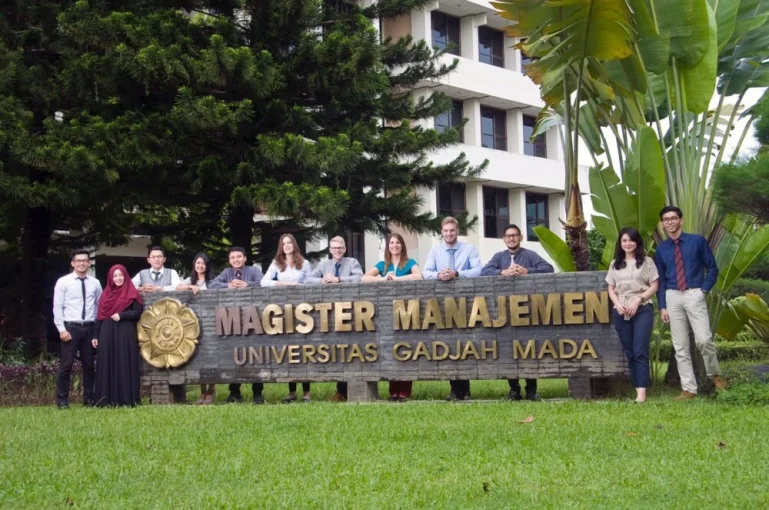
The Master of Business Administration Program at the Faculty of Economics and Business, Universitas Gadjah Mada (MBA FEB UGM), has improved its position in the QS Global MBA Ranking 2027. Offered at the Yogyakarta and Jakarta Campuses, the program ranks 191–200 globally among 423 MBA programs and 27th in Asia among 81 ranked programs. This marks an improvement from the previous edition, in which MBA FEB UGM ranked 201–250 globally and 30th in Asia. MBA FEB UGM is the only MBA program in Indonesia to have moved up in the global ranking this year, while also recording a three-place increase in the Asian ranking.
Vice Dean for Academic and Student Affairs at FEB UGM, Bayu Sutikno, said the achievement resulted from a program development process involving various elements within FEB UGM.
“We are very grateful and proud of the rise in the QS Global MBA Ranking 2027 achieved by MBA FEB UGM. We have moved up one ranking band, from 201–250 globally to 191–200. In Asia, MBA FEB UGM also climbed three places, from 30th to 27th,” he said on Friday (September 18).
According to Bayu, the achievement resulted not from a single effort but from collaboration among faculty members, students, alumni, and national and international partners who contributed to various aspects of program development.
“This makes MBA FEB UGM the only program from Indonesia to have moved up a ranking band, as well as the one with the highest increase, rising three places compared with other business schools in Indonesia,” he said.
Improvement Across Indicators
The QS Global MBA Ranking evaluates MBA programs based on five main indicators: Employability, Return on Investment, Entrepreneurship and Alumni Outcomes, Thought Leadership, and Class and Faculty Diversity. The indicators carry different weights and reflect various aspects of MBA programs, ranging from graduate prospects to academic quality and diversity within the learning environment.
In the 2027 ranking, four of the five MBA FEB UGM indicators improved compared with 2025. The Employability score increased from 30.1 to 34.4, Return on Investment from 31.5 to 41.7, Entrepreneurship and Alumni Outcomes from 58.5 to 60.9, and Class and Faculty Diversity from 64.1 to 75.2.
The improvement reflects gradual development over the past several years. The largest increase was recorded in Class and Faculty Diversity, which gained 11.1 points since 2025, while Return on Investment increased by 10.2 points over the same period.
“This is certainly the result of the hard work and solidarity of the academic community, together with students, alumni, and all our national and international partners,” he explained.
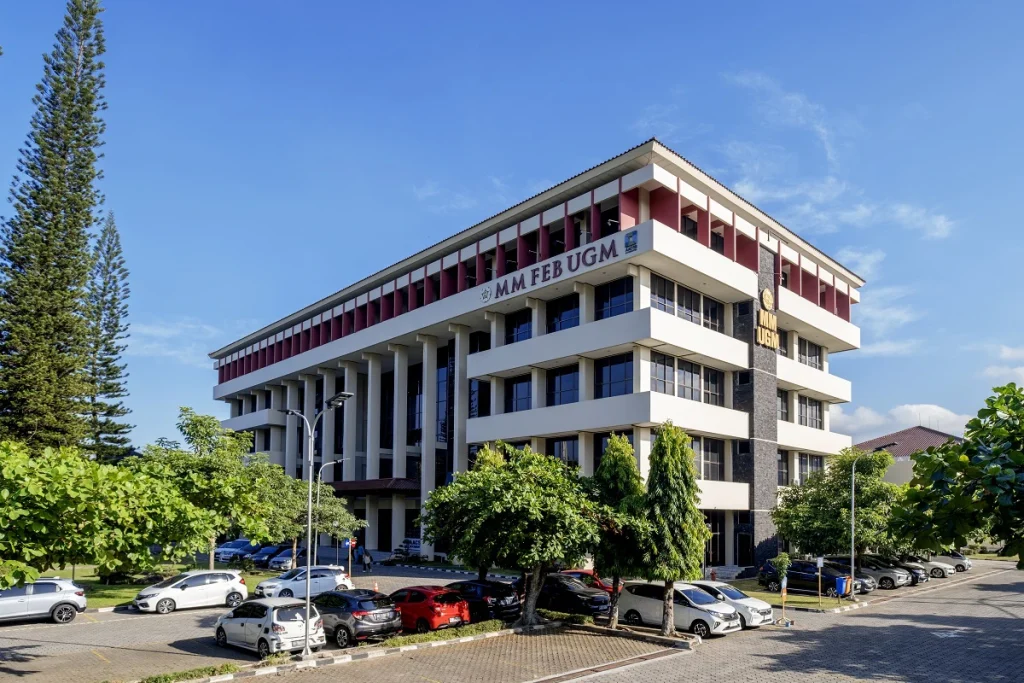
Of the five indicators, Entrepreneurship and Alumni Outcomes is one of the program’s notable achievements. MBA FEB UGM scored 60.9 and ranked 72nd globally and 13th in Asia for this indicator. This achievement reflects the program’s approach of positioning entrepreneurship as an integral part of the overall learning experience. Entrepreneurship is introduced not only through specific courses or concentrations but also through discussions of leadership and sustainability across various areas of management.
“We choose not to position entrepreneurship merely as a single concentration. Instead, it serves as a spirit across all courses, alongside leadership and sustainability. A score of 60.9 and a global ranking of 72nd for the entrepreneurship indicator show that international assessors have recognized this approach,” said Professor Amin Wibowo, Head of MBA FEB UGM.
In the learning process, this approach is implemented through issues closely connected to business practice. For example, students not only study corporate financial statements but may also assess startup feasibility, test value propositions, and understand decision-making processes under uncertainty.
One Program, Two Campuses
The improvement of MBA FEB UGM is also closely linked to delivering the program at two locations with different participant profiles. The Jakarta Campus has a higher proportion of professionals and executives with prior work experience. In contrast, the Yogyakarta Campus has more early-career participants, with a stronger academic and research focus.
These different backgrounds come together in a single program through academic and nonacademic activities. Joint guest lectures, mentoring, cross-campus case competitions, and alumni activities give participants from both campuses opportunities to exchange experiences.
Professor Gugup Kismono, Head of the MBA FEB UGM Jakarta Campus, said these differences provide complementary experiences for students.
“This achievement belongs to the program, not to a single campus. The Department of Management and the FEB UGM Dean’s Office jointly set the direction for improvement, and program managers, faculty members, and staff in Yogyakarta and Jakarta carry it out every day, with support from students and alumni. What we see in the QS figures is a consistently upward three-year trend, not a temporary leap,” he explained.
Interaction between the two groups of participants also provides different benefits. Participants in Yogyakarta can gain insights into management practices from professionals and executives. In contrast, participants in Jakarta can engage with academic perspectives and newer ways of thinking from those early in their careers.
“The differences in participant profiles between the two campuses are actually a strength. Senior executives in Jakarta provide practical insights to recent graduates in Yogyakarta, while younger participants’ fresh perspectives challenge established assumptions. This has grown out of the decision to run one program in two cities,” he added.
The composition of the participants also contributes to a diverse learning environment. Different industry backgrounds, work experiences, career stages, and regional origins create a space for discussions that bring practical experience together with academic perspectives.
Bringing Learning Closer to Industry
The Jakarta Campus’s location at the heart of the national business ecosystem also strengthens the connection between learning and practice. The presence of various companies, government institutions, and professional organizations in Jakarta gives students opportunities to engage directly with issues faced in the professional world.

These connections are developed through guest lectures with executives, industry visits, applied projects, and the use of Indonesian corporate cases in learning. As a result, students not only gain conceptual understanding but also see how management concepts apply in real-world situations.
“We collaborate with industry to obtain material that we cannot generate in the classroom alone. We develop Indonesian corporate cases and conduct joint research to keep faculty members grounded in real-world issues, while students practice handling situations that managers actually face. That practical perspective is just as important as theoretical rigor, both for educators and graduates,” Gugup said.
Industry engagement is also an important part of strengthening employability. The indicator carries the largest weight in the QS Global MBA Ranking, at 40 percent, making the development of employer networks and stronger career outcomes a key focus of the program.
Strengthening Employability and International Networks
Although most indicators have shown positive development, MBA FEB UGM still has room for further improvement, particularly in indicators that carry significant weight in the assessment. Employability and Return on Investment together account for 60 percent of the ranking weight, making improvements in both areas an important part of the program’s next development agenda.
Strengthening efforts include improving career services, tracking graduate outcomes to international standards, and expanding employer networks. The program will also increase the proportion of project- and corporate case-based learning and involve more practitioners in the learning process.
Bayu said these developments would go hand in hand with curriculum updates to ensure continued relevance to changing workforce needs.
“To further strengthen our current position, MBA FEB UGM will intensify its national and international networks to improve Employability, alongside structured updates to the curriculum design and content by integrating sustainability and the latest technologies,” he said.
In addition to strengthening industry relations, the agenda also includes developing international partnerships. Partnerships with overseas business schools, student exchanges, and joint classes expand academic experiences while exposing students to management perspectives from various contexts.
“We do not treat international collaboration as a complement. Partnerships with overseas business schools, joint classes, and student exchanges expand our networks while also requiring us to compare our own ways of thinking with others’. This fosters openness to criticism, and that openness is what allows quality improvement to continue rather than stop after achieving a single milestone,” Amin said.
Meanwhile, strengthening faculty research and publications is also a priority for improving the Thought Leadership indicator. In the 2027 ranking, the indicator received a score of 47.9, down from 52.0 in 2025.
Future program development will focus on maintaining positive trends in improved indicators while addressing areas that still require strengthening. These efforts are part of a broader commitment to continuously improving the quality of MBA FEB UGM at both the Yogyakarta and Jakarta Campuses.
Author: Zabrina Kumara
Editor: Gusti Grehenson
Post-Editor: Priyananda
Photo: MBA FEB UGM Documentation