


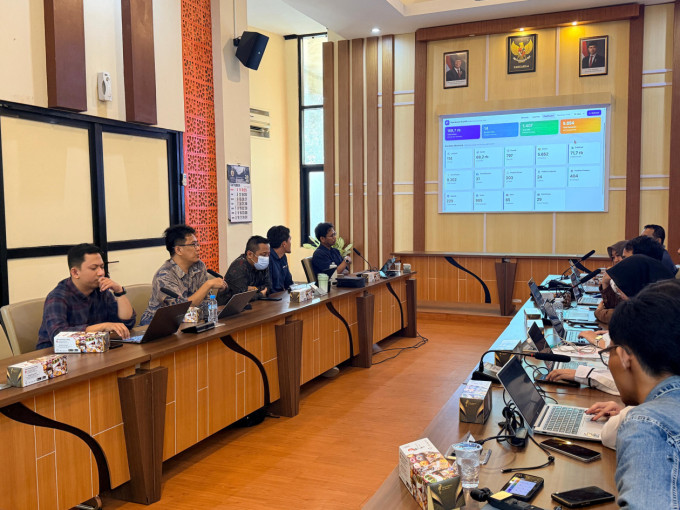
The Corruption Eradication Commission (KPK) visited Universitas Gadjah Mada (UGM) to discuss digital transformation management with UGM’s Bureau of Digital Transformation (BTD UGM) on Wednesday (Oct. 21). Held at the UGM Library, the meeting featured a presentation on the university’s digital architecture and discussions on leveraging data to support institutional governance.
BTD UGM explained its approach to digital transformation, which integrates business processes, data, applications, and technology. The discussion also addressed challenges in building a digital culture, optimizing human resources, and developing the use of artificial intelligence (AI). The meeting provided an opportunity to exchange experiences in developing digital systems that meet organizational needs.
The Head of BTD UGM, Dr. Mardhani Riasetiawan, explained that UGM’s digital transformation began with documenting business processes to establish a structured digital architecture. This approach encompasses mapping human resources, business processes, data, applications, technology, and governance.
The documentation helps the university identify each work unit’s needs and understand the relationships among its processes, data, and applications. This enables the university to plan new system development based on identified needs and previously mapped processes.
“We map business processes, data requirements and sources, supporting applications, technology, and governance. This mapping helps us understand how these components are interconnected in supporting the operations of each work unit,” Mardhani explained.
Mardhani added that mapping the digital architecture also helps UGM manage the growing complexity of its organization. According to BTD UGM’s records, the bureau has documented 4,229 business processes and 706 applications, while mapping more than 15,000 data identities, 281 risks, and 1,067 regulations or standards. These records provide a basis for understanding relationships between systems, identifying risks, and assessing the impact of changes on services.
This approach also enables application development to account for user needs, resource availability, and the long-term sustainability of system maintenance.
“We do not want applications to be developed without proper documentation, so when an application needs to be updated, work units do not have to start everything from scratch,” Mardhani said.
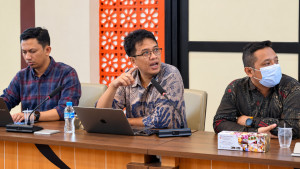
Dedi Eko Yunanto Priyadi, head of the System Engineer Working Team at BTD UGM, added that AI development is part of UGM’s efforts to use its documented institutional knowledge. Through this approach, managed data and information can serve as knowledge sources to assist in drafting documents and carrying out administrative tasks.
Mardhani emphasized that AI use still requires review mechanisms to ensure its outputs meet specific needs and remain accountable. Human verification therefore remains an essential part of the workflow developed by BTD UGM.
“AI generates drafts based on the knowledge we manage, but humans still make the decisions,” he said.
During the discussion, KPK representatives highlighted the challenges of building a digital culture within organizations, particularly when work units have varying levels of readiness and capability. They also need to consider limited human resources when setting digitalization priorities to ensure these efforts deliver tangible results.
In response, Dedi emphasized the importance of identifying individuals willing to learn and drive change within their work units. Leadership support is necessary to give employees opportunities to try new approaches and develop their digital skills.
“The first key is human resources. There must be people who are willing to learn and become drivers of change,” he explained.
The discussion then turned to managing data distributed across different applications and work units. In this context, integration does not necessarily mean consolidating all applications into a single platform. Instead, it means connecting data from different systems and using it to meet organizational needs.
Dr. Andri Prima Nugroho, a lecturer at UGM’s Faculty of Agricultural Technology and an expert staff member at BTD UGM, also emphasized the importance of starting data management with the organization’s priority business processes. This approach helps institutions identify the data they need, address data silos, and design more structured data flows.
“We always start with business processes. We identify which ones are priorities, then determine the data needed and address the data silos,” Andri explained.
Beyond technical considerations, the sustainability of digital transformation also depends on proper documentation to ensure institutional knowledge doesn’t rely on specific individuals. Documenting business processes and data flows helps organizations retain knowledge when employees leave or organizational structures change.
During the discussion, the UGM team also highlighted the need to develop systems that manage and use data from various sources more effectively. This requires clear divisions of responsibility among business process managers, data managers, and technology development teams.
“If our data documentation is good, employee turnover should not become a major problem because data flows and metadata have already been documented,” Andri explained.
Through this meeting, UGM shared its experience developing digital transformation initiatives based on organizational needs, supported by business process documentation, and advanced through data and technology. The discussion with KPK also demonstrated that successful digital transformation requires alignment between human resource readiness, data governance, and system development.
AI can support productivity, but the quality of its outputs still depends on the data used and the verification mechanisms in place. The exchange of experiences is expected to broaden perspectives on managing digital transformation within institutions.
Author/Photo: Triya Andriyani
Post-editor: Zabrina Kumara