



Extreme heat is increasingly affecting Indonesia and has become a serious threat to public health and safety. Although the country’s average temperature has risen by only about 0.5 degrees Celsius, the impact on the human body is significant. Indonesia’s humid tropical climate, combined with rising temperatures driven by climate change, has increased the risk of heat stress, which can progress to heat stroke.
Responding to these conditions, a lecturer from the Department of Health Behavior, Environment, and Social Medicine at the UGM Faculty of Medicine, Public Health, and Nursing (FK-KMK UGM), Aditya Lia Ramadona, Ph.D., explained that heat stroke is the most severe health condition caused by excessive heat exposure. It occurs when the body can no longer regulate its temperature, disrupting the function of vital organs and the brain. Symptoms include extremely high body temperature, confusion, slurred speech, seizures, and loss of consciousness. Without immediate treatment, the condition can be fatal.
“Simply put, heat stroke occurs when the body fails to regulate its temperature. Body temperature rises rapidly, cooling mechanisms such as sweating are no longer effective, and organ and brain functions begin to fail,” he said on Friday (Jul. 10).
According to Dr. Ramadona, public awareness of heat stroke remains low for several reasons. One is the widespread perception that hot weather is normal because Indonesians have long lived in a tropical climate. However, even a small increase in temperature can have substantial health consequences. Cited research shows that a one-degree Celsius increase in average weekly temperature was associated with a 15.5 percent rise in maternal and child visits to primary healthcare facilities.
“Heat-health research consistently shows that even a modest increase in temperature can place greater pressure on healthcare services. Our study in Yogyakarta found that a 1°C increase in average weekly temperature was associated with a 15.5% increase in maternal and child visits to primary healthcare facilities,” he explained.
Dr. Ramadona also noted that public health communication regarding heat stroke remains limited. Because of this, most people are more familiar with dehydration, fatigue, or fainting caused by heat than with heat stroke itself. As a result, early symptoms often go unrecognized, delaying treatment and increasing the risk of complications.
Dr. Ramadona noted that heat exposure occurs not only outdoors but also indoors. This was reflected in a master’s thesis by Anzalia Sabrina, a student in the FK-KMK UGM Master of Public Health Program, which found that indoor temperatures in the homes of elderly residents participating in the Yogyakarta Climate Village Program (ProKlim) were higher than the ambient temperatures recorded by the Meteorology, Climatology, and Geophysics Agency (BMKG). The average indoor temperature reached 31 degrees Celsius. Moreover, every one-degree Celsius increase in the difference between indoor and outdoor temperatures increased the risk of heat stress among older adults by approximately 32 percent.
“These findings suggest that relying solely on outdoor temperature as an indicator may underestimate the actual heat exposure experienced by communities,” he said.
These findings indicate that low public awareness is influenced not only by limited knowledge of heat stroke symptoms but also by the absence of a strong public narrative that frames extreme heat as a public health issue rather than merely a weather phenomenon. In addition, numerous studies have shown that heat-related health risks are higher in urban areas, coastal regions, densely populated communities, and among vulnerable populations. However, policy responses and early warning systems in Indonesia remain uneven.
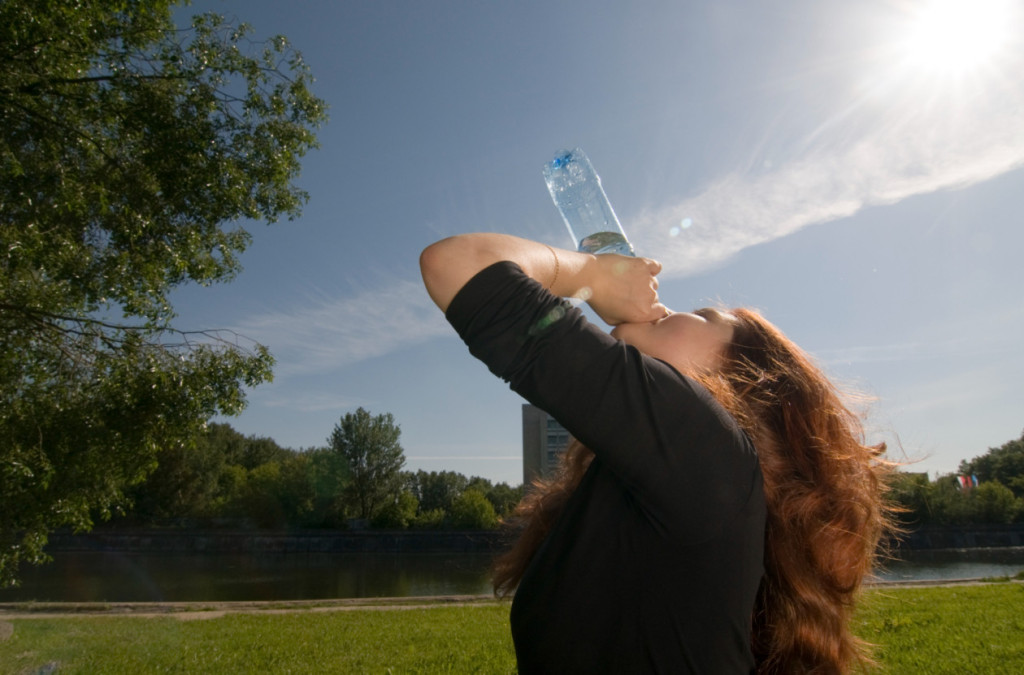
According to Dr. Ramadona, addressing the impacts of extreme heat requires more than changes in individual behavior. Therefore, while people should make it a habit to stay hydrated, wear lightweight clothing, avoid strenuous physical activity during the hottest part of the day, seek shade, and recognize the early symptoms of heat stress, these actions must be supported by broader policies.
“Behavioral change is important, but it cannot be the only strategy. Heat-related risks are also influenced by housing quality, population density, green spaces, occupations, access to drinking water, electricity, cooling systems, and the preparedness of healthcare facilities,” he said.
He added that several studies conducted by students in the FK-KMK UGM Master of Public Health Program demonstrate that the health impacts of heat result from interactions between exposure levels, individual vulnerability, and adaptive capacity. One study by Annisa Kharismaningtyas found an association between maximum temperatures and increased visits to healthcare facilities by patients with hypertension, with varying delays. These findings suggest that protecting communities requires not only individual education but also adjustments to healthcare systems, working hours, and community activity management.
 Ia menambahkan, berbagai penelitian mahasiswa Program Magister Kesehatan Masyarakat FK-KMK UGM menunjukkan bahwa dampak panas merupakan hasil interaksi antara tingkat paparan, kerentanan individu, dan kapasitas adaptasi. Salah satunya penelitian Annisa Kharismaningtyas yang menemukan hubungan antara suhu maksimum dengan peningkatan kunjungan pasien hipertensi di fasilitas kesehatan, dengan pola efek tertunda yang berbeda-beda. Temuan ini menunjukkan perlindungan terhadap masyarakat tidak cukup dilakukan melalui edukasi individu, tetapi juga memerlukan penyesuaian sistem pelayanan kesehatan, pengaturan jam kerja, hingga tata kelola kegiatan masyarakat.
Dr. Ramadona further stated that the growing body of evidence highlights the urgent need for Indonesia to establish a national early warning system and guidelines for extreme heat. In turn, rising temperatures caused by climate change have increased the risk of a wide range of health problems that are both predictable and preventable through multisectoral policies. Scientific evidence from across Indonesia increasingly demonstrates links between rising temperatures and greater demand for healthcare services, including maternal and child health, hypertension, type 2 diabetes mellitus, and anxiety disorders.
However, Dr. Ramadona emphasized that any early warning system must be tailored to local conditions.
“Heat thresholds in Jakarta, Yogyakarta, Makassar, Kupang, Medan, and highland regions are naturally different. Therefore, early warning systems should consider not only absolute temperatures but also humidity, nighttime temperatures, the urban heat island effect, population vulnerability, and healthcare system capacity,” he explained.
He also stressed that early warning systems should be accompanied by clear response measures. In other words, weather forecasts alone are insufficient; they should include risk levels and recommended actions, such as public education, adjustments to school and working hours, preparedness of community health centers and hospitals, protection for outdoor workers, and restrictions on outdoor activities during peak heat periods.
Regarding the protection of outdoor workers, Dr. Ramadona emphasized that the goal is not to prohibit work but to create safe working conditions without jeopardizing their livelihoods. Practical measures include adjusting work schedules so that physically demanding tasks are performed in the morning or late afternoon, providing scheduled rest breaks in shaded areas, ensuring access to drinking water and electrolytes, and implementing a buddy system to help workers recognize the early signs of heat stroke.
Meanwhile, vulnerable groups, including older adults, pregnant women, children, and people with chronic illnesses, require a more proactive approach through education, health monitoring, improved home ventilation, and the provision of shaded community spaces. Dr. Ramadona reiterated that older adults are often exposed to excessive heat indoors, so interventions should not focus solely on outdoor activities. Instead, they should address both indoor and outdoor exposure.
He also believes that adapting daily activity patterns is one of the most realistic responses to the increasing occurrence of extreme heat. Accordingly, strenuous physical activity, exercise, and outdoor activities should be scheduled in the morning or late afternoon when temperatures and humidity are lower. According to him, such adjustments should be supported by regulations that do not disadvantage workers or the public.
“In conclusion, Indonesians need to adapt their daily habits to cope with extreme heat. However, these changes will only be effective if they are supported by broader systems, including workplace regulations, climate-adaptive urban design and housing, prepared healthcare services, and clear risk communication. Extreme heat is no longer simply uncomfortable weather; it has become a public health and social resilience issue,” he concluded.
Author: Zabrina Kumara
Editor: Gusti Grehenson
Post-editor: Jasmine Ferdian
Photo: Magnific