


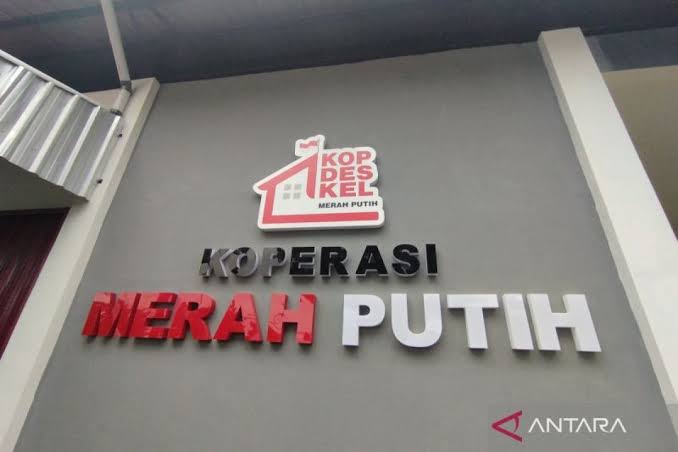
Indonesia’s Red and White Village Cooperatives (KDMP), envisioned as a driver of the rural economy, should be developed through community participation and remain free from political influence, according to a researcher at Universitas Gadjah Mada (UGM).
Dr. Hempri Suyatna of UGM’s Center for People’s Economy Studies said the government’s top-down approach to developing KDMP risks weakening the fundamental principles of cooperatives, which are rooted in voluntary participation, collective action, and member empowerment.
“A top-down approach will also lead to the standardization of economic institutions at the village level, even though each village has distinct potentials and challenges,” he said on Friday (Jul. 24).
Dr. Hempri said the implementation of KDMP should take into account the lessons learned from previous village economic institutions, including Village Unit Cooperatives (KUD) and Village-Owned Enterprises (BUMDes). Standardized institutional models have produced different outcomes across regions, with some village economic institutions eventually becoming inactive because their structures failed to match local needs and conditions.
He said KDMP managers should instead develop businesses based on the economic potential and needs of their respective communities. Creativity and innovation are essential to identifying business opportunities that can generate sustainable benefits for villagers, while the government should continue providing support for management, governance, and business development.
“Government support is needed both in terms of management and cooperative governance, as well as structural support to create a favorable environment for KDMP business development,” he said.
Dr. Hempri also highlighted the importance of strengthening KDMP’s public image and competitiveness. Digitalization, innovation, and stronger branding could help cooperatives reach broader markets and build greater public trust.
However, he emphasized that technology and business development alone would not guarantee the sustainability of cooperatives. Strong social capital is equally important.
Successful cooperatives, he explained, tend to be built on trust, solidarity, openness, transparent governance, accountable management, strong collaboration between managers and members, and partnerships with external stakeholders.
“These are precisely the values that must strengthen within the Red and White Village Cooperatives,” he said.
Dr. Hempri stressed that KDMP must also be protected from political interference. When cooperatives become instruments of political interests, he warned, they risk losing their independence as economic institutions.
Political competition can also create internal conflicts among cooperative managers and disrupt the development of the organization.
“Once cooperatives become extensions of political interests, they will never become truly independent economic institutions,” he said.
He further argued that cooperative development should not focus solely on providing capital. Villages also need better access to financing through banks, adequate infrastructure, and capacity-building programs to strengthen the skills of cooperative managers.
More importantly, he said cooperatives should remain platforms for collective economic empowerment.
Such an approach, he explained, could help improve members’ welfare while addressing broader social challenges such as unemployment, poverty, and inequality.
“Times have changed, but the spirit of fighting injustice must remain at the heart of the cooperative movement,” he concluded.
Dr. Hempri also placed the cooperative movement in its historical context. During the colonial period, cooperatives emerged as a means of strengthening communities and challenging economic injustice. In today’s context, he argued, that spirit of collective action remains relevant as communities face new forms of economic inequality and external pressures.
Author: Hanifah
Editor: Gusti Grehenson
Post-Editor: Jasmine Ferdian
Photo: Antara News