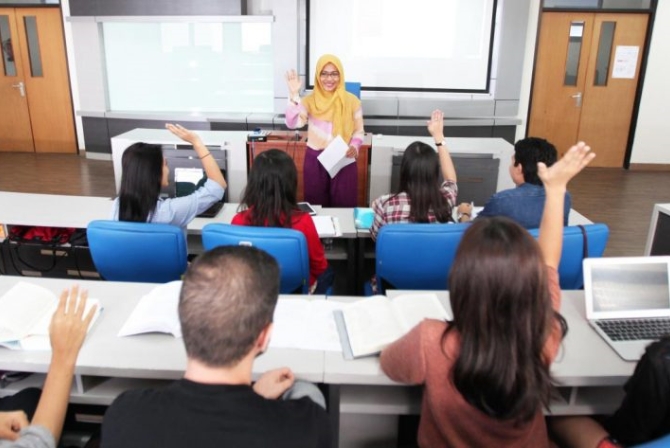
The Undergraduate Architecture Program at Universitas Gadjah Mada goes beyond teaching building design by cultivating critical and creative ways of thinking in responding to human needs, environmental challenges, and socio-cultural dynamics through the built environment. The curriculum is grounded in the philosophy of architecture for the humanities, integrating design studios, technology, computational thinking, sustainability, and sensitivity to both local and global contexts.

Graduates of the program are awarded the Bachelor of Architecture degree and are equipped with the competencies to design functional, inclusive, aesthetic, and sustainable spaces. Supported by an outcome-based education system, international accreditation standards established by the Korea Architectural Accrediting Board (KAAB), and a 4+1 academic-professional pathway, the curriculum prepares students to develop as adaptive, human-centered future architects capable of addressing complex challenges across multiple scales of the built environment. This international accreditation provides competency equivalence and offers graduates greater opportunities to pursue further studies or professional careers abroad.

Key Strengths

  • Project-Based Design Studios: Students are trained through design studios that emphasize creative exploration, spatial problem-solving, and the integration of technical, social, and environmental aspects across multiple scales of the built environment.
  • Integration of Technology and Computational Thinking: The curriculum incorporates digital and computational approaches to architectural practice, including digital representation, simulation, and technology-based design exploration.
  • International KAAB Accreditation: The curriculum refers to the standards of the Korea Architectural Accrediting Board (KAAB) as part of the program’s commitment to maintaining educational quality and enhancing the global competitiveness of its graduates.
  • National and International Networks: The program actively develops academic collaborations through workshops, guest lectures, international studios, research activities, and academic exchange programs with various institutions at both the national and international levels.
  • Connection to Professional Practice: Learning activities engage practitioners, alumni, and professional partners through studios, seminars, design critiques, and community-based engagement.

Career Prospects

  • Architect in national and international architectural firms
  • Urban Designer and Spatial Planning Consultant for urban and district-scale projects
  • BIM Specialist and Computational Design Assistant in digital-based design industries
  • Interior Designer and Exhibition Designer for commercial, cultural, and public spaces
  • Sustainability and Green Building Consultant in the field of sustainable architecture
  • Project Coordinator and Design Development Staff in the construction and property development industries
  • Heritage and Conservation Specialist for building and historic district preservation projects
  • Entrepreneur in architectural design, digital visualization, interior design, and other creative industries related to the built environment.

Accreditation

Accredited with an “A” rating by BAN-PT, certified by AUN-QA, and currently undergoing the international accreditation process with the Korea Architectural Accrediting Board (KAAB).

Curriculum

More information on curriculum: https://architecture.archiplan.ugm.ac.id/id/kurikulum/

Crisis Center

Please contact us for any problem with SIMASTER

(Direktorat Teknologi Informasi Directorate of Information Technology )

*Hari Senin-Jumat, 07.00 – 16.00

Call this number for any emergencies

(Kantor Keamanan, Keselamatan Kerja, Kedaruratan, dan Lingkungan Office of Workplace and Environmental Security and Safety and Emergencies)

Skip to content