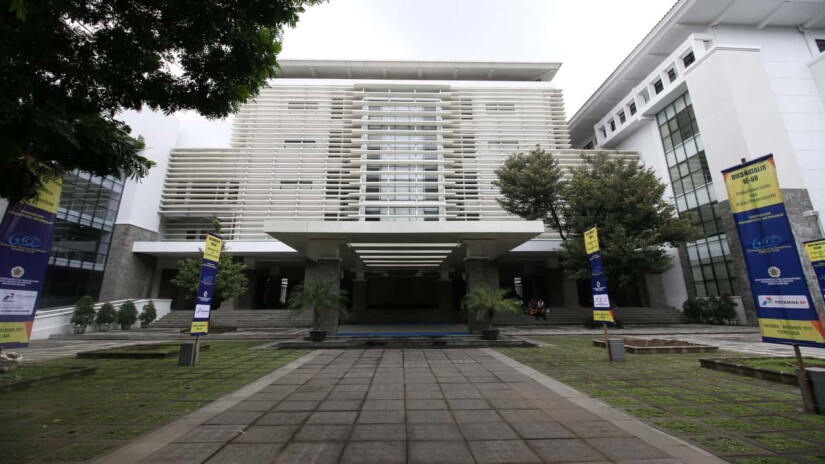
The Department of Sociology was established on September 19, 1955, and has since developed into a competitive, dynamic, and adaptive department in responding to social change. In terms of academic substance, the Undergraduate Program in Sociology focuses on the Principles of Sociology, sociological disciplines, and applied practices for understanding social phenomena.
In practice, the Department of Sociology emphasizes the importance of synergy between education, research, and community service as the foundation for academic development and meaningful contributions to addressing social issues.
Graduates of the Sociology Program at FISIPOL UGM have broad career prospects, as their competencies extend beyond social theory to include social research, social data analysis, community problem mapping, program evaluation, and policy development. Their ability to understand social behavior and analyze societal dynamics makes sociology graduates highly relevant across various sectors.
Career sectors for graduates include ministries and government institutions, NGOs/CSOs, international organizations, donor agencies, consulting firms, media, survey and research institutions, corporations with CSR divisions, social impact startups, and educational and research institutions.
One of the key strengths of Sociology graduates from FISIPOL UGM lies in their competencies in field-based social research, community analysis, analytical report writing, and critical understanding of social issues, enabling them to work flexibly across the public sector, the development field, and people- and data-driven industries.
Accreditation Rating: EXCELLENT (Unggul)
Accreditation Agency: BAN-PT
Validity Period: 9 May 2024 – 9 May 2029
International Accreditation:
Accreditation Agency: ACQUIN
Accreditation Status: Accredited
Validity Period: 23 March 2026 – 30 September 2032
Classical and Contemporary Sociological Theory, Social Research Methods, Sociology of Social Change, Urban Sociology, Gender and Society, Digital Sociology, Social Data Analysis, and Development and Community Empowerment.
More information on curriculum: https://sosiologi.fisipol.ugm.ac.id/en/undergraduate-program/
Please contact us for any problem with SIMASTER
(Direktorat Teknologi Informasi Directorate of Information Technology )
*Hari Senin-Jumat, 07.00 – 16.00
Call this number for any emergencies
(Kantor Keamanan, Keselamatan Kerja, Kedaruratan, dan Lingkungan Office of Workplace and Environmental Security and Safety and Emergencies)


