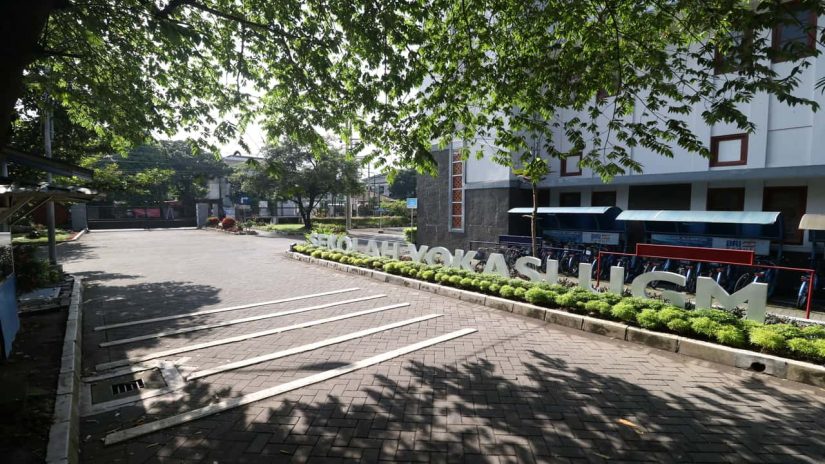
The Applied Bachelor’s Program in Regional Economic Development (D4) at UGM Vocational College prepares applied economics graduates with competencies in regional economic development planning, economic and spatial data analysis, and development policy analysis. Students are trained through a practice-based curriculum supported by laboratory work, project-based learning, case studies, applied research, and field experiences.

Graduates earn the degree of Applied Bachelor of Economics (S.Tr.E.) and are prepared to become regional development planning assistants, data analysts, and economic policy analysts. The 2026 curriculum is designed based on Outcome-Based Education (OBE) and developed in collaboration with government institutions, industries, and professional partners to ensure graduates possess competencies aligned with labor market needs and sustainable development challenges.

Key Strengths

  1. Professional Lecturers: Taught by competent academic and practitioner lecturers in the fields of regional economics, development planning, data analysis, public policy, and sustainable development, as well as certified planners and assessors.
  2. Laboratory Facilities: Supported by modern laboratories, including the Economics Laboratory equipped with licensed software and planning analysis tools, Computer Laboratory, as well as access to libraries and online journals.
  3. Curriculum: The 2026 curriculum is based on Outcome-Based Education (OBE), designed to adapt to industry needs, technological developments, and sustainable development issues with a balanced combination of theory and practice. The curriculum also supports development planning certification and provides opportunities for graduates to continue to Applied Master’s Degree programs.
  4. Certification: The curriculum supports professional competency certifications through the Indonesian Development Planning Professional Certification Institution (LSP Perencanaan Pembangunan Indonesia) and certifications related to data analysis, regional planning, and public policy.
  5. Collaboration with Institutions: Collaborates with PPPI, the Ministry of Finance, Bappenas, the Ministry of Villages, Development of Disadvantaged Regions and Transmigration, the Regional Government of Yogyakarta Special Region, Yogyakarta City Government, Sleman Regency Government, Presidential Staff Office (KSP), and the Directorate General of Fiscal Balance (DJPK) in curriculum development, certification, internships, public lectures, training programs, and other academic activities.
  6. Practice and Technology-Based Learning: Learning activities are supported through a Student-Centered Learning (SCL) approach by utilizing a Learning Management System (LMS) to enhance interactive and technology-oriented learning experiences.

Career Prospects

Graduates of the Regional Economic Development Study Program have broad career opportunities in government institutions, private sectors, international organizations, and non-governmental organizations, including positions such as:

  1. Development Planning Officers at Bappenas, regional planning agencies, and government institutions.
  2. Economic, social, and spatial data analysts in research institutions, companies, and government agencies.
  3. Regional Development Consultants in national and international consulting firms.
  4. Researchers in survey institutions, think tanks, and development research organizations.
  5. Project Officers and Development Specialists in international organizations such as the World Bank, UNDP, ADB, and ASEAN.
  6. Public Policy Analysts in ministries, local governments, and non-government organizations.
  7. Professionals in NGOs working in regional development and community empowerment sectors.
  8. Academics and lecturers in higher education institutions and educational organizations.

Accreditation

This study program has been awarded a “Very Good” accreditation by the Independent Accreditation Agency for Economics, Management, Business, and Accounting (LAMEMBA), which operates under the supervision of BAN-PT.

Featured Courses

Econometrics, Regional Analysis Techniques, Public Policy Analysis, Development Information Systems, Regional Infrastructure Planning, Quantitative Analysis of Development Policy Impacts, Digital Business Practicum, and Disaster Economics.

Crisis Center

Please contact us for any problem with SIMASTER

(Direktorat Teknologi Informasi Directorate of Information Technology )

*Hari Senin-Jumat, 07.00 – 16.00

Call this number for any emergencies

(Kantor Keamanan, Keselamatan Kerja, Kedaruratan, dan Lingkungan Office of Workplace and Environmental Security and Safety and Emergencies)

Skip to content