


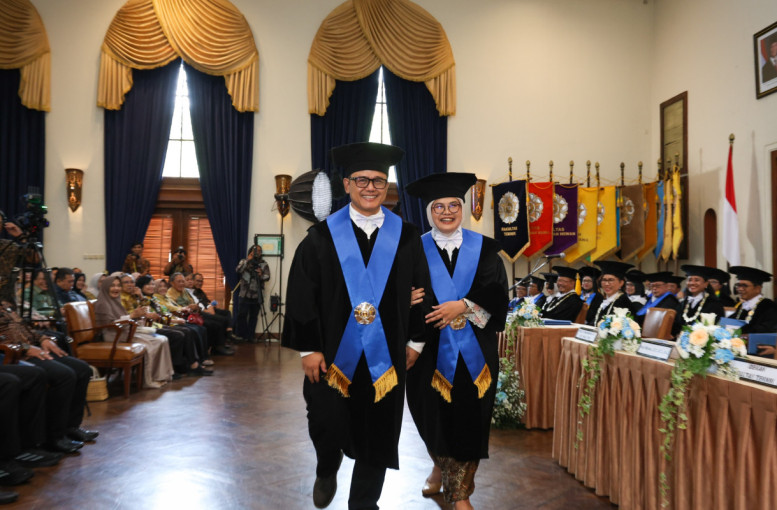
A husband-and-wife pair from the Department of Chemical Engineering, Faculty of Engineering, Universitas Gadjah Mada (FT UGM) were inaugurated together as professors on Tuesday (Nov. 11) at the Senate Hall, UGM Central Office. They are Professor Budhijanto and Professor Wiratni.
In the inaugural speeches, both highlighted the energy, food, and environmental challenges facing Indonesia. Through a chemical engineering approach grounded in social and humanistic values, they emphasized that technology holds meaning only when it serves human wellbeing.
In her inaugural address titled “Humanitarian Bioprocess Engineering,” Professor Wiratni underlined the importance of bringing bioprocess engineering into real-world applications rather than confining it to laboratory experiments or scientific publications.
She explained that bioprocess engineering is a complex subdiscipline of chemical engineering that integrates biology, mathematics, and process engineering to achieve efficient and sustainable production using microorganisms.
This approach aligns with global efforts toward Net Zero Emissions (NZE) by using renewable, environmentally friendly resources.
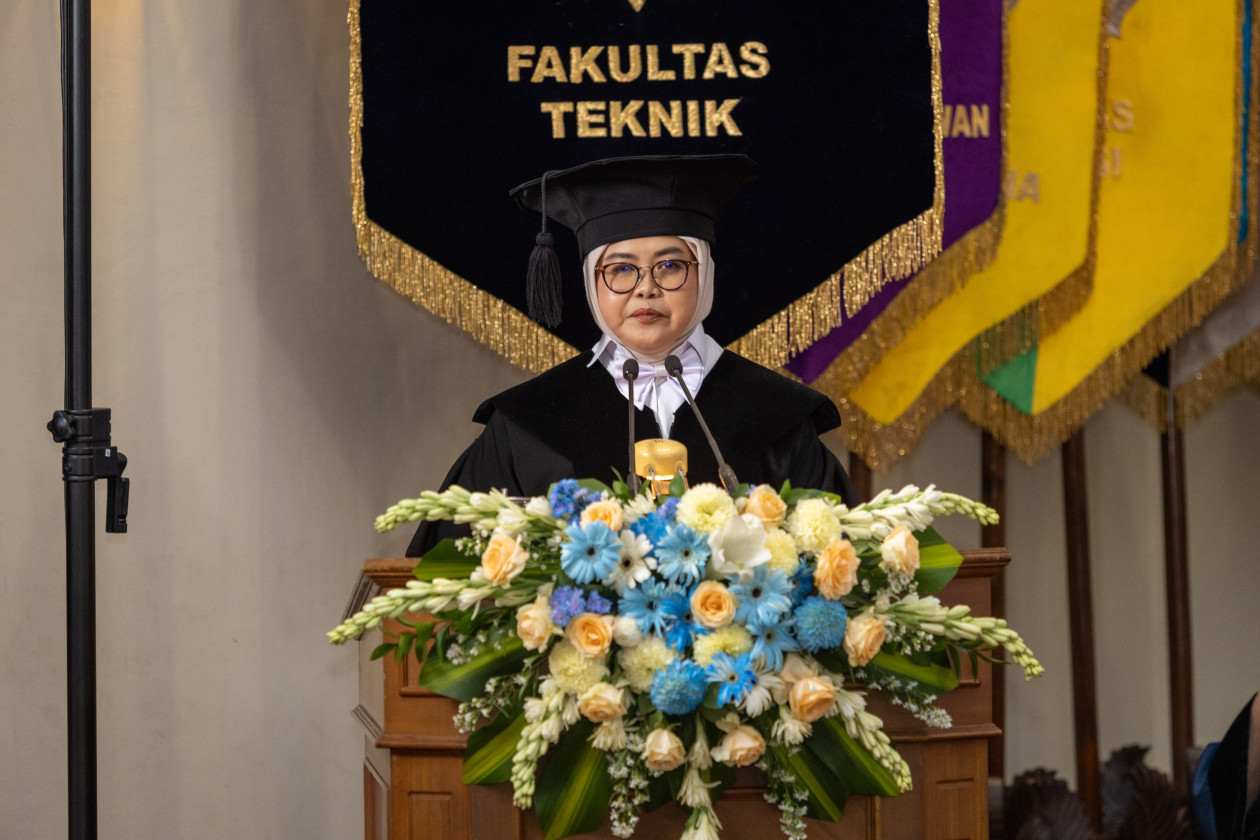
However, Professor Wiratni also reminded the audience that biotechnology is not solely a technical matter. She noted the need for “social engineering” to ensure that communities genuinely understand and are willing to adopt technologies resulting from research.
One example is the use of biofertilizers, biogas, and waste-processing technologies, which will not be effective if people remain inattentive to consumption patterns and waste management.
“The transition to a sustainable lifestyle requires ‘social detoxification’ before the adoption of green technologies can be implemented,” she said.
She further emphasized that many scientific problems cannot be solved solely through technological development. She encouraged engineers to collaborate with scholars from the social sciences and humanities to build strategies for just and equitable change.
“Social construction is the foundation that must be laid before building the skyscrapers of high technology,” she added.
Meanwhile, in his speech titled “The Role of Chemical Reaction Engineering in Sustainable Energy and Environmentally Friendly Industries,” Professor Budhijanto explained that mastery of chemical reactions lies at the heart of developing industrial processes that are efficient, clean, and energy-saving.
Chemical reaction engineering, he noted, goes beyond equations and catalysts and is closely linked to reactor design, process optimization, and clean-energy innovations such as biogas, biofuels, and wastewater recycling.
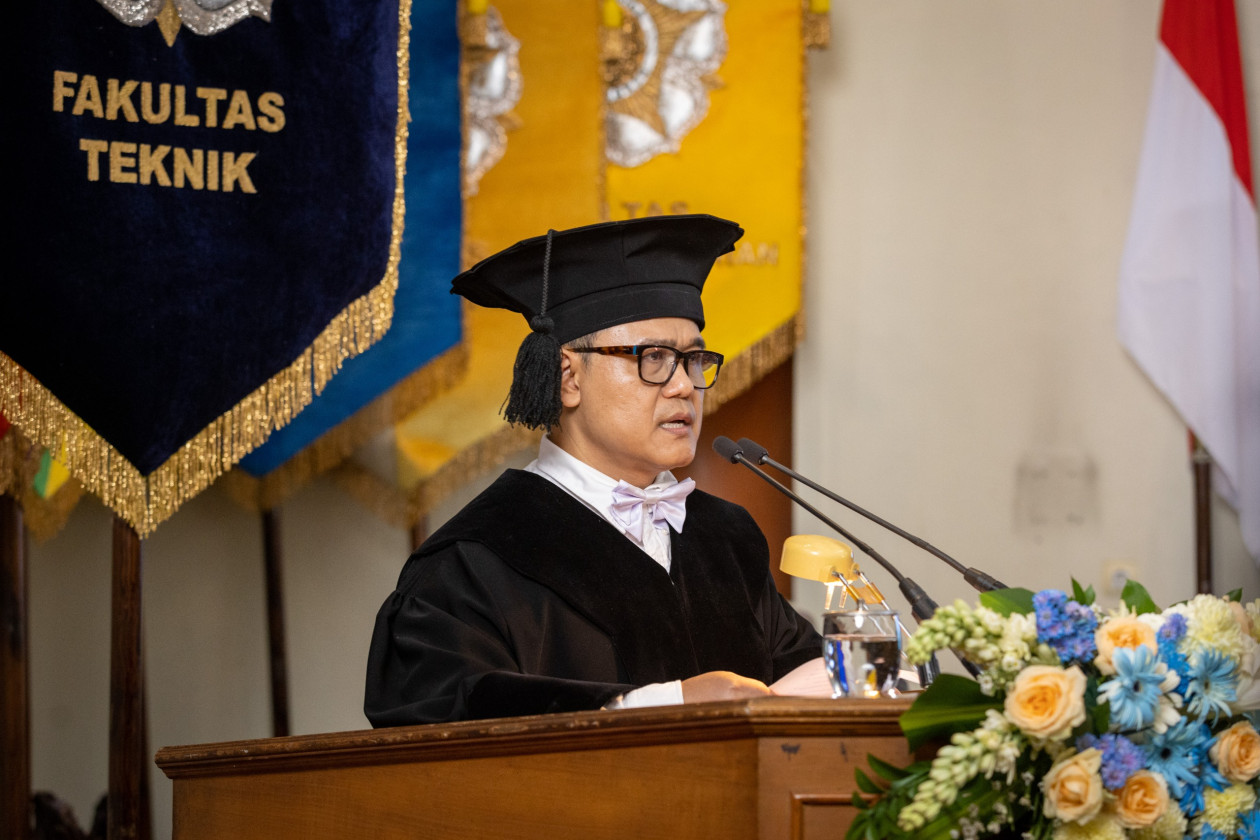
According to Professor Budhijanto, improving reaction efficiency and process control can help realize low-emission industries in Indonesia. One of the studies he and his team developed was a thermophilic anaerobic biogas reactor system that increases biogas productivity compared to conventional methods.
He also highlighted another innovation: an aerobic granular sludge reactor technology for treating palm oil mill effluent, enabling wastewater to be processed efficiently for reuse.
He stressed that the success of the energy transition is not only about replacing fossil fuels with renewable energy but also transforming how industrial processes are designed to be cleaner and more resource-efficient.
“Chemical engineering ensures that every reaction delivers optimal benefits for people and the environment,” he stated.
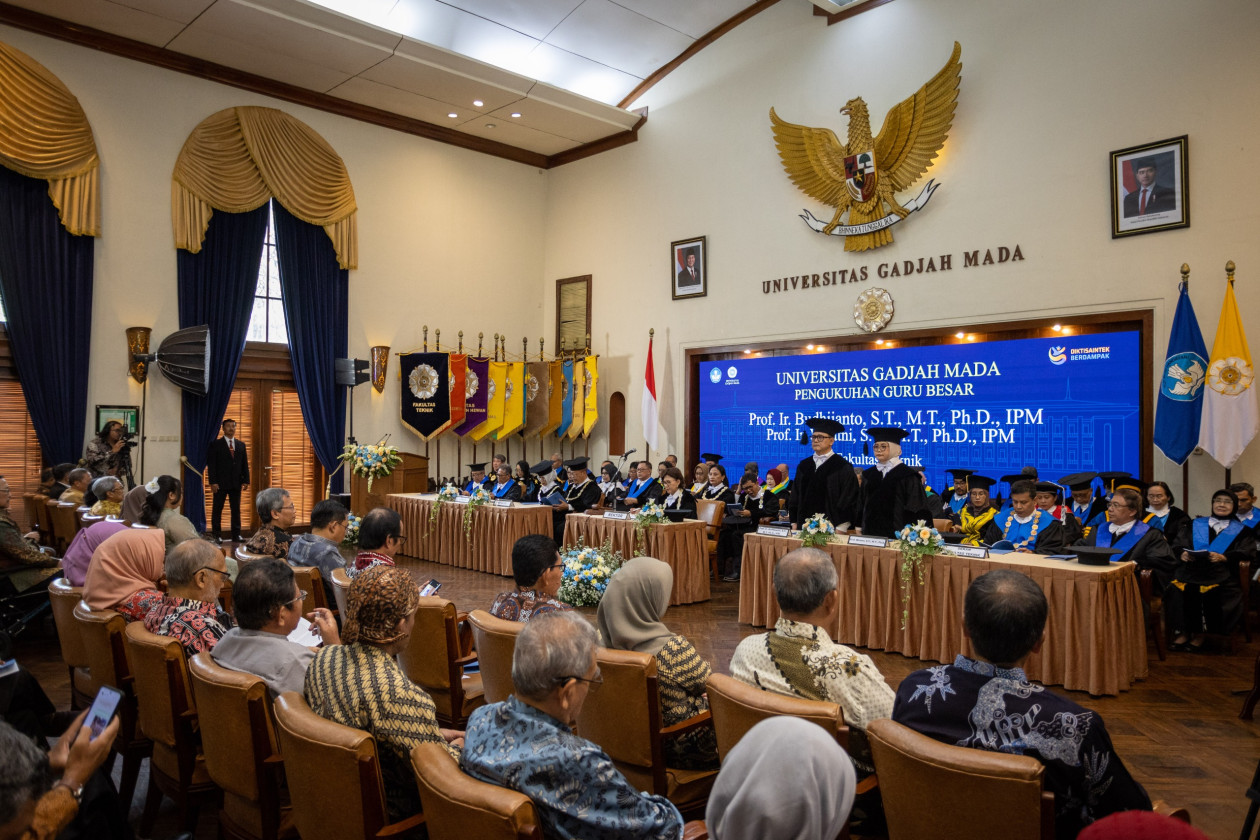
Both professors from FT UGM concluded their speeches with a shared message: engineering must not be confined to formulas and reactors but must be present within communities.
In the context of national development, the mastery of bioprocess engineering and chemical reaction engineering will serve as key foundations for Indonesia’s energy independence, food security, and environmental sustainability.
Author: Ika Agustine
Editor: Gusti Grehenson
Post-editor: Rajendra Arya
Photographer: Donnie Trisfian