


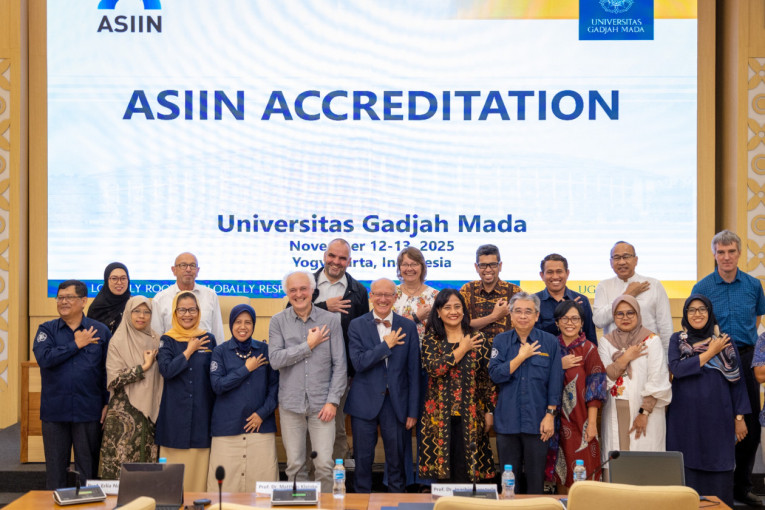
Universitas Gadjah Mada (UGM) has undergone an international accreditation assessment by the Accreditation Agency for Degree Programs in Engineering, Informatics, Natural Sciences, and Mathematics (ASIIN), a Germany-based accreditation body, for six study programs across three faculties. These programs include the Bachelor’s Program in Food and Agricultural Product Technology, the Master’s Program in Food Science and Technology, the Master’s Program in Biomedical Engineering, the Doctoral Program in Biology, the Doctoral Program in Environmental Science, and the Doctoral Program in Biotechnology.
UGM Vice-Rector for Education and Teaching, Professor Wening Udasmoro, welcomed the ASIIN assessment team in Multimedia Room 1 of the UGM Central Building on Wednesday (Nov. 12).
In her remarks, she emphasized that this assessment reflects UGM’s commitment to improving academic quality and strengthening the university’s global recognition. She added that the six proposed study programs form an important part of UGM’s vision to advance scientific development and contribute to national and global sustainability goals.
“This assessment is part of our long-term strategy to internationalize our education system, ensure global recognition, and provide students with a world-class academic experience,” said Professor Udasmoro.
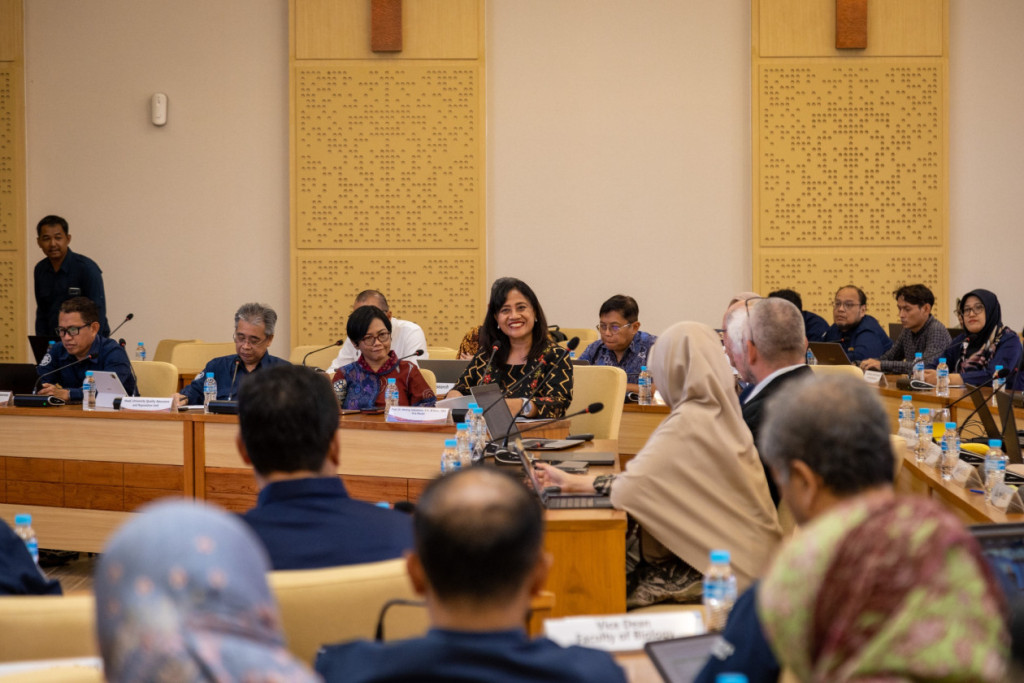
One of the ASIIN assessors, Professor Thomas John, expressed his appreciation for UGM’s reputation as Indonesia’s leading university. He noted that UGM had prepared its academic documentation well but still needed to enhance the quality of its international publications.
“UGM has produced a substantial number of publications, but publication quality is not determined solely by quantity; it also depends on citation indexes or impact factors,” he said.
Responding to this, Professor Udasmoro explained that UGM has prepared several strategic measures to improve the quality of education, research, and graduate preparedness for international assessments.
One such initiative is the Enhancing Quality Education for International University Impacts (EQUITy) program, which promotes improvements in the quality of international publications.
“We now place a stronger emphasis on enhancing publication quality with high citation indexes rather than merely increasing publication volume,” she explained.
UGM Director of Research, Professor Mirwan Ushada, stated that the university has established five flagship research areas as the main direction for supporting sustainable development. These areas include food sovereignty, health independence, energy transition, environmental adaptation, and social resilience.
“One of the requirements for conducting research at UGM is that it must support one of these five flagship areas. We also have learning centers and integrated laboratories that serve as student research hubs to support the university’s performance indicator targets,” he said.
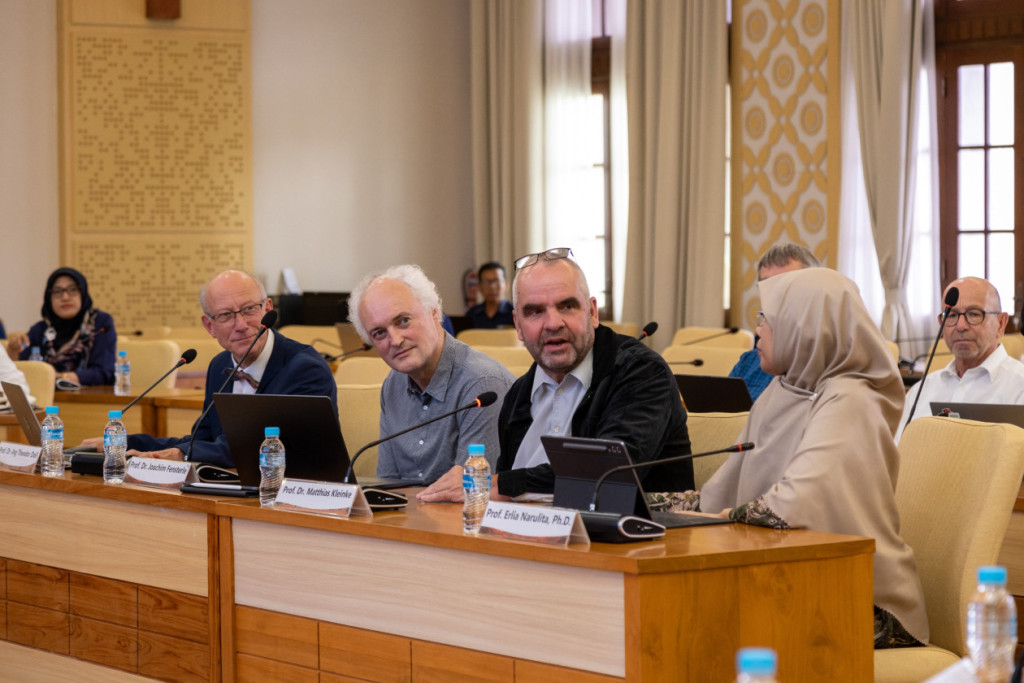
The ASIIN assessment team also expressed appreciation for UGM’s strategic position in Asia. One assessor, Professor Dieter Trautz, stated that UGM has a strong appeal to international students and a strong academic and administrative readiness to face the accreditation process.
“We are very impressed with Universitas Gadjah Mada. Its exceptional standing is evident throughout Indonesia and the region,” he said.
The assessment took place over two days, Nov. 12 to 13, 2025, and forms part of UGM’s ongoing efforts to strengthen quality assurance, enhance global relevance, and reinforce graduate competitiveness through research and educational innovation.
Through international accreditations such as ASIIN, UGM continues to expand academic networks and strengthen cross-border collaborations in research and education. These efforts reflect UGM’s commitment to becoming a world-class university firmly rooted in Indonesian values.
Author: Cyntia Noviana
Editor: Triya Andriyani
Post-editor: Rajendra Arya
Photographer: Donnie Trisfian