


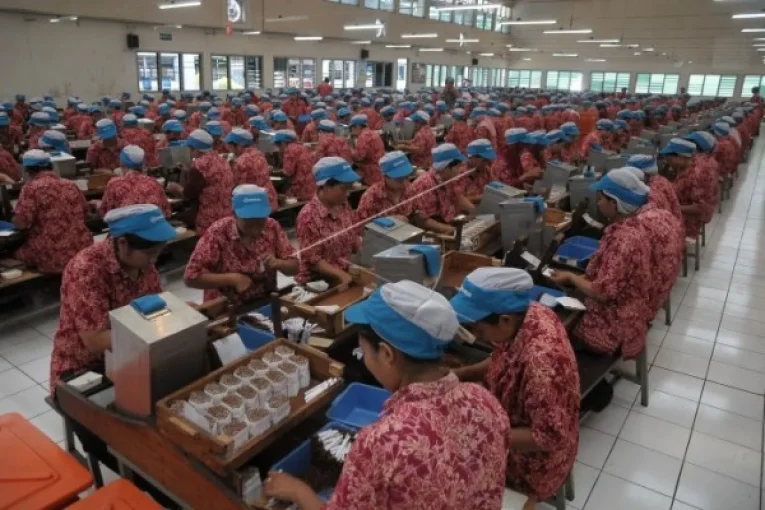
The government has decided not to raise the Tobacco Excise in 2026. The move has sparked mixed responses, as it sits at the crossroads of health protection and community economic resilience. Responding to the decision, Universitas Gadjah Mada (UGM) academic Dr. Hempri Suyatna views the policy as a short-term measure oriented toward maintaining social stability.
“This policy was taken to minimize broader social impacts,” Dr. Suyatna explained on Thursday (Nov. 13).
He stated that the decision is understandable amid the current downturn in domestic industries.
“We can observe that many labor-intensive industries are shutting down, leading to layoffs. Therefore, in the short term, this policy may aim to minimize wider social impacts, particularly rising unemployment,” he said.
However, Dr. Suyatna emphasized that the public health dimension must not be overlooked. He noted that education and campaigns on the dangers of smoking must continue to be strengthened to ensure long-term consumption control goals are met.
One ongoing concern is the argument that excise hikes may drive the spread of illegal cigarettes, costing the state trillions of rupiah. He argued that the causes are not singular.
“I believe the rise of illegal cigarettes is not solely due to increases in legal excise,” he said.
He pointed out that weak oversight and poor inter-agency coordination also play a significant role.
“It may stem from law enforcement that is not comprehensive. Many aspects need attention, such as the quality of supervision, coordination between Customs, law enforcement agencies, the judiciary, and health institutions,” he explained.
Furthermore, Dr. Suyatna touched on the welfare of tobacco farmers and cigarette industry workers, an issue often cited to resist excise increases. He stated that in reality, the welfare of tobacco farmers does not match their significant contribution to state revenue.
He even referenced a 2023 student research project that highlighted the strong cultural significance of tobacco in communities, where it is regarded as “green gold.”
“Even in difficult economic conditions, farmers remain committed to growing tobacco because it is seen as a blessing,” he said.
This cultural factor, combined with limited government support, Dr. Suyatna argued, contributes to the slow progress of job-transition programs for cigarette industry workers. For this reason, he urged the government not to view the excise issue solely from an economic standpoint but also through social, cultural, and health lenses.
“Through a multidimensional analysis such as covering social, health, economic, and cultural aspects, we hope to find solutions that offer the best middle ground,” he concluded.
Author: Aldi Firmansyah
Editor: Triya Andriyani
Post-editor: Rajendra Arya
Illustration: Antara