


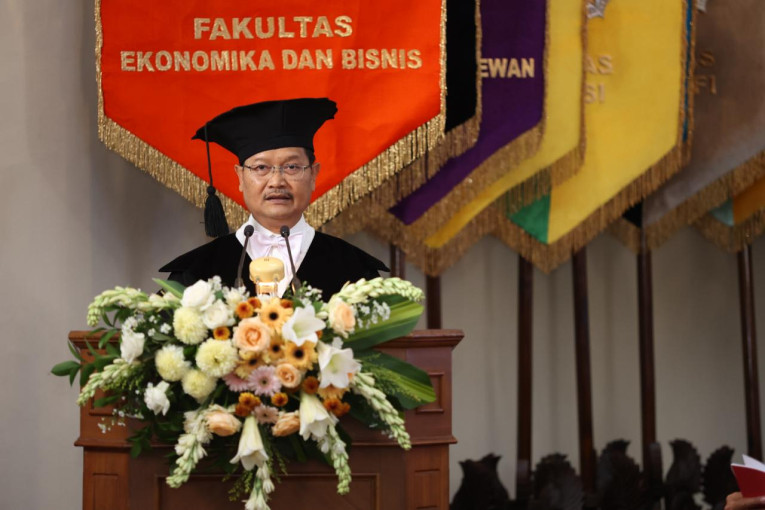
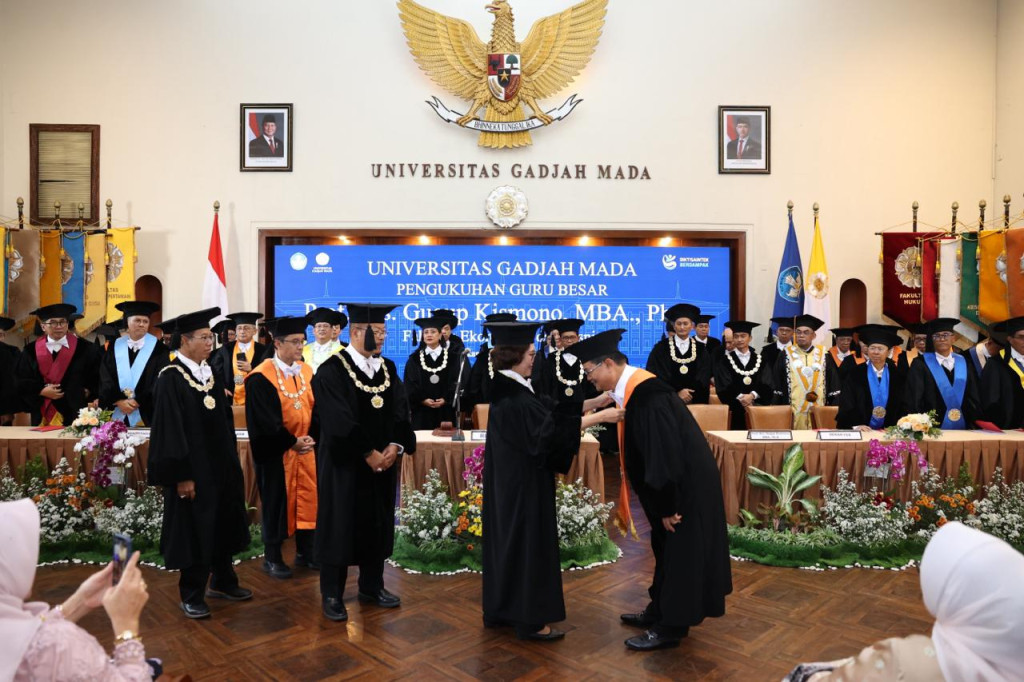
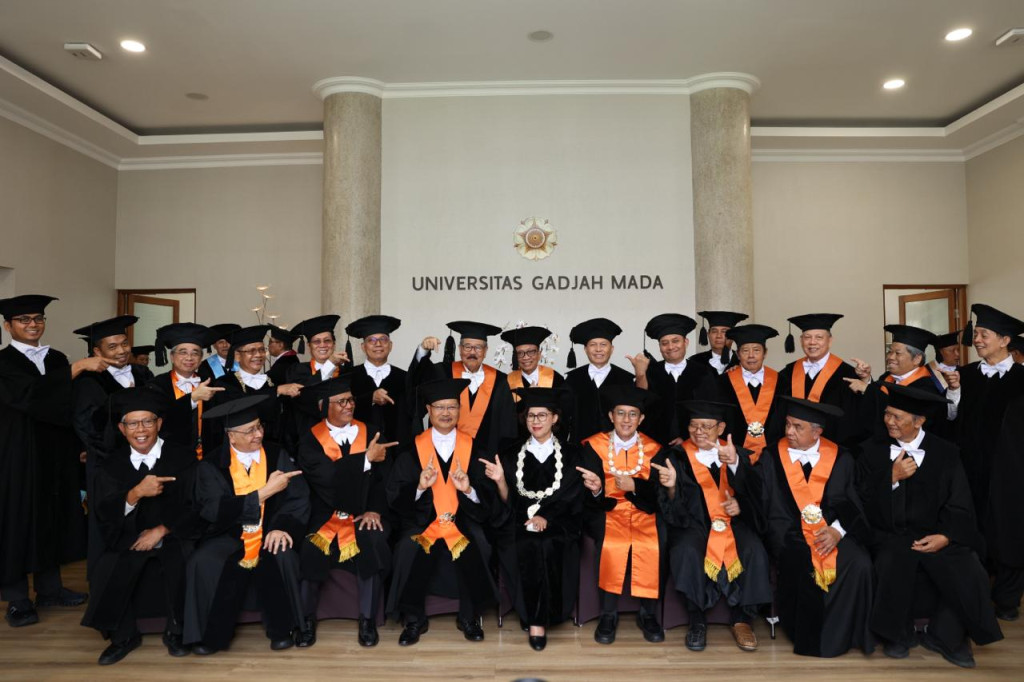
Lecturer of Management at the Faculty of Economics and Business, Universitas Gadjah Mada (FEB UGM), Dr. Gugup Kismono, was officially inaugurated as Professor in Organizational Psychology and Behavior on Thursday (Nov. 13) at the UGM Senate Hall. In his inaugural address titled “Finding Solutions for Achieving Work-Life Balance Amid Changing Life Orientations Among Young People,” he highlighted major shifts in the working patterns of the younger generation.
Professor Kismono noted that the imbalance between work and personal life has become increasingly evident among young people. Nearly half of young workers experience fatigue caused by high digital demands and increasingly blurred working hours.
“This phenomenon prompts my field of study to re-examine how motivation, psychological well-being, and adaptive work behavior can form the basis for more humane organizational policies and cultures,” he said.
He added that the widespread practice of working from anywhere since the Covid-19 pandemic has pushed many people into new work patterns without adequate psychological or social preparation. This shift has brought consequences for domestic life, including prolonged exhaustion, role confusion, and household conflicts.
“The initial concept was to bring people closer, but work from home can easily turn into work from heartburn,” he remarked.
In his presentation, Professor Kismono emphasized that Generation Z has been the most affected by these changes. The flexibility that appears to promise freedom has, in fact, turned into social pressure as organizations rush to adopt trends without considering actual needs.
He also addressed the rise of the gig economy, which may seem liberating, but in reality creates mental burdens for young people who rely on these non-formal work systems.
Professor Kismono underscored the importance of organizations maintaining a balance between productivity and employees’ psychological well-being, particularly for younger workers who are more vulnerable to stress in an era of ongoing uncertainty.
According to him, Generation Z is becoming more aware of the importance of setting boundaries to protect mental health.
“Productivity matters, but life should not be consumed solely by work. Work-life balance is a necessity that must be consciously pursued,” he stated.
He also stressed that young people and gig workers must cultivate an acceptance mindset and develop the skills to set boundaries in their work to remain healthy within a dynamic digital work system.
Organizations, in turn, should build humane work environments through leadership grounded in empathy and trust. He further emphasized the need for government support to ensure social protection, healthcare services, and pension schemes are accessible across forms of employment.
“Empowered individuals, adaptive organizations, and supportive systems form the three pillars of work balance for a healthy and humane future of work,” he concluded.
UGM Rector, Professor Ova Emilia, stated that Professor Kismono is now one of 542 active professors at UGM. He is one of 31 active professors out of 48 recorded professors at FEB UGM.
Author: Cyntia Noviana
Editor: Triya Andriyani
Post-editor: Rajendra Arya
Photographer: Firsto Adi