


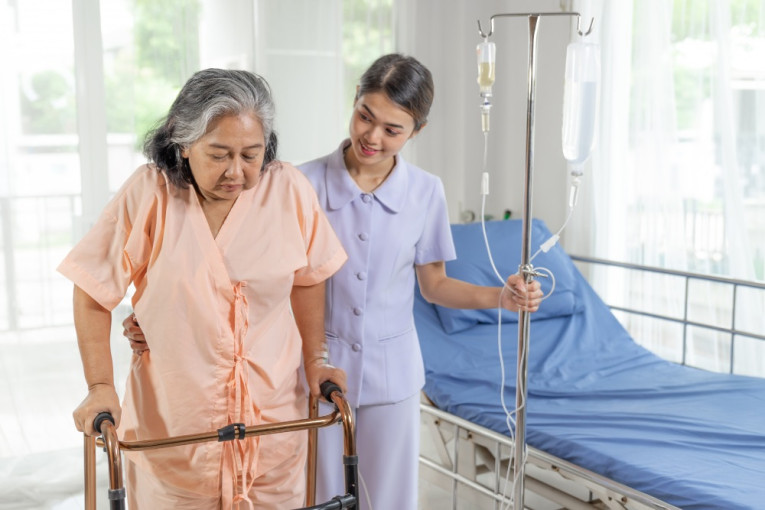
The number of older adults in Indonesia continues to rise each year. This increase affects the provision of healthcare services, including the conditions elderly care nurses face, particularly regarding competency standards that require greater attention. Adhi Santika, Deputy Chair for Legal Affairs and Elderly Protection of the Indonesian Wredatama Association Central Board (PWRI), noted that current elderly nursing competency standards in Indonesia still focus primarily on health and have yet to fully address multidimensional needs.
Dr. Probosuseno, a lecturer at the Faculty of Medicine, Public Health, and Nursing at Universitas Gadjah Mada (FK-KMK UGM), an internal medicine specialist with a subspecialty in geriatrics, and a UGM expert in elderly health, expressed concern and offered his perspective on this issue.
According to him, there are still relatively few competent elderly care nurses, and only a small number have received specialized education. For this reason, he frequently conducts training sessions for elderly care nurses to strengthen their competencies.
“This work requires special skills, and they need to be equipped with them,” he said at FK-KMK UGM on Thursday (Nov. 19).
Dr. Probosuseno stated that Indonesia’s delay in preparing nurses with competent standards could impact the quality of elderly healthcare. As with any field, limited knowledge and inadequate skills lead to poor outcomes. Conversely, when nurses are well-trained, the overall well-being of older adults improves.
“With regard to competency standards, the nursing profession follows the standards set by the Indonesian Gerontic Nursing Association (IPEGERI), which strengthens its quality benchmarks every year,” he explained.
Dr. Probosuseno also expressed concern that in practice, elderly care is not always handled by graduates of nursing programs. In fact, he noted cases in which individuals with undergraduate or graduate degrees in the social sciences who lack relevant knowledge and skills are tasked with elderly care.
Therefore, he urged the government to promote gerontological nursing education and broaden its accessibility to improve the quality of elderly care.
“Through the Ministry of Health and through the education sector, gerontic nursing should be strengthened and expanded with the involvement of professional organizations,” he proposed.
Author: Salwa
Editor: Agung Nugroho
Post-editor: Rajendra Arya
Illustration: Freepik