


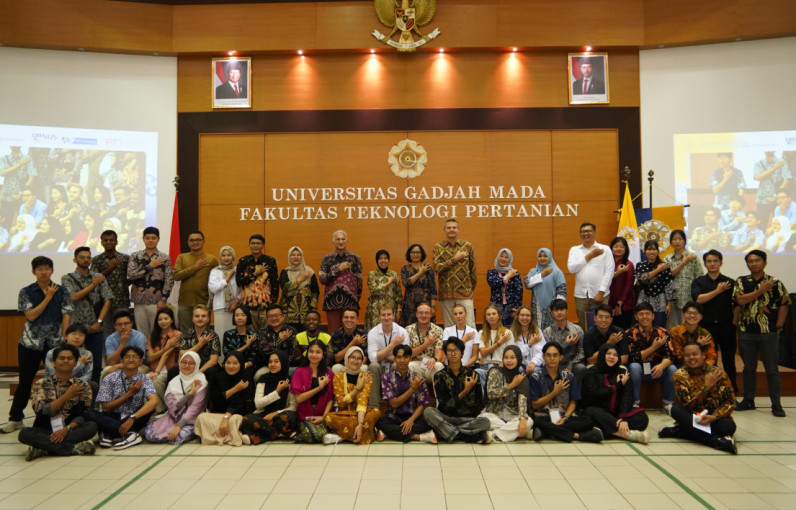
The Summer School on Global Logistics and Supply Chain Management 2025 at the Faculty of Agricultural Technology, Universitas Gadjah Mada (FTP UGM), officially concluded on Friday (Jun. 13).
This event was collaborated with The Logistics Institute – Asia Pacific, the National University of Singapore, and the University of Applied Sciences Upper Austria. It provided case-based learning and real-world business challenges.
Dean of FTP UGM, Professor Eny Harmayani, expressed her appreciation and gratitude for the successful collaboration through this summer school program.
She hopes that inter-university collaborations can continue and provide cross-country learning programs for students.
“Of course, I hope this program can become a realm for cultural exchange and learning to build networks for students. Hopefully, other impactful agendas will be carried out in the future,” Professor Harmayani said.
Professor Harmayani mentioned that this summer school program opened last April and ran from June 2 to 13, 2025.
For two weeks, participants were provided with materials on implementing theories into real-world business challenges.
Three learning objects will be located in Yogyakarta, including the tempeh, chocolate, and batik industries.
“Understanding the supply chains of local industries is expected to be a new experience for students, while also fostering innovation or creative thinking to solve business problems of local products, especially micro, small, and medium enterprises,” Professor Harmayani stated.
Dr. Robert de Souza, Executive Director of The Logistics Institute – Asia Pacific at the National University of Singapore, expressed his pride in organizing this program with UGM in Indonesia.
According to Dr. de Souza, regarding tourism, accommodation, and service, Indonesia is one of his priorities for collaboration.
Its tourist attractions, culinary delights, and even natural richness offer the best experience for learning and enjoying.
“I have been to Indonesia many times, and I think this is my best experience. Especially with visits to the tempeh and chocolate industries, this is very valuable,” Dr. de Souza said.
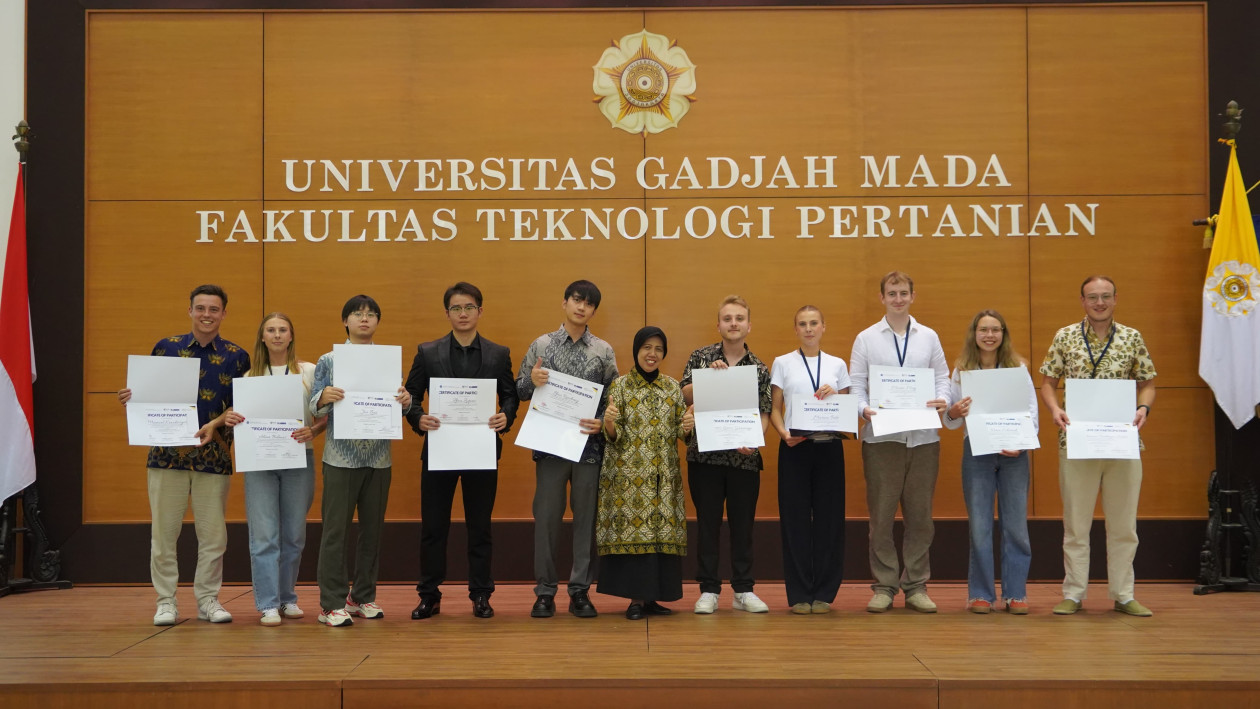
Through this program, Dr. de Souza hopes that participants can explore local industry problems that can increase economic income.
He realizes that in recent years, the global economy has been facing a crisis due to global geopolitics.
Thus, with this program, participating students can receive the best preparation to embark on their future careers.
Also conveyed by the representative of the School of Business and Management, University of Applied Sciences Upper Austria, Professor DI Franz Staberhofer, was that it was a historical moment in organizing a summer school to gain the best experience after collaborating with UGM in Indonesia.
Indeed, two years ago, this program focused on collaborating with regions in Europe. Therefore, holding this program in Indonesia turned out to provide a fresh perspective.
“We really need good cooperation; I remember how I couldn’t stop being surprised by the experience and service in this program. Hopefully, it can be a provision for our students’ careers,” Professor Staberhofer said.
Professor Puji Astuti, Director of Partnerships and Global Relations at UGM, appreciated the activity for developing student competence in understanding global economics and trade.
According to Professor Astuti, the summer school program marks the strengthening of international collaboration between UGM and universities from other countries.
“Our focus is to create an ecosystem capable of supporting student creativity, especially in character building and business development,” Professor Astuti stated.
Author: Tasya
Editor: Gusti Grehenson
Post-editor: Afifudin Baliya
Photographs: FTP UGM