


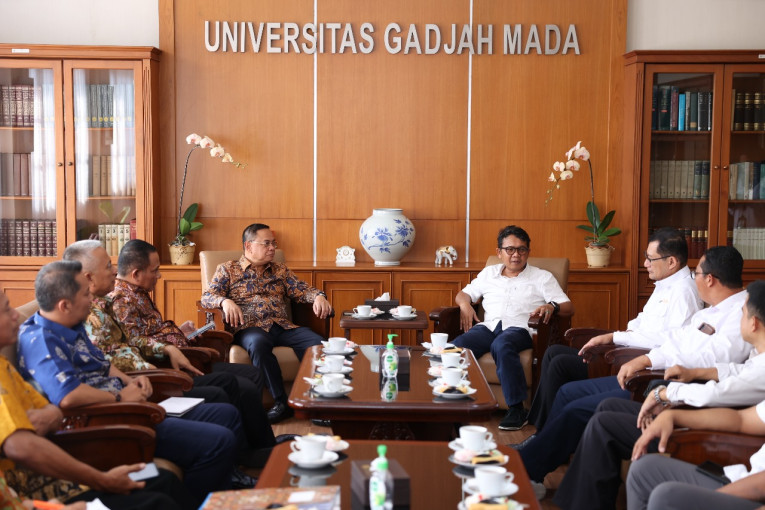
Universitas Gadjah Mada received a visit from the Regent of Pati, Sudewo, on Monday (Jun. 16) at the UGM Central Office.
This visit became an important momentum to strengthen relations between higher education institutions and local governments. This is particularly true in the fields of education and community service.
The regent was received directly by UGM Vice Rector for Student Affairs, Community Service, and Alumni, Dr. Arie Sujito.
He was joined by the Director of Community Service, Dr. Rustamadji, and Professor Abdul Rohman.
Professor Rohman is a lecturer at the UGM Faculty of Pharmacy and also a Field Supervising Lecturer (DPL) for the Community Service Program (KKN).
In a warm dialogue, Regent Sudewo conveyed the Pati Regency Government’s strategic initiative to support education.
One such initiative is the pre-university program aimed at high school graduates.
This program includes university information, mapping student interests and talents, and academic enrichment with professional mentors.
All these activities are provided free of charge, not using regional budget (APBD) funds. Instead, they utilize CSR funds from Bank Jateng, local industries, and the local Baznas.
“If UGM has a program like this, we entrust Pati’s children to participate,” Regent Sudewo said hopefully.
On the same occasion, the deployment of UGM students in the Community Service Program (KKN) was also a main topic of discussion.
It is planned that more than 150 UGM students will be deployed to Pati Regency on Jun. 23.
They will collaborate with students from IPB University and local universities.
The regent expressed his desire for the next KKN period to be developed thematically.
It should not be limited to the education sector; it should also include tourism, fisheries, and livestock.
He emphasized that the utilization of local potential must be managed integrally and involve students as agents of change in the community.
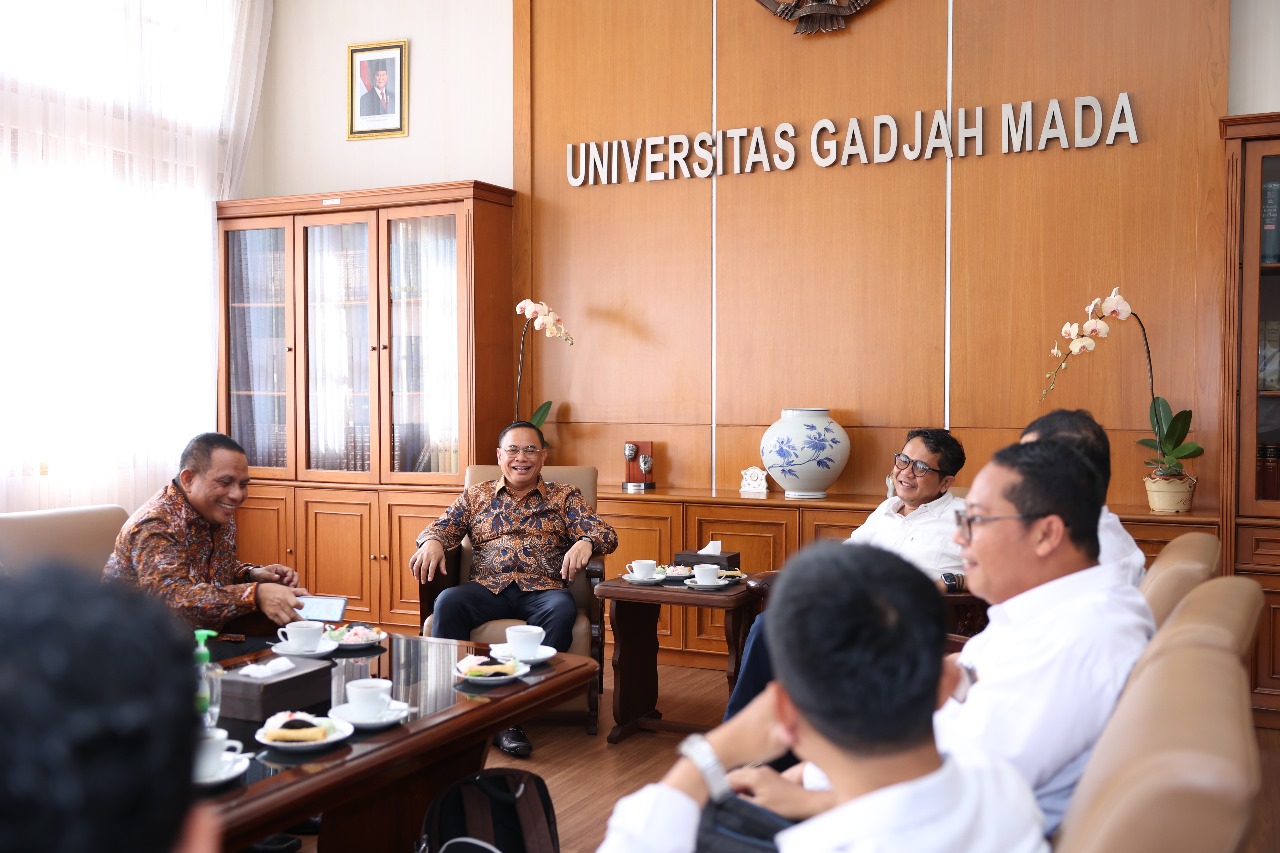
UGM Vice Rector, Dr. Arie Sujito, responded positively to the invitation and affirmed that UGM is ready to serve as a strategic partner to local governments.
According to Dr. Sujito, community service is one of the university’s main mandates, to be carried out collaboratively and to have a real impact.
He also emphasized the importance of an adaptive approach to local needs in each KKN program.
“This synergy is a manifestation of the university’s responsibility to the nation. We are ready to be present and learn from the Pati community, while also bringing innovative solutions,” Dr. Sujito said.
Furthermore, Dr. Sujito added that strengthening students’ roles in society should be directed toward sustainable social transformation.
He assessed that KKN is not merely an academic routine but an important vehicle in building social empathy, leadership, and sensitivity to grassroots problems.
He hopes that the presence of students in Pati will have a long-term impact on both the community and students’ character formation.
“UGM will continue to encourage students not only to go into the field but also to be able to become catalysts for change. Thus, community service becomes part of a holistic learning process,” Dr. Sujito explained.
In line with this, the Director of Community Service, Dr. Rustamadji, conveyed that UGM is developing a KKN model based on impact measurement and sustainability.
In the upcoming KKN implementation, UGM will involve students from the Faculty of Psychology to conduct pre- and post-program assessments.
This is particularly true in the aspects of character building and social change.
This approach will also help UGM in designing more responsive programs in the future.
“We want this program not only to be completed within two months but to have a long-term impact that can be measured and followed up,” Dr. Rustamadji said.
In the tourism sector, the regent highlighted Pati Regency’s great potential, which has not been fully utilized.
He mentioned several local riches, such as Pamelo oranges, Jollong coffee, and a dam across from Sunan Muria’s tomb, as religious tourism.
This potential, according to Regent Sudewo, can be an economic driver for the community if managed with a research-based, culturally informed approach.
“We hope UGM can conduct studies that help map our tourism development strategy to be more competitive,” Regent Sudewo hoped.
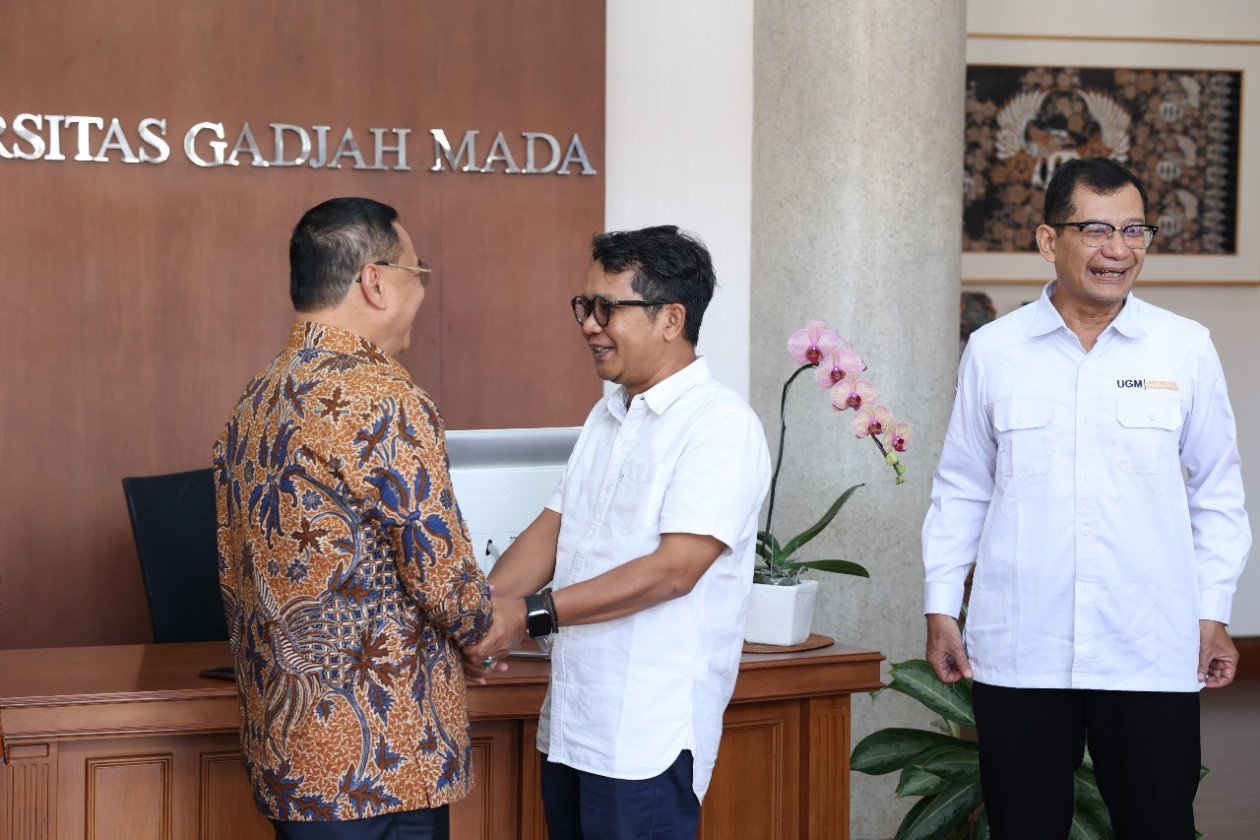
In the audience, the regent also shared his ideas on developing a fisheries laboratory in Pati Regency.
According to the regent, Pati is the second-largest salt producer in Indonesia, and ranks first in Central Java for aquaculture and capture fisheries production.
Research support from UGM, according to Regent Sudewo, will be very crucial in strengthening technology and innovation in the marine and fisheries sector.
“We hope UGM can be present not only as an academic partner but also a strategic partner in transforming leading regional sectors,” Regent Sudewo added.
Meanwhile, Professor Abdul Rohman highlighted the need for halal certification assistance for culinary MSMEs (Micro, Small, and Medium Enterprises) in Pati.
He mentioned that the potential of local food products such as nasi gandul, kepala manyung, and bandeng presto needs to be strengthened by securing halal certification.
This will enable them to penetrate wider markets.
As an academic and a native of the area, Professor Rohman also stated his readiness to oversee this effort through UGM’s research and community service networks.
“Many MSME actors are actually ready to develop, but don’t know how the halal certification process is done. This is a gap that higher education institutions can fill,” Professor Rohman explained.
Closing the audience, Professor Rohman expressed his hope that the collaboration between UGM and the Pati Regency Government would continue to expand.
This expansion should not be limited to KKN but also include aspects of community empowerment and human resource capacity building.
He also emphasized the importance of building a solid network among the local government, academics, and the community.
“As a native of Pati, I feel moved to contribute. It’s time for knowledge to return to its roots, to build the home region with a scientific and participatory approach,” Professor Rohman concluded.
This audience demonstrated a shared commitment to regional development through a knowledge-based approach.
UGM and the Pati Regency Government showed that cross-sector synergy is key to creating inclusive and sustainable change.
With a spirit of populism, independence, and sustainability, this collaboration is expected to be an inspiring model of community service for other regions in Indonesia.
Going forward, both parties are committed to expanding the scope of collaboration across various strategic sectors.
The hope is that this cooperation will not just end with a program but continue into a collective movement for the nation’s progress.
Author: Triya Andriyani
Post-editor: Afifudin Baliya
Photographer: Firsto