


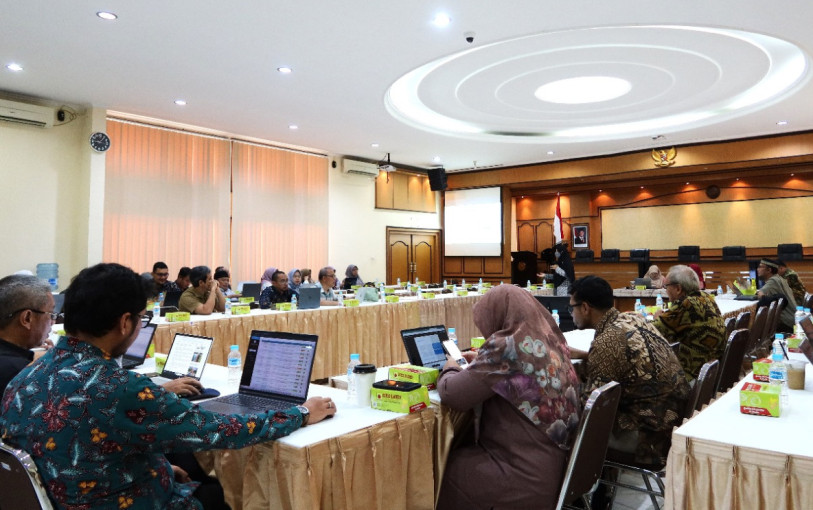
The generational gap, or the multigenerational phenomenon, has become one of the major challenges in higher education. In university, this phenomenon primarily involves lecturers and students from distinctly different generations. In the context of learning, students can be seen as clients whose characteristics must be understood. Therefore, efforts must be made to narrow this gap so that information delivery becomes more effective and comprehensive.
“Today’s students come from a generation that is vastly different from us, the lecturers of the past. In this era dominated by gadgets, we must understand the characteristics of students as our ‘clients’ to minimize the generational gap,” said Dean of the Faculty of Geography at Universitas Gadjah Mada (Geography UGM), Professor Muhammad Kamal, during a Self-Development Workshop for Lecturers themed “Effective Communication and Teaching with Generation Z”, held on Tuesday, Jun. 17, 2025..
The workshop invited three speakers from the Faculty of Psychology at UGM.
The first speaker, Dr. Rizqi Nur’aini A’yuninnisa, a lecturer at Psychology UGM, discussed the Characteristics and Mindset of Generation Z.
According to her, Generation Z is known for its unique traits, such as early access to technology, a preference for visual and interactive learning, responsiveness to instant feedback, and a tendency toward project-based and collaborative learning.
Dr. A’yuninnisa explained that advances in technology have made gadgets an essential part of daily life for Generation Z.
While these devices may sometimes serve as distractions, within the learning context, they can be valuable tools, provided they are used under clearly defined rules.
She emphasized that lecturers should establish a “rule of the game” to help students stay focused and prevent gadgets from becoming disruptive.
For example, setting guidelines on when and for what purposes gadgets may be used during class.
Another issue addressed was the mental health challenges often faced by Generation Z students.
Many are prone to emotional exhaustion or burnout, and often engage in self-diagnosis.
“This issue stems from underdeveloped socio-emotional aspects during their earlier education phases. As lecturers, we need to be more proactive in guiding our students. One of the basic principles to uphold is being an active and non-judgmental listener,” she explained.
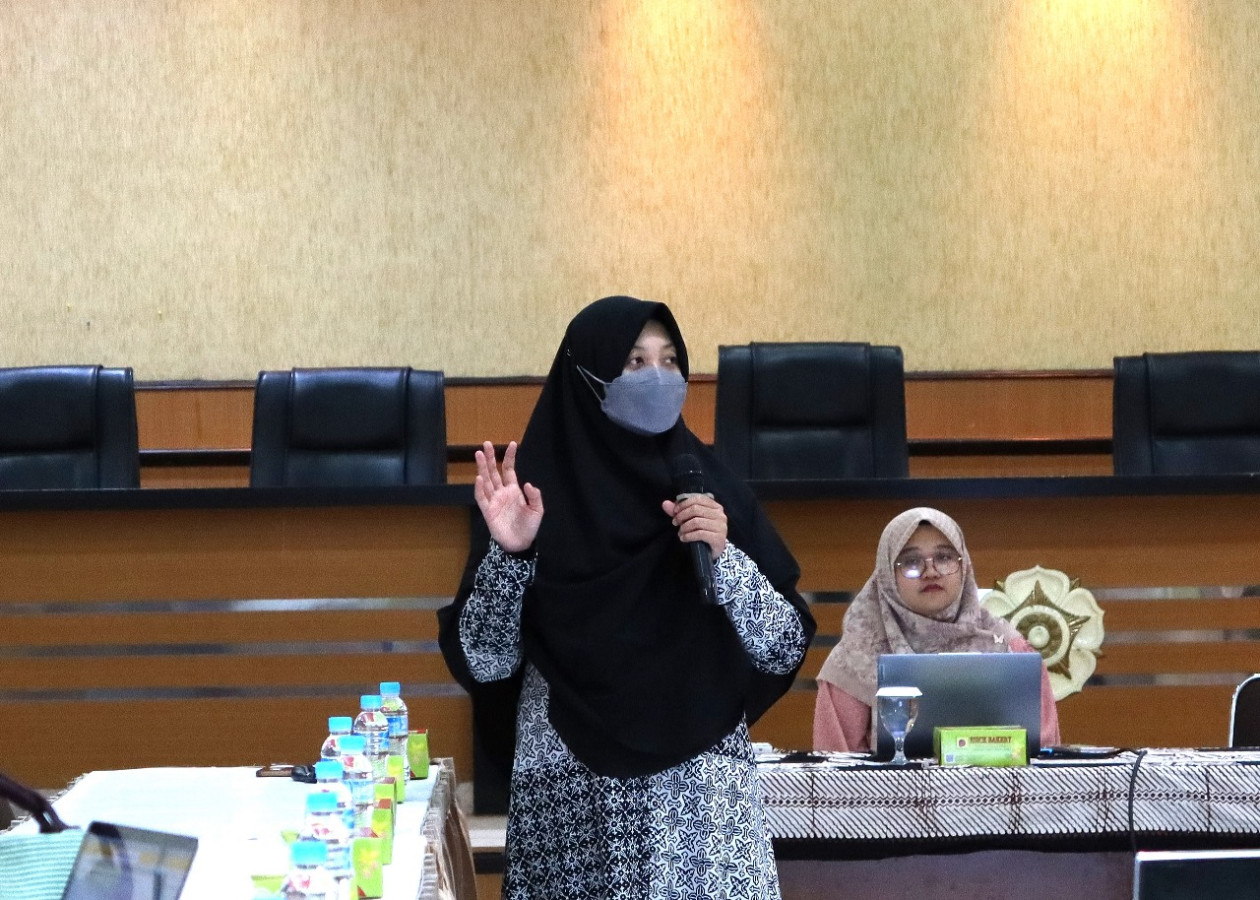
The next challenge relates to the learning preferences of Generation Z, which demand relevant, authentic, and interactive educational experiences.
They favor quick feedback, visual aids, and project-based methods.
By understanding these traits, she continued, lecturers can better align their teaching strategies with today’s students’ needs, thereby enhancing the effectiveness and educational goals.
Further insights were provided by psychologist Aisha Sekar Lazuardini Rachmanie, who spoke about how lecturers can build connection and empathy with Generation Z students using techniques such as active listening and reflective questioning.
During her session, Psychologist Rachmanie invited lecturers to share their experiences and challenges when dealing with students.
She also noted that Generation Z students sometimes need firm reminders to be more self-reflective.
To this end, she stressed the importance of setting expectations and boundaries from the beginning.
Clear yet open communication is key.
For instance, lecturers should inform students that responses will be given only during working hours and that formal language should be used in correspondence.
“Being firm means making it clear that students are here to learn, and that the faculty should act reflectively so students can learn from the process and the problems they share with us,” she stated.
In the third session, Fakhirah Inayaturrobbani, also a lecturer at Psychology UGM, presented material on teaching methods that appeal to Generation Z, including hybrid learning and technology.
The integration of technology is essential for students in this era, who are increasingly interested in digital learning methods such as quizzes through Quizizz, Mentimeter, or other gamified learning platforms.
The two-day workshop, held from June 17 to 18, 2025, was attended by all Geography UGM lecturers to deepen their understanding of student characteristics and create a more suitable learning environment.
On the second day, psychologist Ardian Rahman Afandi from Psychology UGM delivered two sessions on motivation and leadership for Generation Z. In addition, Syaifa Tania presented strategies for effective communication with Gen Z students.
Author: Lintang Andwyna
Editor: Gusti Grehenson
Post-editor: Lintang Andwyna