


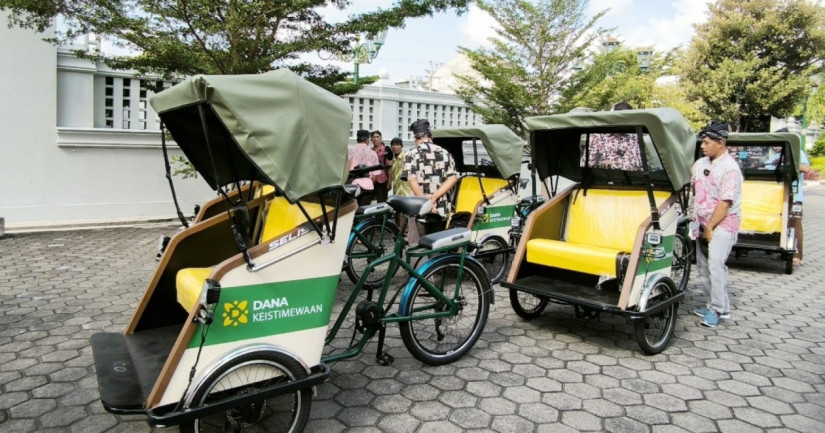
The transition from pedal-powered rickshaws to electric rickshaws is one of President Prabowo Subianto’s initiatives to improve public welfare. The program has been running since 2024 and has so far distributed more than 2,000 units to various regions across Indonesia. Elderly groups are prioritized as beneficiaries, in line with the President’s goal of empowering underprivileged communities.
Senior Researcher at the UGM Center for Transportation and Logistics Studies (Pustral UGM), Dr. Dewanti, emphasized that this initiative is positive news in supporting the concept of green and sustainable transportation in urban areas.
According to her, urban areas continue to struggle with traffic congestion and carbon emissions, which significantly worsen air pollution. Electric rickshaws, she said, can help reduce such pollution.
“I believe this program must be well prepared with the necessary infrastructure and regulatory framework,” Dr. Dewanti stressed on Wednesday (Dec. 3, 2025).
Electric rickshaws are now equipped with Internet of Things (IoT) technology to enhance user convenience.
Dr. Dewanti explained that the components include vehicle tracking, battery and electrical system monitoring, digital payment systems, safety sensors, and other supporting features.
She noted that this technology could make rickshaws more appealing and encourage tourists to choose them as a distinctive mode of transportation in Indonesia.
Nevertheless, the UGM Civil Engineering lecturer also pointed out several challenges that may arise, including the transition of old rickshaws to electric ones, the availability of charging infrastructure, Public Electric Vehicle Charging Stations (SPKLU), and the need for appropriate traffic regulations.
“In addition, battery waste must be properly managed to minimize environmental impacts,” Dr. Dewanti asserted.
With electric rickshaws priced at tens of millions of rupiah, Dr. Dewanti acknowledged that pedal-powered rickshaws have lower operational costs.
However, she noted that conventional rickshaws may be perceived as less humane because they rely heavily on human labor for transportation.
Dr. Dewanti expressed support for the government’s electric rickshaw program, provided that its development minimizes unintended social impacts.
She emphasized that pedal rickshaw drivers need proper operational guidance and that limits on the number of electric rickshaws are necessary to prevent worsening congestion.
“Electric rickshaw drivers must be equipped with knowledge of the technology, its operation, and maintenance,” she concluded.
Author: Hanifah
Editor: Gusti Grehenson
Post-editor: Lintang Andwyna
Photograph: Suara.com