


As Indonesia enters the peak of the rainy season from November 2025 to February 2026, various regions are facing an increased risk of landslides and flash floods. Professor Dwikorita Karnawati of Geological and Environmental Engineering at Universitas Gadjah Mada (UGM) emphasized that current atmospheric conditions and rainfall intensity could trigger extreme events in vulnerable areas. A series of recent disasters in West Sumatra, North Sumatra, and Aceh indicates that similar threats may occur in other regions with comparable landscape characteristics.
“These events demonstrate the vulnerability of steeply sloped areas, regions experiencing land-use change, and active tectonic zones with fragile geological conditions across Indonesia,” she said on Friday (Dec. 5).
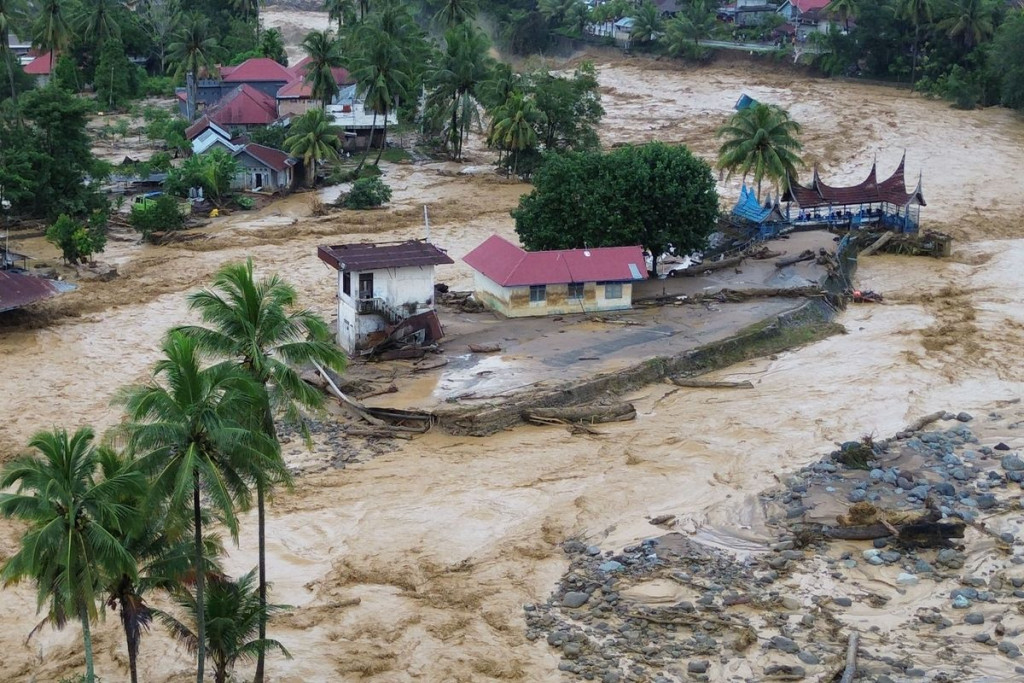
Professor Karnawati explained that debris flows, a mixture of mud, rocks, wood, and sediment, can travel at very high speeds when extreme rainfall strikes mountainous regions.
Such material can hit settlements and infrastructure within seconds, making communities living along riverbanks and below slopes a priority for warnings and preparedness.
She stressed that Early Warnings issued by the Meteorology, Climatology, and Geophysics Agency (BMKG) must be accompanied by strengthened community capacity to enable rapid and appropriate responses.
“Debris flows of this kind are extremely destructive and demand immediate action from residents in vulnerable zones,” she said.
According to Professor Karnawati, empirical data from BMKG indicate that tropical cyclone seeds and cyclones tend to increase from December through March or April of the following year.
This phenomenon is more dominant in the Southern Hemisphere, meaning regions south of the equator must remain on high alert for extreme weather.
Areas such as Java, Bali, Nusa Tenggara, southern and southeastern Sulawesi, Maluku, and southern Papua fall within zones that may experience intense rainfall capable of triggering landslides and floods.
“These regions should be in a state of HIGH ALERT for extreme weather, similar to what has recently occurred in Sumatra,” she noted.
To address the potential expansion of risks, Professor Karnawati underscored the importance of swift measures in disaster-prone areas. Re-identifying red zones and restricting human activities during early warning periods are initial steps that local governments need to take.
In addition, the preparation of evacuation routes and safe shelters is crucial, particularly for vulnerable groups such as persons with disabilities, the elderly, pregnant women, and children.
“These measures must be implemented immediately in areas designated under BMKG early warnings,” she said.
Local governments are also urged to ensure their contingency plans are ready for emergencies. Such plans include logistics for three to six days, first-aid facilities, safeguarding residents’ important documents, and strengthening communication networks.
The availability of evacuation equipment and heavy machinery is an essential element in accelerating emergency response efforts on the ground.
“All of these facilities must be ready and adequate so that responses can be carried out without obstacles,” Professor Karnawati stated.
She further highlighted that inter-agency coordination is a vital component in strengthening preparedness.
Integration with BMKG and the National Disaster Management Agency (BNPB) includes the potential implementation of weather modification operations if necessary to reduce rainfall intensity in critical areas.
These collaborative efforts are expected to accelerate response times and minimize potential losses.
“Strong coordination enables risk reduction measures to be implemented more effectively,” she said.
Professor Karnawati emphasized that the series of disasters in Sumatra should be understood as a serious warning from nature.
Mitigation, she argued, must not be regarded as a temporary effort but rather as a long-term strategy rooted in environmental protection. Ecosystem restoration, spatial planning, and control must form the foundation for building disaster resilience.
“Disaster mitigation must be based on environmental restoration and protection to realize a better and more sustainable civilization,” she stressed.
In closing, Professor Karnawati called on all stakeholders to act swiftly and in a synergistic manner in the face of potential extreme weather in the coming months.
She warned that unstable atmospheric conditions could exacerbate risks in vulnerable areas if not correctly anticipated. Cooperation among institutions, local governments, and communities is deemed essential to ensure that mitigation efforts are practical.
“We must act now before extreme rainfall amplifies the threats in hydrometeorologically vulnerable areas,” she concluded.
Author: Triya Andriyani
Post-editor: Rajendra Arya
Photographs: Donnie Trisfian and Kompas