


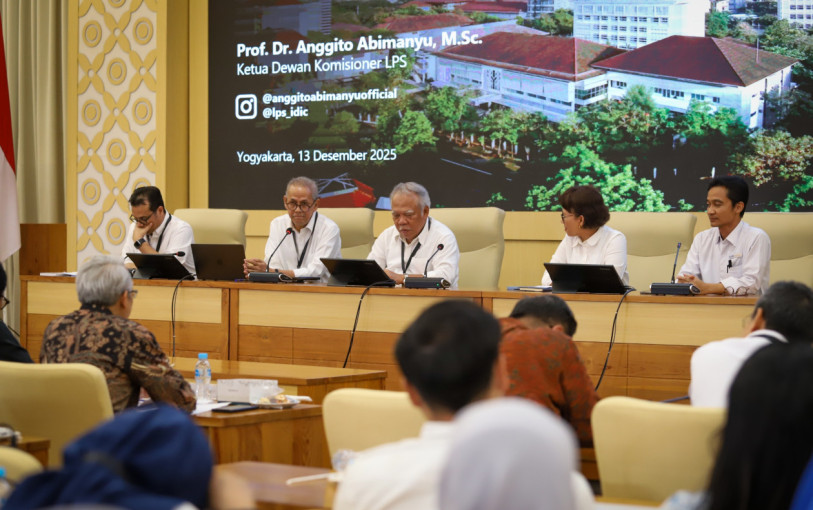
Universitas Gadjah Mada (UGM) and the Gadjah Mada Alumni Association (Keluarga Alumni Gadjah Mada/Kagama) held a strategic forum designed to connect leading campus research innovations and ideas with the real needs of society and the business sector. Packaged through the Kagama Policy Dialogue, the forum was aimed at promoting evidence-based public policy and is expected to generate several outputs, including policy briefs, published discussion results, and an academic–practitioner action plan network map to support policy implementation.
Member of the Kagama Central Executive Board, Expert Council, and Director of the Indonesia Deposit Insurance Corporation (Lembaga Penjamin Simpanan/LPS), Professor Anggito Abimanyu, said the initiative was motivated by recurring policy failures stemming from the absence of academic studies and research as its foundation. He encouraged the formulation of more public policies derived from rigorous research findings.
“This idea is essentially to ensure that every policy is based on reputable research and publications,” he stated on Saturday (Dec. 14) at the Multimedia Room of the UGM Central Office.
UGM Rector, Professor Ova Emilia, explained that the forum represents a collaboration between academics and practitioners to foster evidence-based public policies. She emphasized that the initiative aligns with UGM’s long-term vision and reflects an ongoing paradigm shift within the university.
“We are also transforming our paradigm from a teaching-centered institution into a research and development center,” she said.
Chairperson of the Kagama Central Executive Board, Basuki Hadimuljono, expressed hope that the initiative would become an annual agenda within UGM’s Anniversary celebrations and that the research conducted could be directly reported to the public.
Echoing Hadimuljono’s remarks, UGM Vice Rector, Dr. Danang Sri Hadmoko, stated that this edition of the Kagama Policy Dialogue addressed several themes, including digital transformation and artificial intelligence, energy transition, food security, health information, and economic and ecological development.
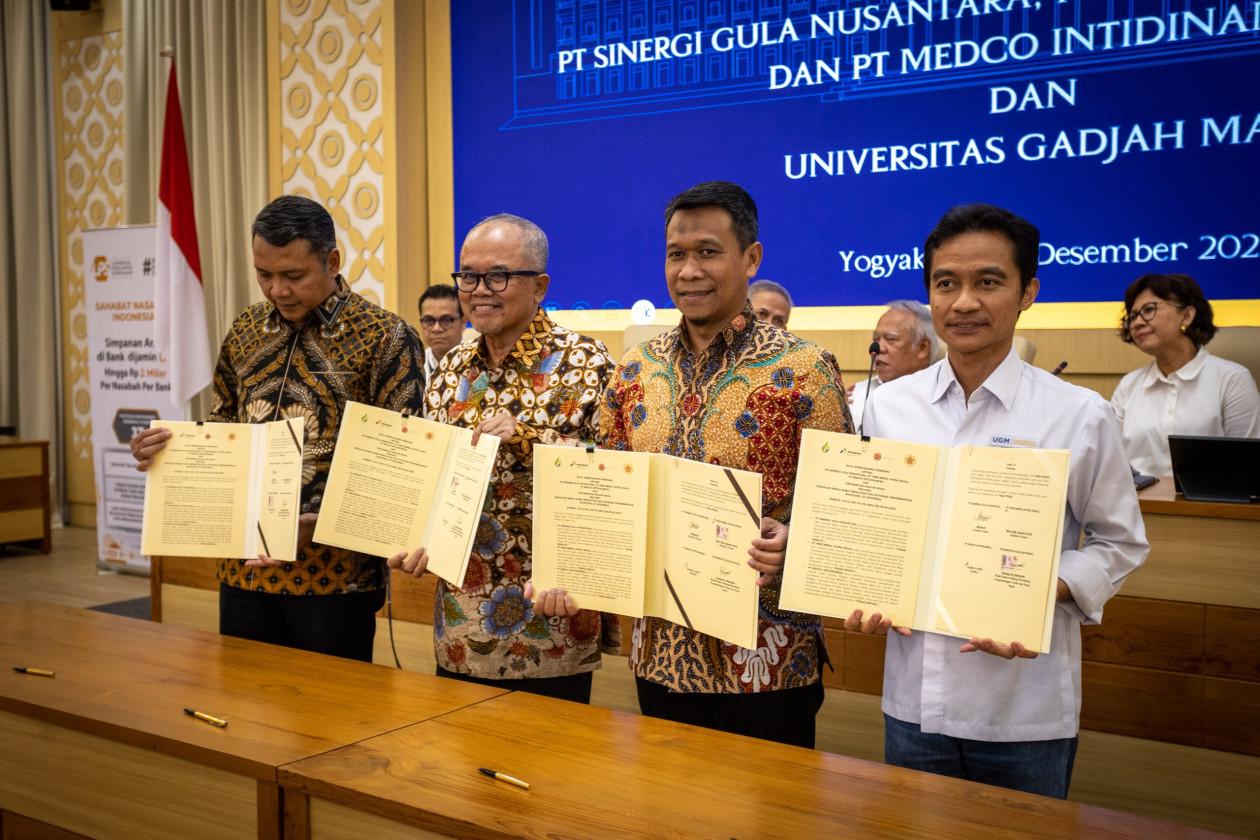
In relation to the energy transition program, UGM signed cooperation agreements with industry partners involved in a bioethanol consortium.
“With regard to the energy transition, this has been immediately followed up with the signing of a Memorandum of Understanding and Cooperation Agreements related to the bioethanol consortium,” he explained.
On the same occasion, a cooperation charter was also signed for research and development activities and bioethanol advocacy in Indonesia among UGM, PT Sinergi Gula Nusantara, PT Pertamina Patra Niaga, and PT Medco Intidinamika.
Through this memorandum of understanding, the parties agreed to conduct studies on acceleration and revitalization plans as part of a quick-win program to develop bioethanol in Indonesia.
Dr. Hadmoko further elaborated that the scope of the collaboration includes studies on the long-term feedstock potential to support the sustainability of the bioethanol industry, analysis of challenges in the household sector related to the use of ethanol as a substitute for liquefied petroleum gas (LPG), assessment of the impact of ethanol blending of up to 10 percent or more on internal combustion engine performance, as well as the formulation of recommendations and educational advocacy for bioethanol development in Indonesia.
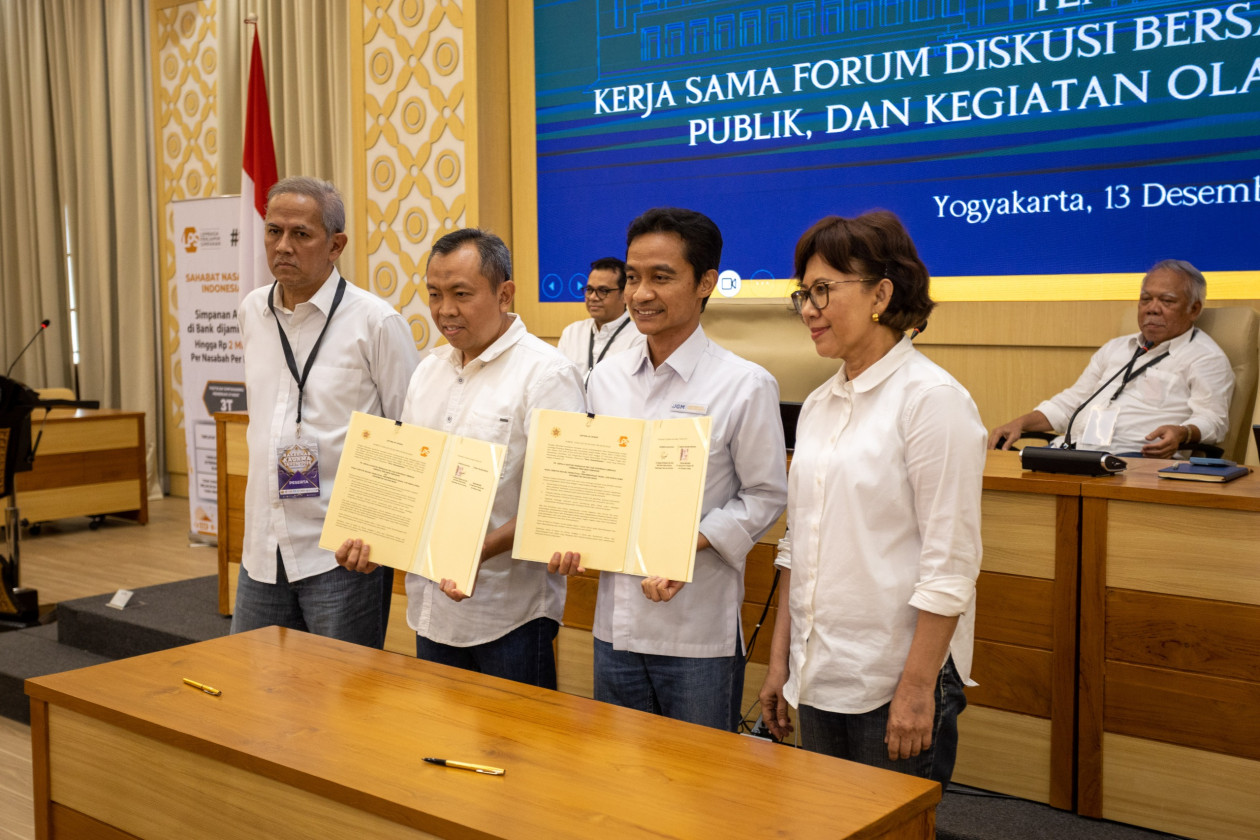
At the conclusion of the Kagama Policy Dialogue, a Letter of Intent (LoI) was also signed between UGM and the LPS, represented by the Head of the LPS Public Relations Division, Nur Budiantoro.
Both parties agreed to pursue cooperation through joint discussion forums that bring together industry leaders, academics, and public officials to deliberate on strategic issues in the financial and economic sectors, while opening opportunities for collaborative and constructive partnerships.
Author: Salwa
Editor: Gusti Grehenson
Post-editor: Rajendra Arya
Photographer: Donnie Trisfian