


Muhammad Dicky Mandiri Nasution, a doctoral student at the Faculty of Animal Science, Universitas Gadjah Mada (Animal Science UGM), expressed his gratitude for the opportunity to undertake a visiting researcher program at the University of Miyazaki, Japan. The program is part of the International Publication Quality Improvement Program (PKPI) organized by the Directorate of Resources, Directorate General of Higher Education, specifically for recipients of the Master’s to Doctoral Education for Outstanding Graduates (PMDSU) scholarship.
“This is a valuable opportunity for me to conduct part of my dissertation research at the University of Miyazaki, Japan,” he said on Tuesday (Dec. 16).
Nasution explained that the PKPI program aims to enhance students’ capacity to produce internationally reputable scientific publications through research activities conducted over four to six months, either online or onsite.
During his stay in Japan, his research is supervised by Dr. Takahiro Gondo, an expert in forage plant genetics who serves as the host professor at the Laboratory of Forage Breeding and Molecular Genetics at the University of Miyazaki. Despite this, he continues to coordinate closely with his supervisory team in Indonesia, namely Professor Nafiatul Umami and Dr. Asih Kurniawati.
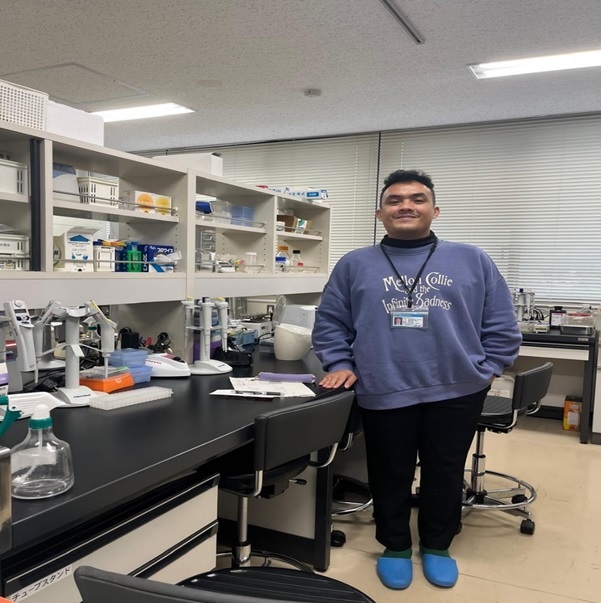
In completing his dissertation research, Nasution focuses on the genetics and molecular biology of elephant grass. His study is situated within the field of molecular forage science and plant genetics, particularly on Pennisetum purpureum (elephant grass).
In depth, he explores genetic and cytogenetic analysis techniques to identify the genetic potential and physiological characteristics of elephant grass that can support the development of superior cultivars in Indonesia, particularly to address the challenges of climate change and limited feed resources.
“The research activities focus on plant genetics and molecular studies to support breeding efforts and improve the quality of forage crops. Through research on climate-resilient forage, this program is expected to contribute to food security and the development of sustainable feed technologies,” he explained.
Reporter: Animal Science UGM/Satria
Author: Agung Nugroho
Post-editor: Rajendra Arya