


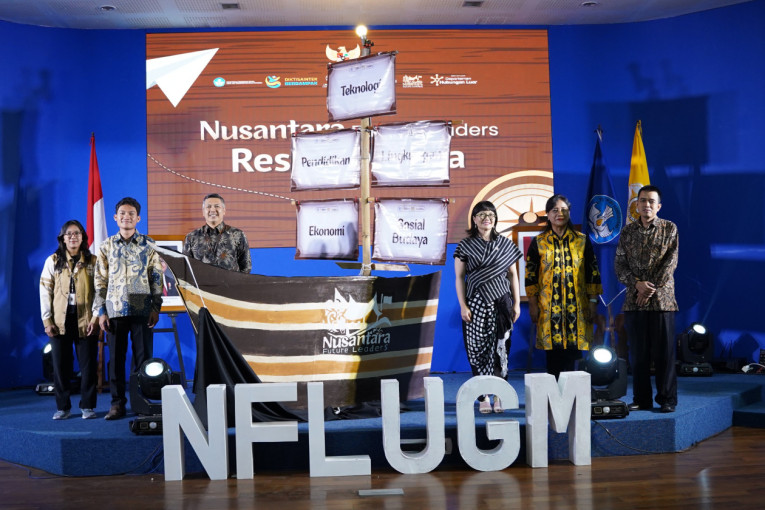
A total of 100 senior high school Student Council (OSIS) presidents from across Indonesia took part in Nusantara Future Leaders (NFL) 2025, a national gathering held from Dec. 18 to 22, 2025, at Universitas Gadjah Mada (UGM). Organized under the auspices of the UGM Student Executive Board (BEM KM UGM), the event served as a space for dialogue, discussion, and leadership learning for young people from diverse regions.
NFL 2025 General Coordinator Syafina Alya Darindrani stated that the program aimed to strengthen participants’ leadership capacities. The attendees, comprising student organization presidents from various high schools across the country, gathered for this forum.
NFL 2025 was designed as a learning platform that not only focuses on ideas but also on shaping the character of Indonesia’s future leaders who are inclusive and uphold integrity.
“NFL is a space to learn and grow. We want our friends to return home with stronger capacities as future leaders,” she said on Monday (Dec. 22) in a statement released to the media.
In his opening remarks, Chair of BEM KM UGM, Tio Ardiyanto, invited participants to understand the realities of social systems established long before they were born. He used the Mahabharata war as an analogy to reflect on contemporary leadership challenges.
“We live within systems that often make us victims. We need to learn smart defensive and offensive strategies, not only in war but also in social realities such as the education system,” he said.
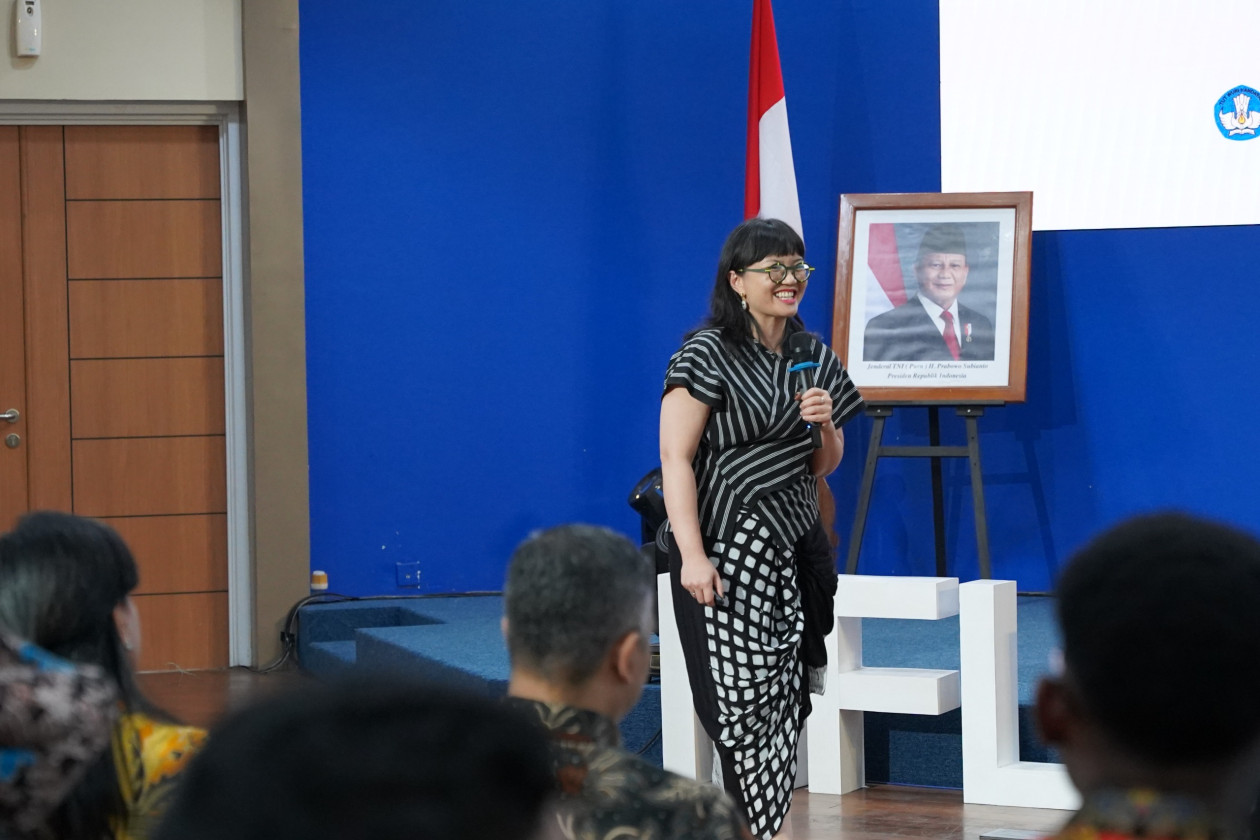
Vice Minister of Higher Education, Science, and Technology, Professor Stella Christie, in her address, discussed the challenges of hoaxes and disinformation in the digital era. She emphasized the importance of thinking with both reason and conscience.
“Nothing is more important than thinking based on reason and the heart,” she stressed.
Professor Christie presented global research findings showing that misinformation and disinformation have become some of the world’s most serious threats today.
“More than 1,100 experts from 136 countries have identified misinformation as a major threat because it influences human perceptions and behavior,” she explained.
She also highlighted the role of artificial intelligence (AI) in facilitating the production of false content. Professor Christie cited findings that chatbots increasingly repeat incorrect information, suggesting that while technology advances, falsehoods tend to advance alongside it.
According to her, the root of hoaxes lies not solely in technology but in how humans think. She introduced the concept of cognitive reflection, namely the ability to think reflectively and analytically.
Professor Christie explained that the human brain operates with two thinking systems: system one is fast, automatic, and practical, but prone to errors, while system two is slower, analytical, and less prone to error.
“When we activate the second, slower, and more analytical thinking system, we are better able to distinguish between hoaxes and truth,” she said.
Professor Christie added that knowledge literacy and simple reflective practices, such as pausing briefly before sharing information, have proven effective in reducing the spread of hoaxes. She illustrated that taking just three seconds to think before sharing can already make a significant difference.
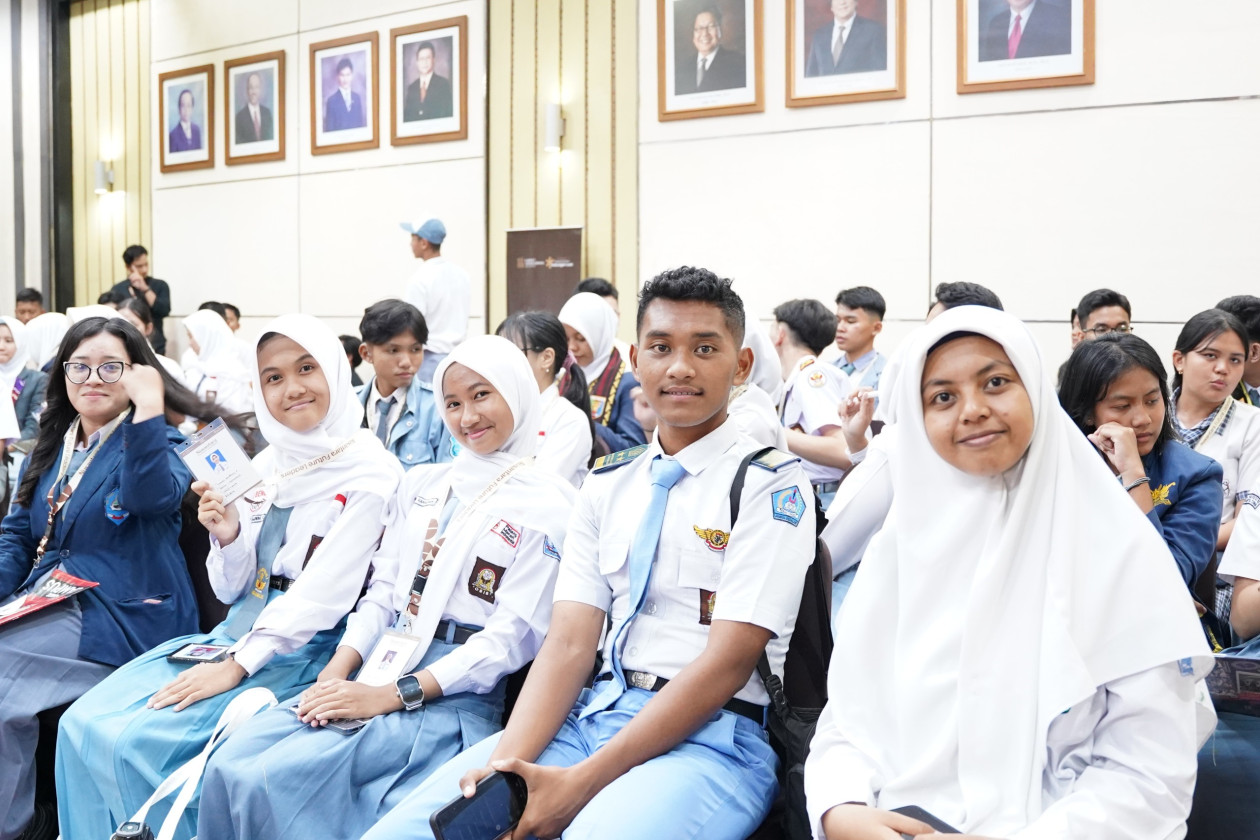
She concluded her presentation by reminding participants that social media algorithms are designed to maximize attention rather than accuracy, underscoring the need to be more discerning in identifying truthful content.
“That is why I am speaking to you. Some of you may become leaders who will make decisions in the future,” she concluded.
Vice Rector for Education and Teaching at UGM, Professor Wening Udasmoro, emphasized that leadership is not measured solely by intellectual ability but also by empathy, humility, and an inclusive spirit.
“A leader is not only intelligent but also humble, empathetic, supportive, and has a strong sense of tolerance,” she added, while encouraging participants to make use of the NFL as a space for cross-regional networking.
Author: Hanifah
Editor: Gusti Grehenson
Post-editor: Rajendra Arya
Photographer: Jesi