


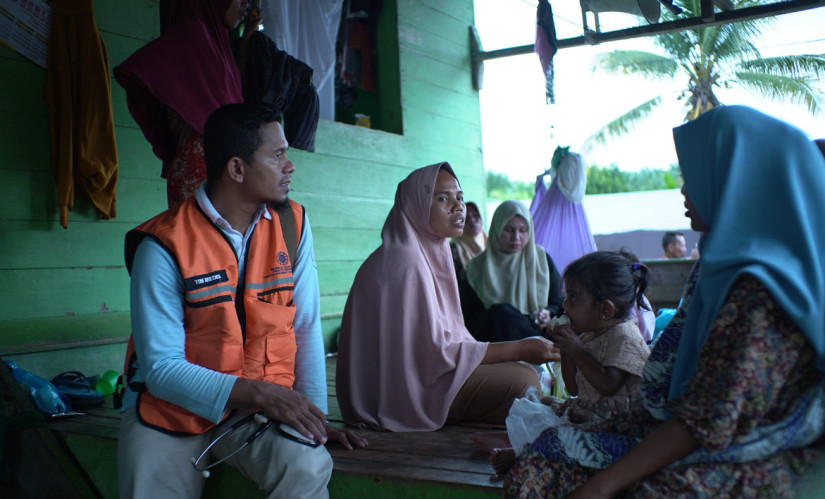
Universitas Gadjah Mada (UGM) has deployed its Emergency Medical Team (EMT) to support disaster response efforts in Aceh. The deployment of volunteers is supported by a funding grant from the Ministry of Higher Education, Science, and Technology obtained through UGM’s Disaster Working Group. The grant funds four EMT units composed of medical personnel, deployed on a weekly rotating basis. These teams play a crucial role in delivering health services during the emergency phase through the disaster recovery period.
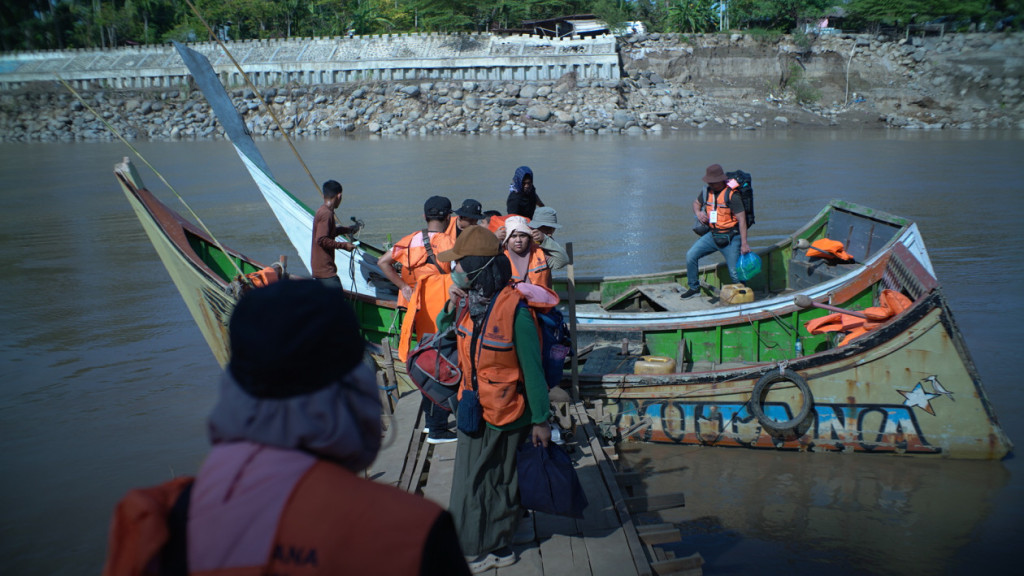
The Coordinator of the EMT from the Faculty of Medicine, Public Health, and Nursing (FK-KMK UGM), Sutono, a lecturer at the Department of Basic and Emergency Nursing, explained that FK-KMK UGM deployed its first team around the second week after the disaster. Each team serves for approximately eight days to maintain effectiveness and ensure personnel safety in the field.
“As of Dec. 19, the third team has been on duty for four days and will complete its assignment on Dec. 21, followed by the fourth team starting on Monday, Dec. 22,” he said on Monday (Dec. 29).
This rotation system is implemented due to the high level of stressors in disaster-affected areas, particularly during the emergency phase. Each EMT consists of 12 multidisciplinary personnel, including general practitioners and specialists, nurses, nutritionists, sanitarians, technicians, pharmacists, and a team coordinator.
During the third team’s deployment, Sutono served as team leader, coordinating all activities while stationed in Lhoksukon District, North Aceh Regency. The main post of the FK-KMK UGM EMT is located at dr. Muchtar Hasbi Hospital, a Type D Pratama General Hospital.
“The presence of this team is focused on strengthening the functions of existing hospital services and health facilities,” he explained.
Sutono noted that the establishment of the EMT is closely linked to UGM’s extensive experience in disaster management across Indonesia. From the Mount Merapi eruption to earthquakes in Palu, Nias, and Cianjur, UGM has consistently initiated Disaster Working Groups.
“These experiences form a strong foundation and rationale for our response to the disaster in North Aceh,” he said.
In the field, the EMT also played a role in establishing a Health Emergency Operation Center (HEOC). Ideally, the HEOC should be activated in the very early minutes following a disaster as a command and coordination center for health responses. However, due to limited local experience, the HEOC only began operating optimally in the second week.
“Ideally, EMTs should continue an existing HEOC, but since it had not yet been established, we helped initiate it,” Sutono said.
The HEOC’s responsibilities include collecting data from 19 affected community health centers (puskesmas), coordinating logistics distribution, and compiling daily health condition reports.
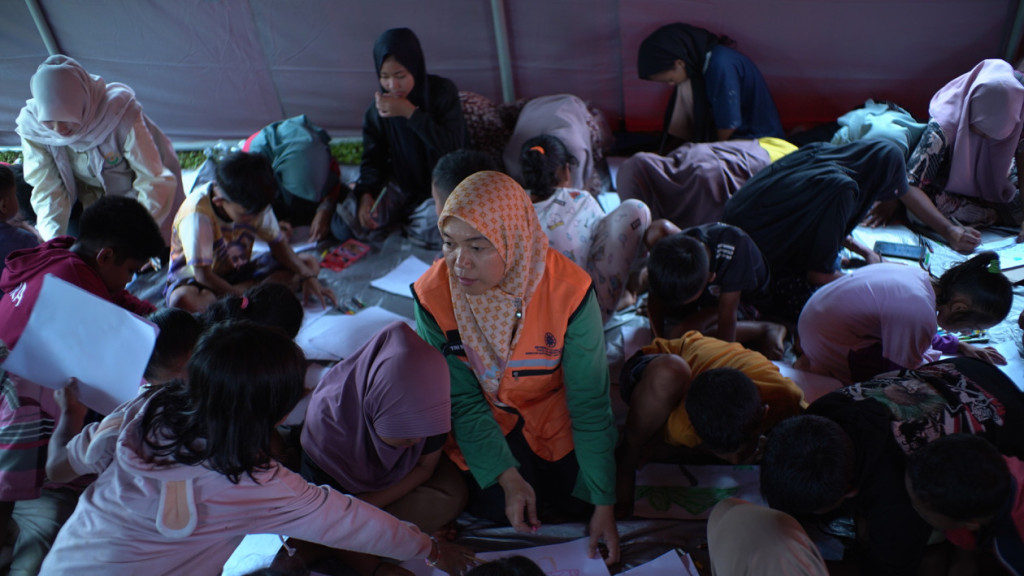
Sutono explained that the most common cases currently handled include skin diseases such as itching and fungal infections, acute respiratory infections (ARI), hypertension, and environmental health issues that affect the psychological condition of survivors. In addition, psychologists within the team conduct mental health assessments of survivors.
“In addition to addressing physical health complaints, we also provide psychological services,” he said.
Beyond medical services, the technical team also ensured the availability of electricity and clean water at the hospital, including activating a generator at dr. Muchtar Hasbi Hospital, which had not been used since it was procured five years ago.
“Our team stepped in directly to activate a generator that had never been used before,” he explained.
Regarding the grant funding from Kemdiktisaintek, Sutono said it is allocated to EMT transportation costs, the procurement of medical equipment and medicines, and logistics for both survivors and team members during deployment.
He added that the grant application also complements FK-KMK UGM’s internal funds, which are explicitly allocated for emergency disaster response. Sutono expressed hope of continuing to expand funding networks and collaborations to enable broader contributions to emergency response and post-disaster recovery.
Author: Ika Agustine
Editor: Gusti Grehenson
Post-editor: Rajendra Arya
Photographs: UGM Medical Team