


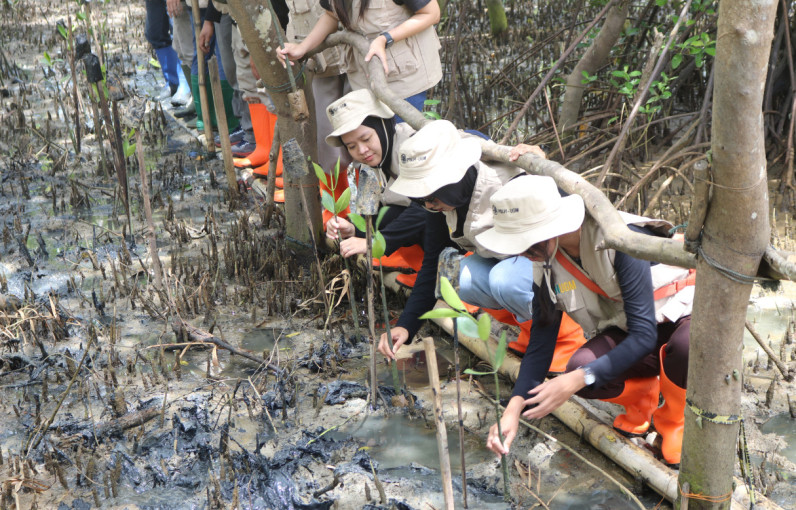
The Center for Environmental Studies at Universitas Gadjah Mada (PSLH UGM) carried out a community service program in Patikang Village, Pandeglang Regency, Banten, on Dec. 13. As part of this initiative, PSLH UGM collaborated with a tourism village known as Lembur Mangrove Patikang to strengthen partnerships aimed at enhancing ecotourism potential and mangrove rehabilitation.
Professor Djati Mardiatno, a researcher at PSLH UGM, stated that the community service activity represents support for the global movement of the United Nations Environment Assembly on “Building Coastal Resilience through Mangrove Rehabilitation: Local Contributions to Global Solutions.”
According to Professor Mardiatno, mangrove ecosystems play a crucial role in minimizing disaster risks, particularly tsunamis. Discussions during the activity also revealed that the Patikang community is already familiar with mangroves.
“Various forms of utilization have been practiced by the Patikang community, generating economic value,” he said in a statement sent to the media on Thursday (Dec. 31).
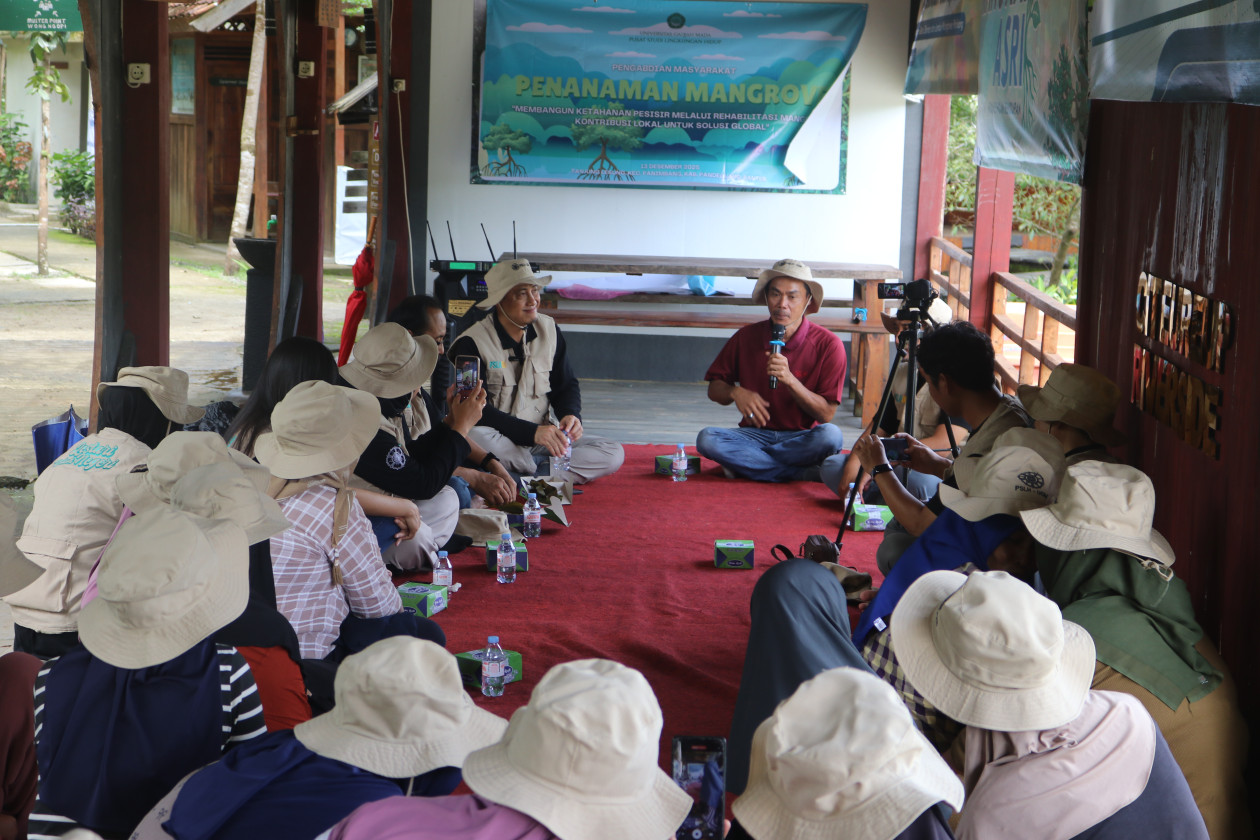
Professor Mardiatno also presented a range of issues related to mangrove ecosystems, including ecosystem services, climate change, and disaster mitigation. This is particularly relevant given that a tsunami struck parts of Banten in 2018.
The disaster mitigation education and mangrove rehabilitation activities are expected to enhance the community’s understanding of the risks posed by disasters, which may occur at any time.
Meanwhile, Deden Sudiana, manager of the Lembur Mangrove Tourism Village, explained that Lembur Mangrove has now empowered local communities.
Many residents of Patikang are actively involved in the seedling process, with nearly every household currently maintaining between 2,000 and 3,000 mangrove seedlings.
“Through mangrove conservation, the mangrove ecosystem area has become a habitat for many marine species,” he said.
Professor Mardiatno further noted that the mangrove forest in Patikang serves as a nursery ground for mackerel (ikan tenggiri), as evidenced by the frequent presence of juveniles.
In addition, juvenile horseshoe crabs (belangkas), a protected species, have also been found within the Patikang mangrove ecosystem. These findings further underscore the importance of conserving the mangrove forest ecosystem in the Patikang area.
Author: Gusti Grehenson
Post-editor: Rajendra Arya
Photographs: PSLH UGM