


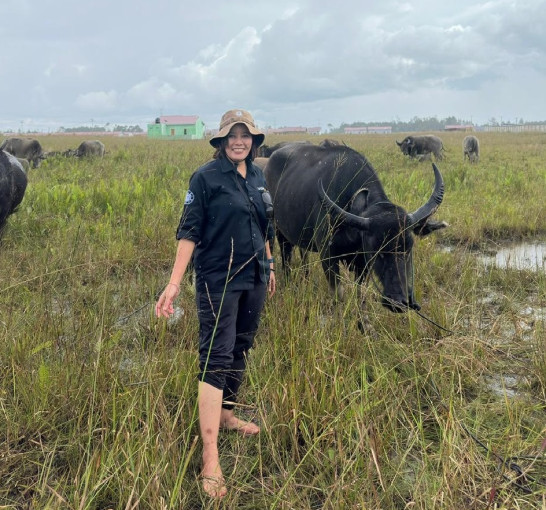
A lecturer at the Faculty of Animal Science, Universitas Gadjah Mada (Animal Science UGM), Professor Tri Satya Mastuti Widi, has conducted a study titled “Development of Local Wisdom-Based Sustainable Buffalo Production Systems to Support National Food Self-Sufficiency.” The research was carried out across several locations, including the Gayo buffalo production system in Gayo Lues Regency, Aceh Province; the Tapanuli buffalo in Toba and Samosir regencies, North Sumatra Province; and the Kalang buffalo in Hulu Sungai Utara and Hulu Sungai Selatan regencies, South Kalimantan Province.
The study was conducted as part of a catalyst scheme collaboration, a strategic research initiative involving Universitas Malikussaleh in Aceh, Universitas Sumatera Utara in Medan, and Universitas Lambung Mangkurat in Banjarbaru, South Kalimantan.
According to Professor Widi, commonly known as Vitri, buffalo are among Indonesia’s strategic livestock commodities, playing a vital role in supporting national food self-sufficiency through meat and milk production, providing agricultural labor, and contributing to social, cultural, and ecological significance.
In several regions, she noted, buffalo have become an identity marker and an integral part of local communities’ collective culture. In South Kalimantan, Kalang buffalo, also known as Kalimantan buffalo, play a crucial role in maintaining swamp ecosystems and supporting wetland conservation.
“Research on buffalo addresses the challenge of sustainability. Buffalo populations in Indonesia continue to decline from year to year. This condition is influenced by low productivity, the dominance of extensive and traditional farming systems, the conversion of grazing land, conflicts over land use, and weak farmer institutions,” she said at the UGM campus on Monday (Jan. 12).
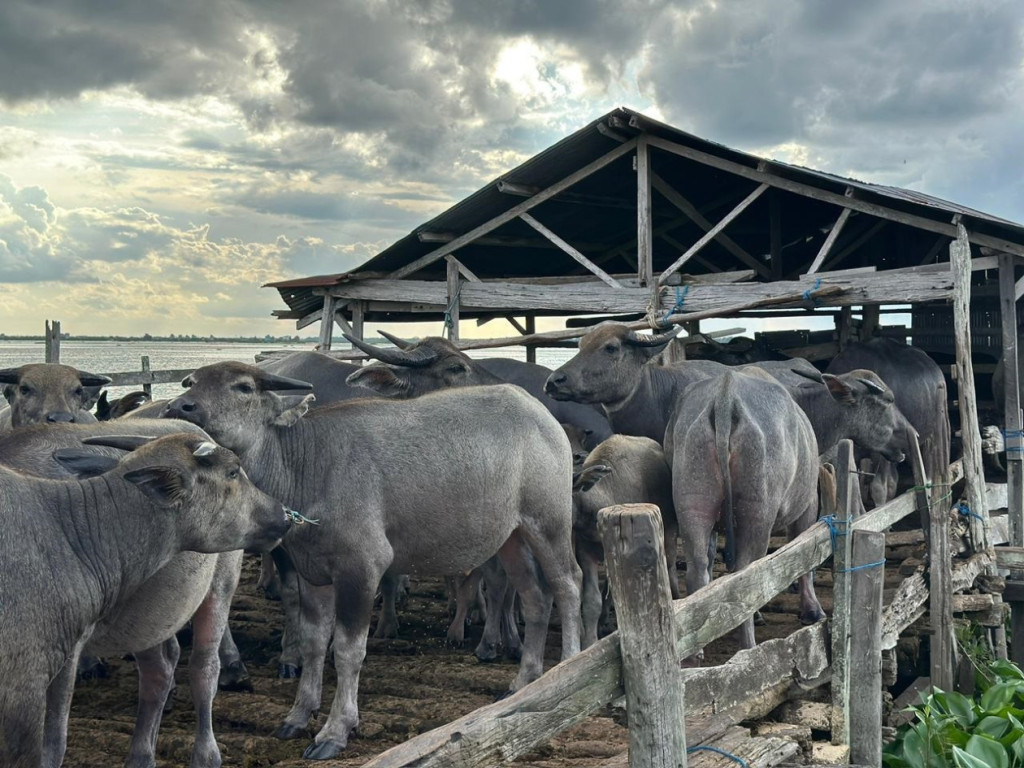
Professor Vitri explained that her research adopts a holistic and integrated approach to assess and design sustainable buffalo production systems.
The analysis emphasizes three dimensions of sustainability, economic, ecological, and social, across multiple levels of production systems, ranging from individual animals and farmers to regional contexts.
The main focus of the research includes analyzing genetic diversity, phenotypic characteristics, and the sustainability of the Kalang buffalo production system.
It also involves designing sustainable swamp buffalo production systems using a systems approach in South Kalimantan, as well as conducting holistic and integrated analyses and sustainability assessments of the Gayo, Tapanuli, and Kalang buffalo production systems.
In addition, the research aims to transform the Gayo and Kalang buffalo production systems toward more sustainable models.
Based on sustainability status measurements, the study has generated various designs and development scenarios for buffalo production systems that prioritize increased productivity, environmental conservation, and the strengthening of the socio-cultural roles of buffalo in each region.
“To date, research on buffalo, particularly in Gayo, Tapanuli, and South Kalimantan, is still ongoing through the application of sustainable buffalo production system modeling,” she explained.
Reporter: Animal Science UGM/Satria
Author: Agung Nugroho
Post-editor: Salma