


Researchers from the Faculty of Biology at Universitas Gadjah Mada (Biology UGM) have once again contributed significantly to the exploration of Indonesia’s biodiversity. In a scientific article titled “Seven New Species of Crayfish of the Genus Cherax (Crustacea, Decapoda, Parastacidae) from Western New Guinea, Indonesia”, published in the Quartile 2 (Q2) journal Arthropoda, the research team successfully identified seven new species of freshwater lobster of the Cherax genus from the West Papua region.
The article was made openly accessible on Jun. 6, 2025, and reflects a collaborative effort involving UGM, an independent researcher from Germany, and a research institution in Berlin.
“Papua is a biodiversity hotspot still full of mysteries. This discovery represents just a small fraction of the immense potential that remains unexplored,” said Dr. Rury Eprilurahman, a lecturer at Biology UGM and the second author of the publication, on Thursday, Jun. 19, 2025.
Dr. Eprilurahman stated that the seven new species, Cherax veritas, Cherax arguni, Cherax kaimana, Cherax nigli, Cherax bomberai, Cherax farhadii, and Cherax doberai, were discovered in several remote locations across Misool, Kaimana, Fakfak, and Teluk Bintuni.
These areas are known for their relatively pristine freshwater ecosystems, largely untouched by exploitation.
The identification process employed an integrative approach, combining morphological studies and molecular phylogenetics using mitochondrial 16S and COI gene sequences.
“We didn’t just examine body shape and coloration but also analyzed DNA to ensure these are indeed distinct species,” Dr. Eprilurahman explained.
Interestingly, many of the specimens studied initially appeared in the international ornamental aquarium trade.
These species had been circulated under trade names such as Cherax sp. “Red Cheek”, Cherax sp. “Amethyst”, and Cherax sp. “Peacock” before receiving formal scientific identification.
This phenomenon demonstrates that trade in exotic species, when managed collaboratively and ethically, can open new avenues for biodiversity research. Dr. Eprilurahman emphasized the importance of collaboration between scientists and aquatic hobbyists in uncovering species diversity.
In fact, several local collectors participated in field specimen collection.
“The ornamental lobster community often provides our initial leads, which we then follow up with systematic research,” he added.
Based on DNA and morphological analysis, the seven species belong to the northern lineage of Cherax, which previously included 28 species and now totals 35.
This classification is essential as it indicates that West Papua serves as a center of evolution for this group, distinct from related species found in Australia and Papua New Guinea.
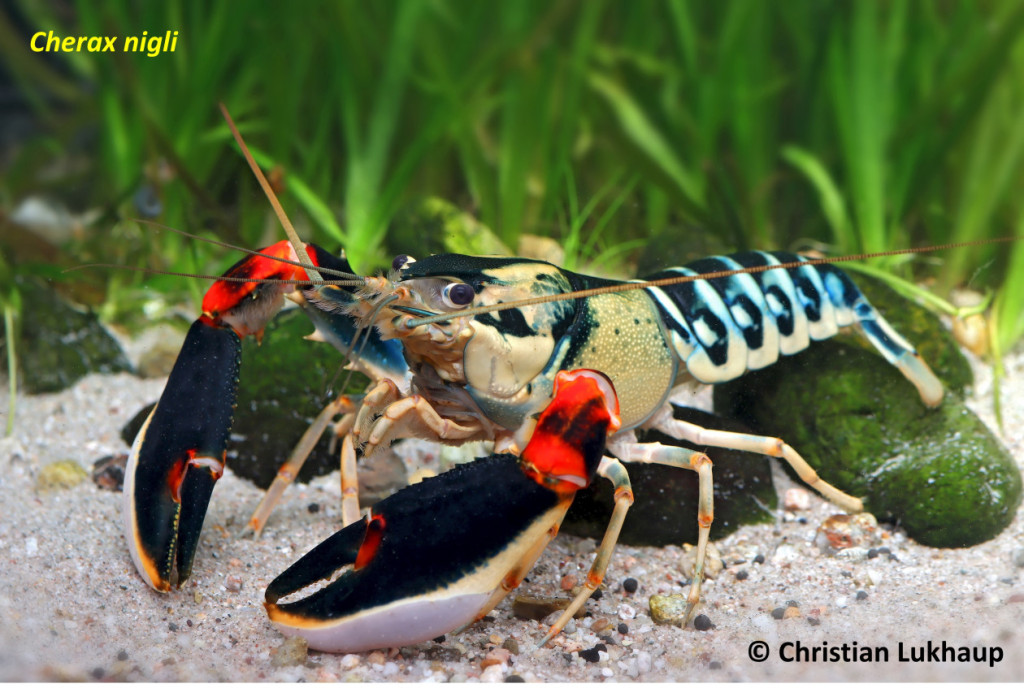
Each species exhibits unique characteristics, such as body coloration, claw (chelae) shape, and rostrum structure, which are crucial for distinguishing them from close relatives.
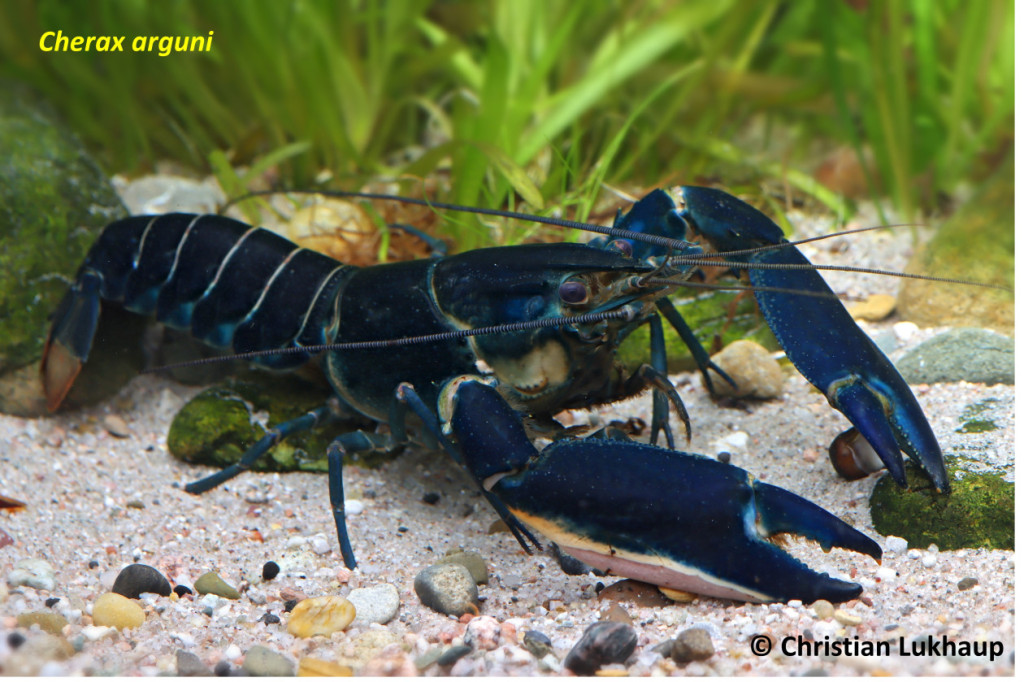
“For instance, Cherax arguni has a predominantly dark blue body with cream stripes and translucent white patches on its claws,” Dr. Eprilurahman said while showing a specimen photograph.
Molecular phylogenetic analysis revealed that Cherax arguni is closely related to Cherax bomberai, yet the genetic distance is significant enough to classify them as separate species.
This analysis was conducted using Bayesian and Maximum Likelihood methods based on mitochondrial DNA.
These genetic markers serve as a critical foundation for objectively defining species boundaries.
“The differences in mitochondrial DNA sequences can reach up to 11%, indicating prolonged evolutionary isolation,” he noted.
This discovery also underscores the urgent need to conserve freshwater species in Papua, which are increasingly vulnerable to exploitation and habitat degradation.
According to Dr. Eprilurahman, many of these species inhabit small rivers and tributaries that remain ecologically unmapped.
Some are known only from a single locality, making them highly susceptible to even the slightest environmental change.
To protect natural populations, the specific locations of these specimens are deliberately omitted from the publication.
Moving forward, further research and mapping of species distribution will be vital to support data-driven conservation policies.
“We must strike a balance between scientific exploration and habitat protection, especially as many of these species live in areas now exposed to human activity,” he concluded.
This publication not only enriches scientific understanding of Indonesia’s fauna diversity but also affirms UGM’s standing as a leading center for tropical biodiversity research.
The involvement of Biology UGM in this cross-national project reflects its globally competitive academic capacity.
Through publication in a reputable journal, UGM demonstrates a strong commitment to research that supports environmental preservation and strengthens the national biodiversity database.
This mission aligns with UGM’s vision as a people’s university that upholds sustainability values.
“We believe that robust science must be rooted in local understanding for a more sustainable future,” Dr. Eprilurahman emphasized.
Author: Triya Andriyani
Post-editor: Lintang Andwyna
Photographs: Christian Lukhaup