


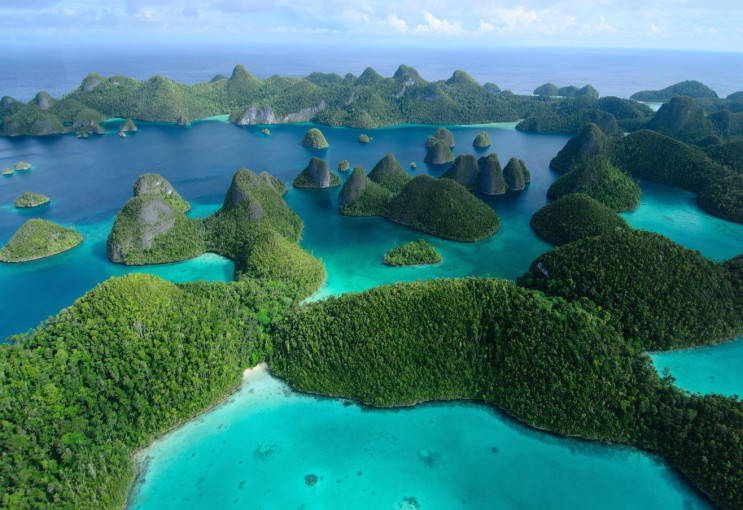
The proliferation of mining permits on small islands has once again drawn attention. Exploitation activities in these ecologically vulnerable areas raise serious concerns, particularly regarding the sustainability of ecosystems and the biodiversity within them.
Several small islands in Indonesia are potentially damaged by mining, ranging from nickel to quartz sand. Yet, Indonesia’s small islands harbor unique and irreplaceable biodiversity.
Dean of the Faculty of Biology at Universitas Gadjah Mada (UGM), Professor Budi Setiadi Daryono, urged the government to halt mining activities on small islands that could damage biodiversity.
This is because small islands, with their distinctive ecological conditions, are renewable resources but have limited carrying capacity. Thus, the risks are very high.
“Small islands have ecosystems that are highly vulnerable to disturbance. Their ecosystems are very unique. Once they are exploited, the impact is immediately felt,” Professor Daryono explained on Monday (Jun. 23).
For Professor Daryono, mining activities not only damage terrestrial ecosystems but also marine ecosystems.
This is because sedimentation can cloud the water, thereby reducing sunlight penetration into the sea.
This has a fatal impact on marine ecosystems, including seagrass, algae, microalgae, and coral reefs.
Additionally, the use of chemicals in the mining process also causes water pollution.
“Ultimately, this water pollution will return to humans through the marine food chain due to biota forced to live in polluted waters,” Professor Daryono added.
Not stopping there, mining activities also trigger noise and light pollution, which can affect species behavior.
Some animals, like sea turtles, tend to avoid strong light, so they will not land to lay eggs.
Similarly, whale sharks will have their resting patterns disturbed. Mining noise will become sound pollution, especially for animals with very sensitive hearing, such as birds and insects.
“Raja Ampat is a melting point for biota recovery because of its naturalness. Places like this are scarce in the world, and all parties should have the awareness to protect them,” Professor Daryono asserted.
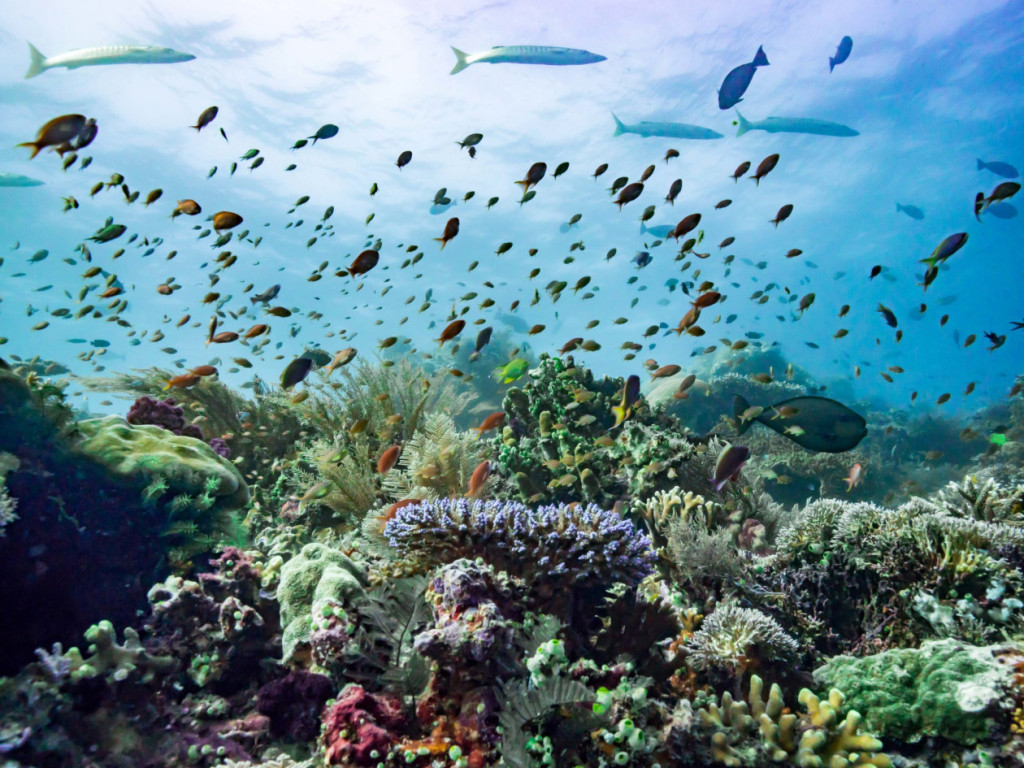
As is well known, areas like Raja Ampat are among the most intact marine ecosystems in the world.
With over 550 coral species and 1,400 fish species, this area serves as a natural recovery zone for marine biota.
If damaged by mining, the losses are not only ecological but also economic.
Healthy and sustainable ecosystems can deliver significant benefits through the development of ecotourism and sustainable fisheries.
According to Professor Daryono, Raja Ampat should be directed toward ecotourism and sustainable fisheries development, not mining.
These two sectors, he mentioned, provide a direct economic benefit to local communities more than mining.
“The concept of mining welfare is less equitable compared to fisheries and ecotourism if pushed forward by the government,” he assessed.
Professor Daryono believes that the community and government need to preserve ecosystems and biodiversity not merely as an environmental discourse.
Instead, it is about the survival of current and future generations.
Policies that prioritize a sustainable approach and favor people are needed so that development does not destroy the environment. Instead, it strengthens the foundations of long-term welfare.
“Moreover, our noble local wisdom and cultural customs instill ecological love responsibly,” Professor Daryono concluded.
Author: Bolivia Rahmawati
Editor: Gusti Grehenson
Post-editor: Afifudin Baliya
Photographs: Rajaampatbiodiversity and papuaexplores