


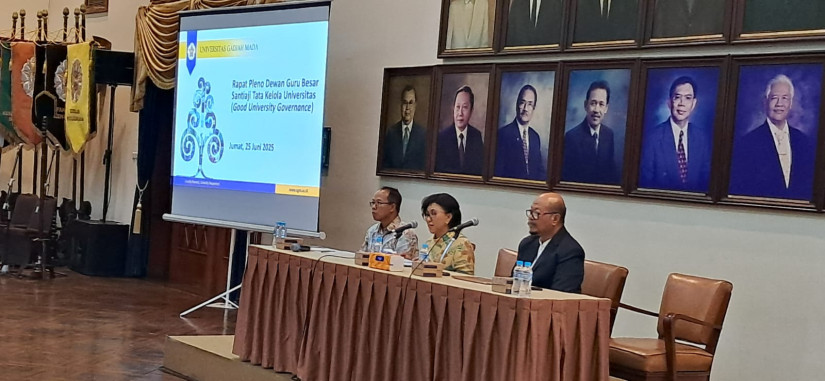
Universitas Gadjah Mada (UGM) once again held a plenary meeting of the Board of Professors (DGB), which this year was packaged in a workshop and training format titled “Santiaji University Governance.”
The activity, held at the UGM Senate Hall on Friday (Jun. 20), brought together representatives of professors from all UGM faculties, with a total of 42 active participants.
This forum serves as a strategic space to align views among DGB members in responding to the various dynamics of higher education at both national and global levels.
Through a participatory and collaborative approach, this activity also encourages strengthening professors’ roles in shaping academic policies oriented towards values and integrity.
UGM Rector, Professor Ova Emilia, expressed appreciation for the presence and active participation of professors in this plenary and workshop activity.
She emphasized that this activity is a strategic effort to reaffirm DGB’s role in fostering a healthy, ethical, and value-based academic climate grounded in the university’s noble principles.
The Rector also encouraged that the discussion outcomes from this forum be translated into practical guides and methods applicable to each faculty and study program.
“Sharing information and experience in this forum is very important to strengthen the UGM values we uphold,” Professor Emilia stated.
Professor Emilia believes that DGB’s active role in conveying ethical and moral narratives will strengthen UGM’s character as a university that is not only academically excellent but also strong in values.
According to Professor Emilia, consistency in building an academic culture of integrity must continue to be strengthened through cross-field and cross-generational collaboration.
“We want DGB members to become ambassadors of knowledge who are also able to influence policies within their respective faculties,” Professor Emilia added.
Chair of DGB UGM, Professor Muhammad Baiquni, stated that this plenary meeting serves as a space for collective reflection.
This reflection aims to strengthen DGB’s function as guardians of academic integrity and scientific ethics.
He added that DGB is not only an honorary forum but also a strategic platform for providing advice, maintaining academic dignity, and developing perspectives.
These perspectives cover national and global issues relevant to the university’s mission.
“This activity aims to strengthen our shared understanding and commitment to the principles of Good University Governance,” Professor Baiquni noted.
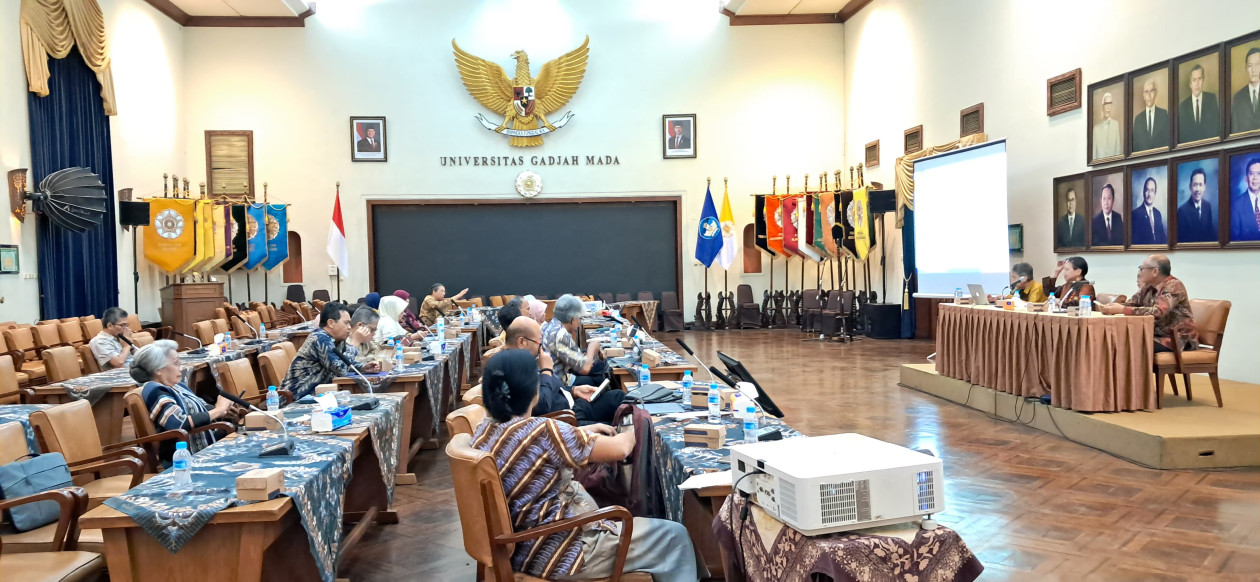
Meanwhile, Professor Suryo Hapsoro Tri Utomo, a DGB member, explained that the topics discussed in this forum reflect UGM’s commitment to academic integrity and the protection of higher education’s fundamental values.
“The topics we raised today are a reflection of the university’s commitment to academic integrity,” Professor Utomo revealed while presenting material on corruption prevention in the campus environment.
Additionally, Professor Janianton Damanik presented material related to plagiarism prevention.
Meanwhile, Professor Yayi Suryo Prabandari comprehensively reviewed efforts to prevent sexual violence within the academic community.
Both materials are beneficial for strengthening the system of preventing academic violations. This impacts not only the university’s reputation but also the quality of its graduates.
By understanding the root of the problem and drawing on solution-oriented approaches from experts, professors are expected to become agents of change in building a safe, healthy, and high-integrity learning environment.
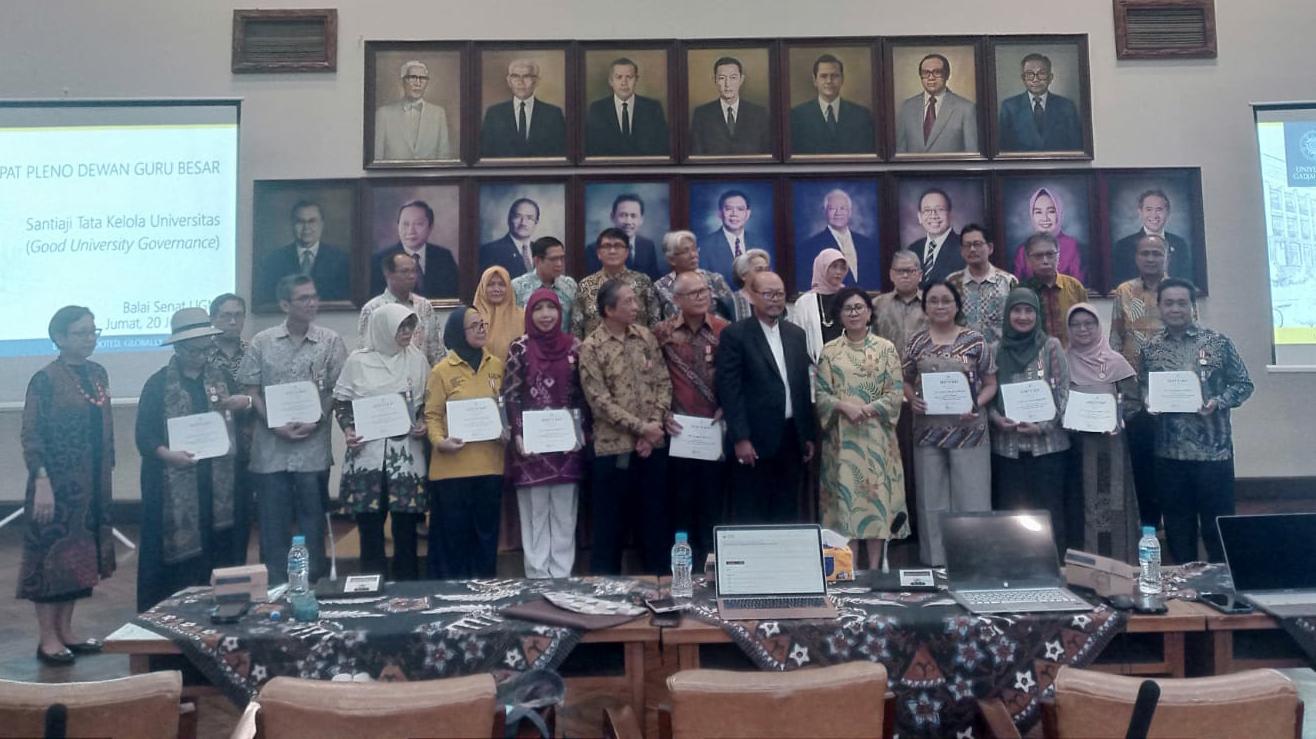
As part of the event series, DGB UGM also honored professors who continue to actively contribute, whether through research, patents, or student mentoring, even outside structural positions.
One figure who received special recognition was Professor Sri Suryawati, who entered retirement.
During her tenure, she was active as Secretary of DGB Commission II for Organization and National Insight and was known as a figure consistently promoting synergy among professors.
“As successors, we handed over the assignment letter to Professor Fadlil Munawwar Manshur, as Secretary of DGB UGM Commission II until 2026,” Professor Baiquni stated, concluding the series of activities.
This appointment, according to Professor Baiquni, is a manifestation of adaptive organizational continuity that adheres to moral and academic principles.
He hopes the new board can continue the institutional agenda with full dedication and address increasingly complex challenges in the era of higher education transformation.
This regeneration is not only about administrative assignments but also a momentum to strengthen collaboration among professors in responding to national dynamics and the globalization of knowledge.
By strengthening DGB’s capacity and strategic role, UGM demonstrates its commitment to building a resilient, relevant, and responsive academic ecosystem that meets the nation’s needs.
Author: DGB UGM/Heru Sutrisno
Editor: Triya Andriyani
Post-editor: Afifudin Baliya
Photographs: DGB UGM