


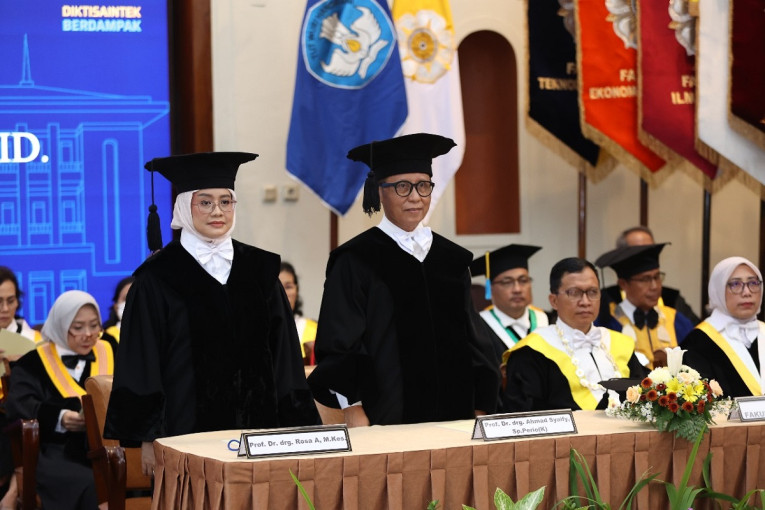
Two lecturers from the Faculty of Dentistry, Universitas Gadjah Mada (FKG UGM), were inaugurated as professors simultaneously on Tuesday (Jun. 24).
The two professors are Professor Rosa Amalia, who was inaugurated as Professor in Epidemiology and Biostatistics.
Meanwhile, Professor Ahmad Syaify was inaugurated as Professor in the Field of Periodontal Medicine.
In the inauguration ceremony held at the UGM Senate Hall, Professor Amalia delivered a speech titled “Exploring Numbers, Reading the Future: The Role of Epidemiology and Biostatistics in the Era of Precision Dentistry.”
Meanwhile, Professor Syaify delivered a speech titled “Diabetic Periodontitis: Disease Complexity and Multidisciplinary Challenges.”
Professor Amalia stated that the transformation towards the era of Predictive, Preventive, Personalized, and Participatory (P4) dentistry shows that future health management must be based on scientific data and centered on the individual.
Epidemiology and biostatistics, she mentioned, play a central role in reading health patterns, building predictive models, and ensuring targeted and equitable interventions for the entire population.
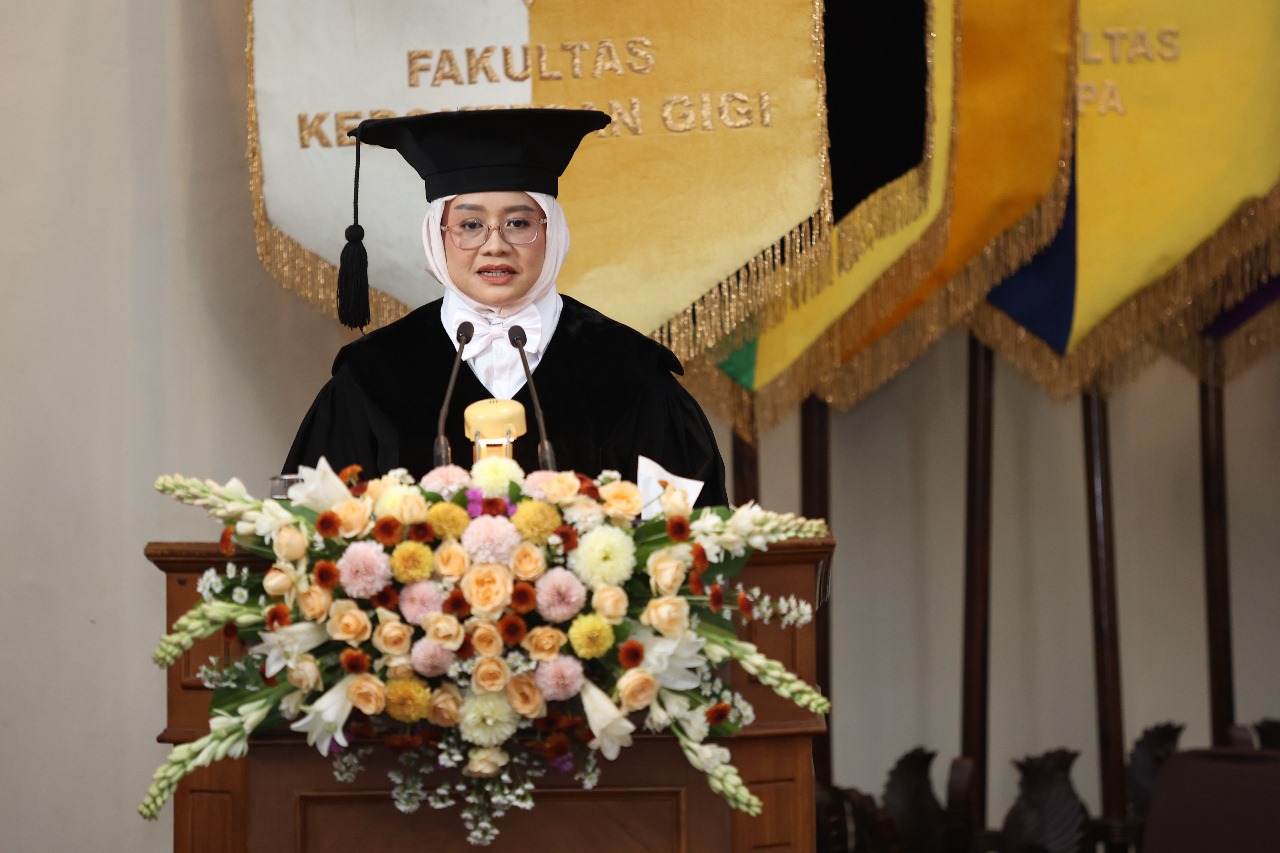
Through this approach, she said, the community will gain tangible benefits: the risk of dental disease can be identified earlier, prevention can be tailored to individual needs, and patients become active partners in maintaining their health.
The application of this science not only improves service quality but also strengthens health policies that prioritize justice, sustainability, and public safety.
“Capacity building in epidemiology and biostatistics is not only important for the academic world but also a strategic asset for Indonesian public health,” Professor Amalia revealed.
According to Professor Amalia, the concept of P4 dentistry can guide daily practice. Clinicians currently face more complex patient data, ranging from medical history to genetic information.
The clinician’s task is to transform this data into clinical decisions that are personal, timely, and easily understood by the patient.
“With technologies like AI in radiography or lifestyle-based caries risk analysis, treatment can be done earlier and more effectively,” Professor Amalia explained.
She added, “In this role, clinicians are not just healers but also educational partners and motivators for patients in continuously maintaining their oral health.”
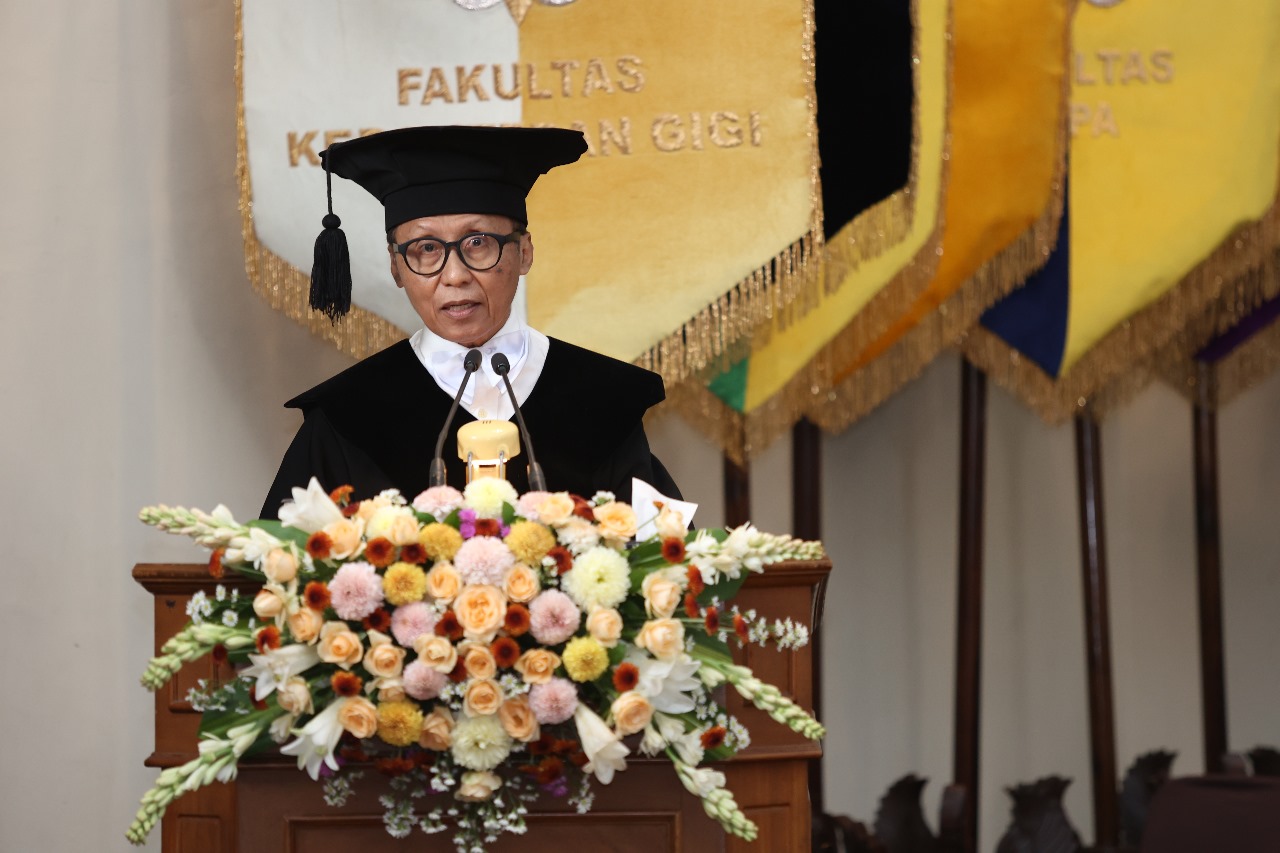
Meanwhile, Professor Syaify conveyed the concept of functional medicine as a cutting-edge, science-based approach in his speech.
It unifies findings in immunology, metabolism, nutrigenomics, microbiota, and endocrinology into a more personal, preventive, and integrative clinical practice framework.
Through this approach, clinicians are required not only to focus on the “site of illness,” but also to go beyond scaling and systemic antibiotic administration.
Instead, they are invited to delve deeper into the patient’s dietary patterns to date and how.
His two decades of experience in periodontics made Professor Syaify increasingly realize that dental science is not just about teeth and gums.
It is a window into the broad landscape of human health, from diet and lifestyle to immunity and psychosocial relationships.
“The role of dentists in the era of chronic diseases like diabetes today can no longer be seen only through a specialist’s lens,” Professor Syaify added.
He continued, “Instead, they must begin to think as doctors for the human being as a whole, not merely as dentists.”
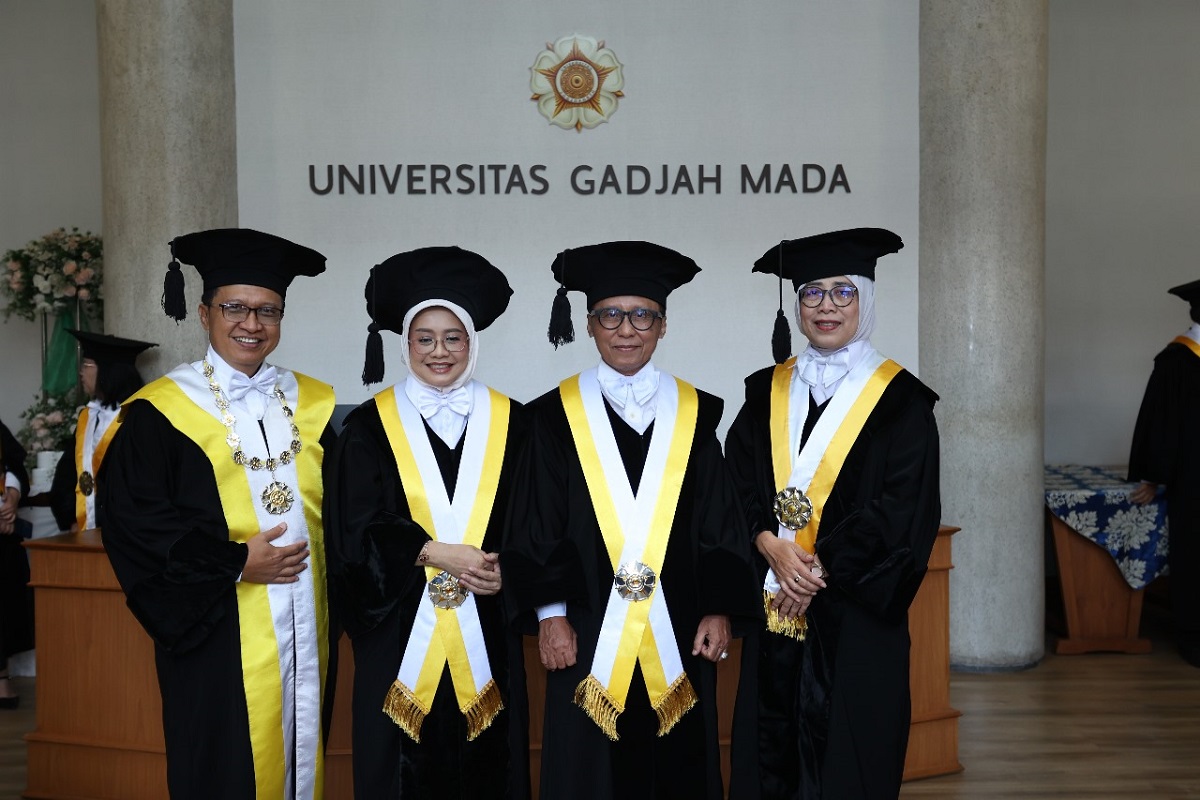
According to Professor Syaify, the Faculty of Dentistry must have a strong academic tradition and a deep Indonesian spirit.
This enables it to be a pioneer in developing an integrative and transformative interdisciplinary approach.
This academic approach not only heals but also educates, prevents, and empowers.
“I hope more colleagues, students, and policymakers not only understand Diabetic Periodontitis but are also moved to champion a more humane dentistry,” Professor Syaify concluded.
Author: Agung Nugroho
Post-editor: Afifudin Baliya
Photographer: Firsto