


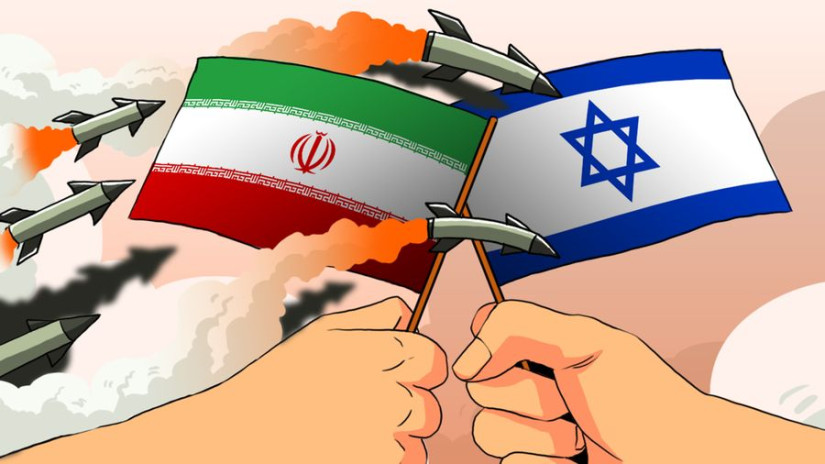
Iran and Israel have agreed to a ceasefire following 12 days of conflict that began on June 13, when Israel launched strikes targeting Iran’s nuclear development program. Iran responded with hundreds of drones and missiles aimed at Israel’s research centers and oil refineries. Although the two countries have paused hostilities following intervention from U.S. President Donald Trump, it remains uncertain whether Iran, Israel, and other Middle Eastern nations will be able to prevent the region from falling back into protracted conflict.
Professor Siti Mutiah Setiawati, a professor of Middle Eastern Geopolitics at the Faculty of Social and Political Sciences, Universitas Gadjah Mada (Fisipol UGM), described the Iran-Israel conflict as highly complex.
She explained that tensions with Iran date back to longstanding U.S. accusations that Iran is developing nuclear weapons.
Regarding Indonesia’s stance, Professor Setiawati stressed the importance of a cautious approach.
The government must monitor developments carefully before deciding whether Indonesia can act as a mediator.
If conditions are too complex, she advised against hasty action.
“For now, the Indonesian government should focus on evacuating Indonesian citizens in Iran and Israel as an immediate protective measure,” she stated on Wednesday, Jun. 25, 2025.
Professor Setiawati expressed hope that the conflict would soon be resolved between the two nations.
She also urged the Indonesian government to closely monitor any potential escalation and ensure the safety of Indonesians residing in both countries.
Economic Impact
Responding to concerns about the economic risks posed by the Iran-Israel conflict, a senior economist from UGM’s Faculty of Economics and Business (FEB UGM), Dr. Revrisond Baswir, stated that the direct impact on Indonesia’s economy is minimal, unless major powers such as the United States, China, France, or Russia become openly involved in the conflict.
“The global economic impact of the Iran–Israel conflict depends greatly on the involvement of major powers. If their involvement deepens, global risks will sharply increase. However, for Indonesia, the direct effect is not substantial,” said Dr. Baswir.
According to him, Indonesia’s main challenge amid global economic instability lies in addressing domestic issues.
He emphasized the importance of improving transparency, combating corruption, reducing social inequality, and creating jobs.
“These are more critical than external effects,” he asserted.
Regarding rising commodity prices due to the conflict, Dr. Baswir said the impact on Indonesia’s exports and trade balance remains relatively mild compared to the tariff war initiated by U.S. President Donald Trump.
“Oil prices are rising, but the effects are not as severe as during the tariff war. We can still manage,” he explained.
As a strategic step, he recommended that the Indonesian government avoid becoming overly entangled in global geopolitical tensions and instead focus on strengthening domestic economic foundations, particularly in the energy sector.
“The government must take serious steps to reform Pertamina’s governance and expand the capacity of domestic oil refineries. This is key to managing global oil price fluctuations,” he said.
In light of the projected large-scale deficit in the United States, which could impact global capital flows, Dr. Baswir also provided a crucial note.
With the U.S. currently facing a significant fiscal deficit, pressure on developing countries like Indonesia may increase as the U.S. aggressively pushes its economic interests.
“This situation affects Indonesia’s fiscal and diplomatic positioning,” he elaborated.
Dr. Baswir concluded by urging all stakeholders, the government, the private sector, and the international community, not to use the global crisis as an excuse for national stagnation.
“Global conditions should not be scapegoated. Instead, this is the time for us to improve and collectively strengthen the national economy,” the expert affirmed.
Authors: Kezia Dwina Nathania, Lazuardi
Editor: Gusti Grehenson
Post-editor: Lintang Andwyna
Illustration: CNBC