


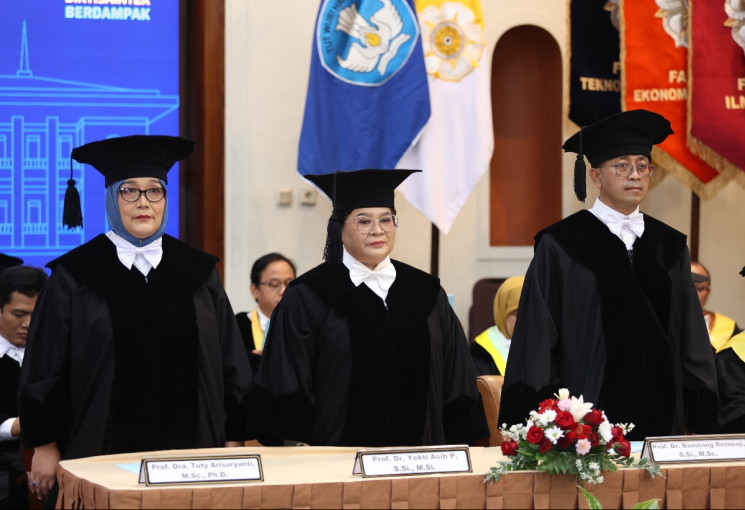
Universitas Gadjah Mada (UGM) has officially appointed three new professors from the Faculty of Biology. The three newly appointed professors are Professor Tuty Arisuryanti, Professor Yekti Asih Purwestri, and Professor Bambang Retnoaji.
Professor Arisuryanti was inaugurated as Professor of Population Genetics.
In her inaugural address titled “The Role of Population Genetics in the Conservation and Sustainable Utilization of Indonesia’s Biodiversity to Support Human Well-being,” she emphasized the urgency of applying population genetics in conservation and science-based adaptive management of biological resources.
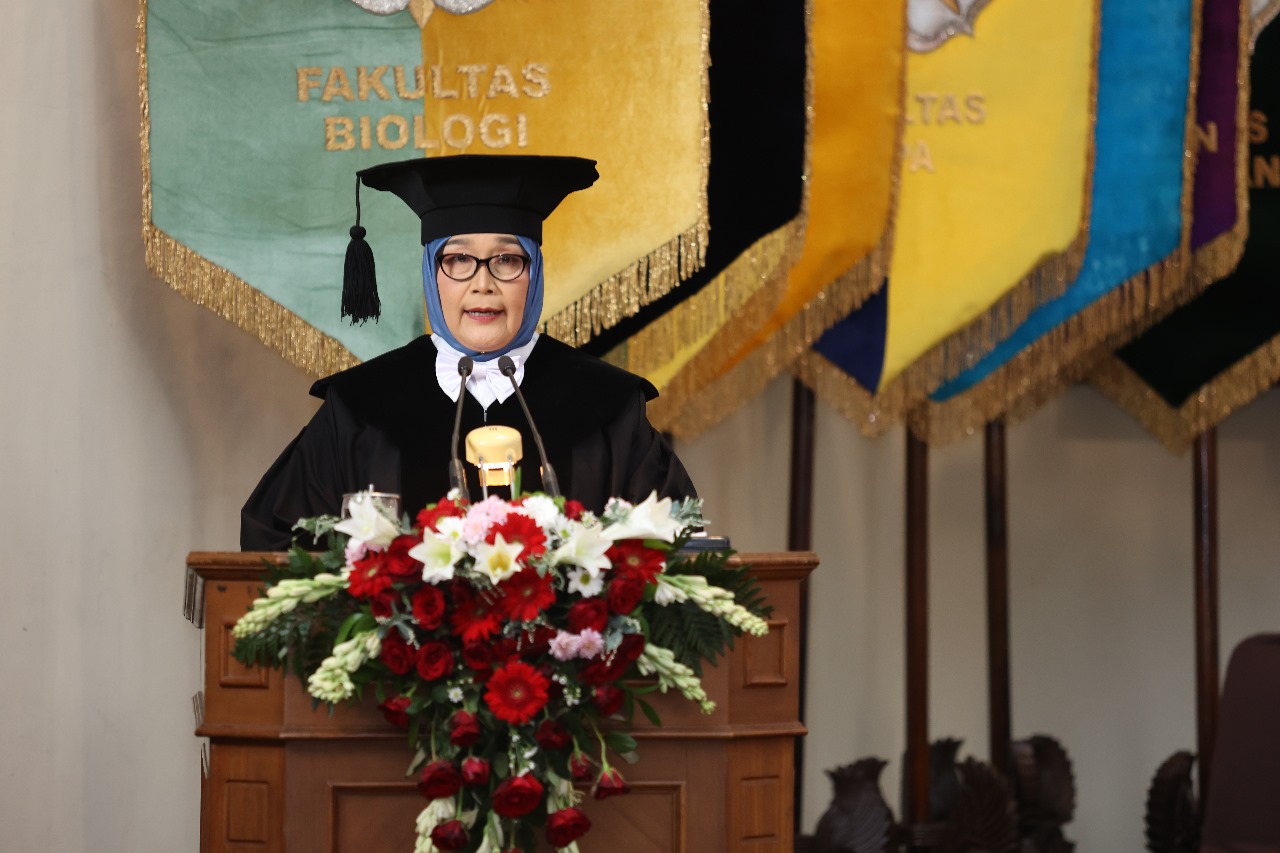
In her speech, Professor Arisuryanti explained that population genetics is a sub-discipline of genetics that focuses on the genetic composition of populations.
This field plays a key role in identifying and assessing genetic diversity to determine conservation priorities.
“Population genetics allows us to identify vulnerable populations, measure genetic variation, and understand how species adapt to environmental stressors such as climate change and other ecological disturbances,” she stated during the inauguration ceremony on Thursday, Jun. 26, 2025, at the UGM Senate Hall.
She pointed out that of the 36 global biodiversity hotspots, Indonesia is home to two priority areas, Sundaland and Wallacea.
These areas are considered global conservation investments due to their relatively small size and exceptionally high biodiversity.
According to Professor Arisuryanti, these resources hold immense economic, ecological, and scientific value that can be sustainably utilized to enhance human well-being.
“Indonesia’s geographic condition as an archipelago has created natural isolation, which in turn leads to high genetic diversity both between and within species populations,” she added.
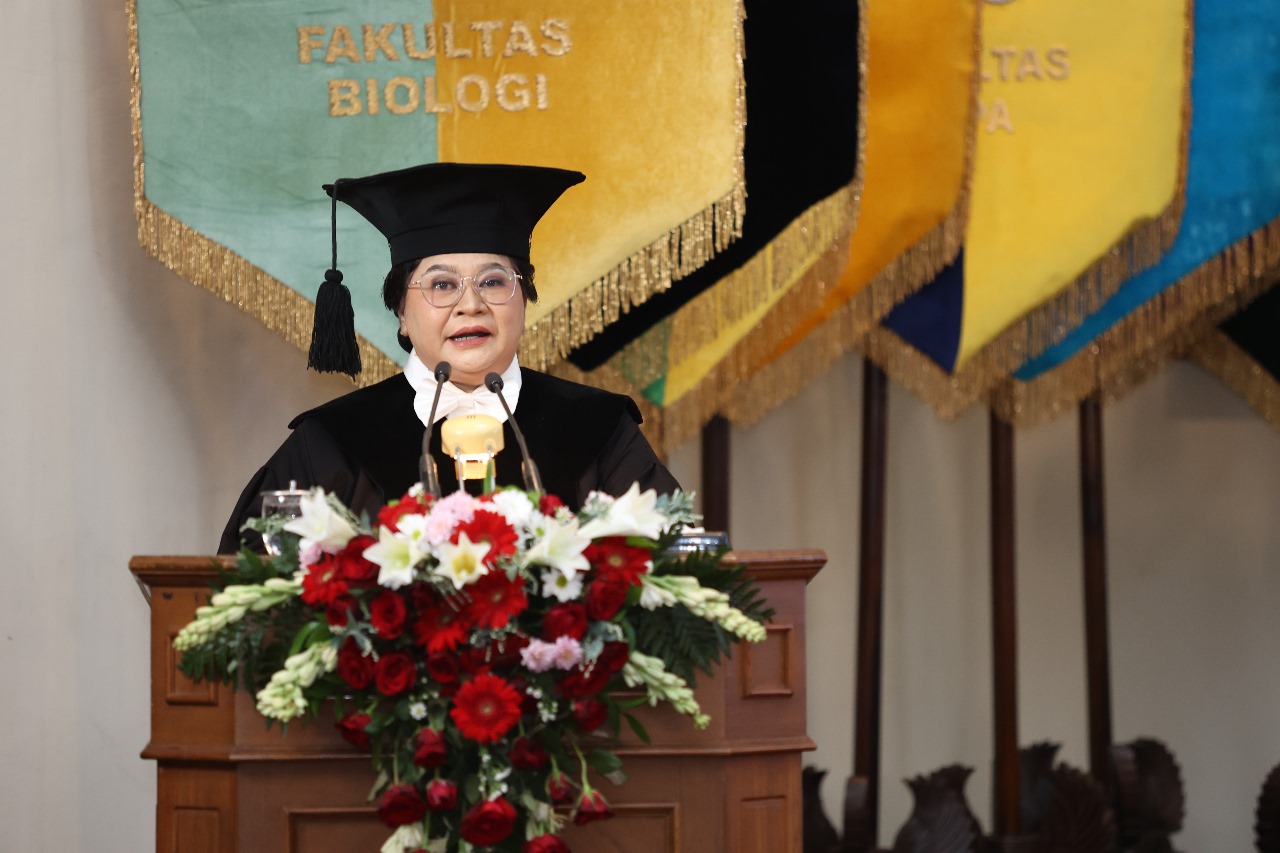
Meanwhile, Professor Purwestri was appointed to the position of Professor of Molecular Biochemistry.
In her speech, she explained that rice, both pigmented and non-pigmented, remains one of Indonesia’s most promising local biological resources.
She noted that rice carries valuable genetic information for developing functional foods due to its nutritional content, superior agronomic traits, and resilience to biotic and abiotic stresses.
She highlighted ‘Cempo Ireng’ black rice, a local variety from the Special Region of Yogyakarta, which has been used as a model plant in functional genomics studies, particularly to identify genes involved in the initiation of somatic embryogenesis.
Molecular biochemical approaches are also being used to identify the diversity of endophytic bacteria in various plant species, including sugarcane and banana.
These bacteria play a critical role in supporting plant growth and enhancing resistance to environmental stresses.
Bacteria benefit from the plant’s internal tissues as habitats and nutrient sources, while the plants gain physiological and metabolic advantages that improve growth and enhance adaptability to environmental challenges.
“Through molecular biochemical approaches, we can gain an in-depth understanding of these interactions by uncovering the mechanisms at the level of genes, enzymes, and signaling molecules,” she added.
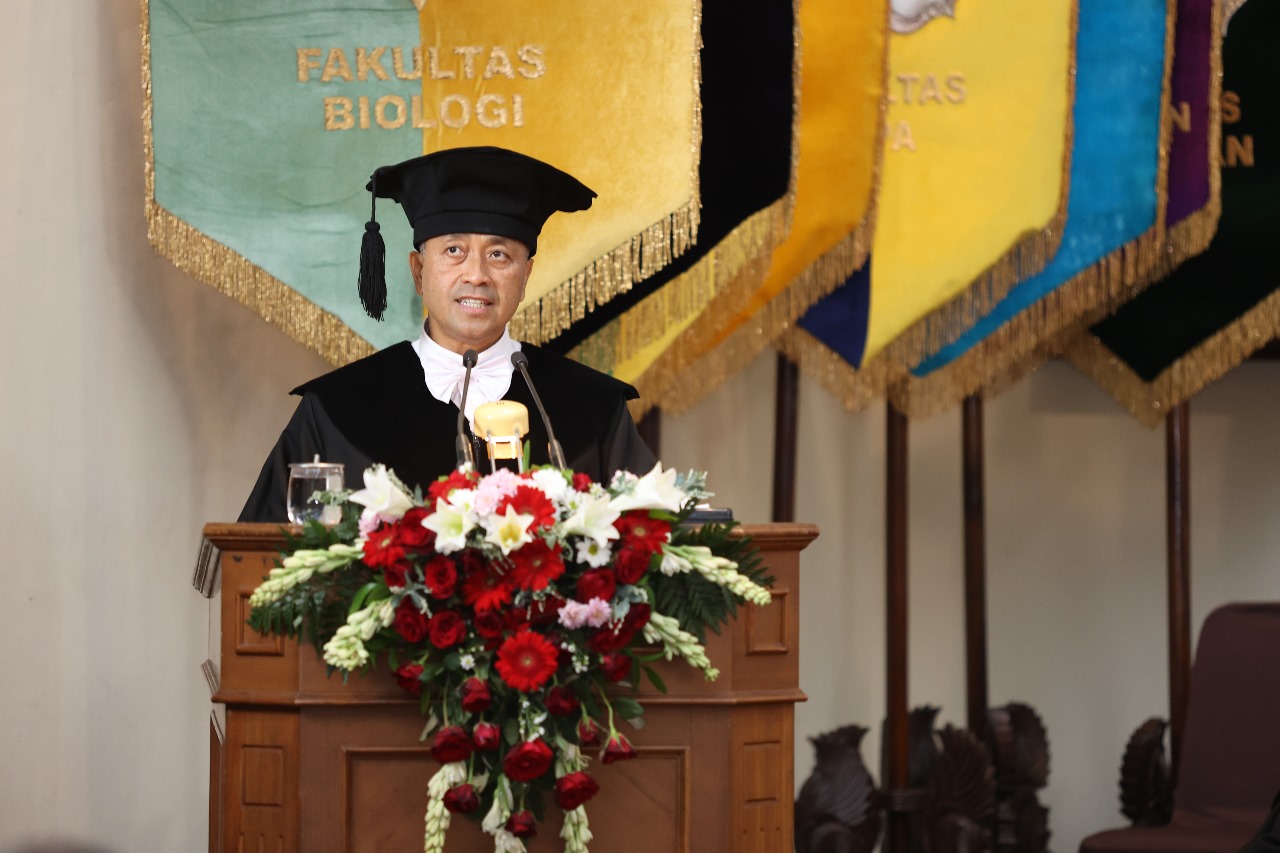
Professor Retnoaji was inaugurated as Professor of the Structure and Development of Aquatic Animals.
In his address, he underscored the importance of advancing research on aquatic model organisms, particularly the wader pari fish (Rasbora lateristriata), as a significant contribution of biological sciences to conservation efforts and national food security.
A central focus of his research is the wader pari, an Indonesian endemic species found across Java, Bali, Sumatra, and Kalimantan.
In addition to its ecological value as an indicator of water quality, the fish also holds high economic value and potential as a locally sourced, affordable protein supply.
“The wader pari has unique features such as transparent embryos, a short life cycle, and rapid development, making it an ideal candidate as an indigenous model organism for Indonesia,” he explained.
Authors: Rahma Khoirunnisa and Lazuardi Choiri
Editor: Gusti Grehenson
Post-editor: Lintang Andwyna
Photographer: Firsto