


Science is often perceived as separate from the humanities. However, in reality, the two fields complement each other. Recognizing this synergy, the Ministry of Higher Education, Science, and Technology collaborated with the Ministry of Culture and the Indonesian Academy of Sciences (AIPI) to organize the SciArt 8.0 Exhibition at the Museum Benteng Vredeburg in Yogyakarta. Four of the 29 scientists portrayed in the exhibition are renowned academics who contributed significantly to the development of Universitas Gadjah Mada (UGM): Professor Sardjito, Professor Teuku Jacob, Professor Poerbatjaraka, and Professor Sartono Kartodirdjo.
Professor Sardjito was UGM’s first Rector and a professor at the UGM Faculty of Medicine.
A scientist and freedom fighter, Professor Sardjito was widely recognized for several medical breakthroughs, including treatments for kidney stones and vaccines against diseases such as typhoid and cholera.
He also co-founded the Indonesian Red Cross Society (PMI), which continues to operate today.
During the Indonesian Revolution, he played a vital role by establishing emergency military hospitals.
He also created a wartime ration called ‘Biskuit Sardjito’ to support the survival of independence fighters.
Professor Teuku Jacob served as UGM Rector from 1981 to 1986.
Despite suffering from asthma, which made him sensitive to the smell of corpses, he devoted his life to science and chose to specialize in physical anthropology.
His contributions include the discovery of Homo erectus fossils in Sangiran (1962) and Homo floresiensis in Liang Bua, Flores Island.
His discoveries positioned Indonesia as a key site in global paleoanthropological research.
Meanwhile, Professor Sartono Kartodirdjo was a prominent Indonesian historian and intellectual in the social sciences and humanities, both nationally and internationally.
He was appointed professor at UGM’s Faculty of Literature in 1968.
His doctoral dissertation later became a seminal book, The Peasant Revolt of Banten in 1888, which earned him a doctoral degree with cum laude honors.
The book’s focus on grassroots resistance marked a pioneering shift in Indonesian historiography, emphasizing the role of ordinary people in shaping national history.
Professor Poerbatjaraka was known for his dedication to philology, Javanese literature, and cultural history.
His scholarship laid the foundation for the study of ancient Indonesian manuscripts, a field that remains vital today.
He once chaired the Faculty of Literature and Culture at UGM and was also a professor there.
His work continues to inspire students of philology, bridging traditional Javanese knowledge with modern academic inquiry.
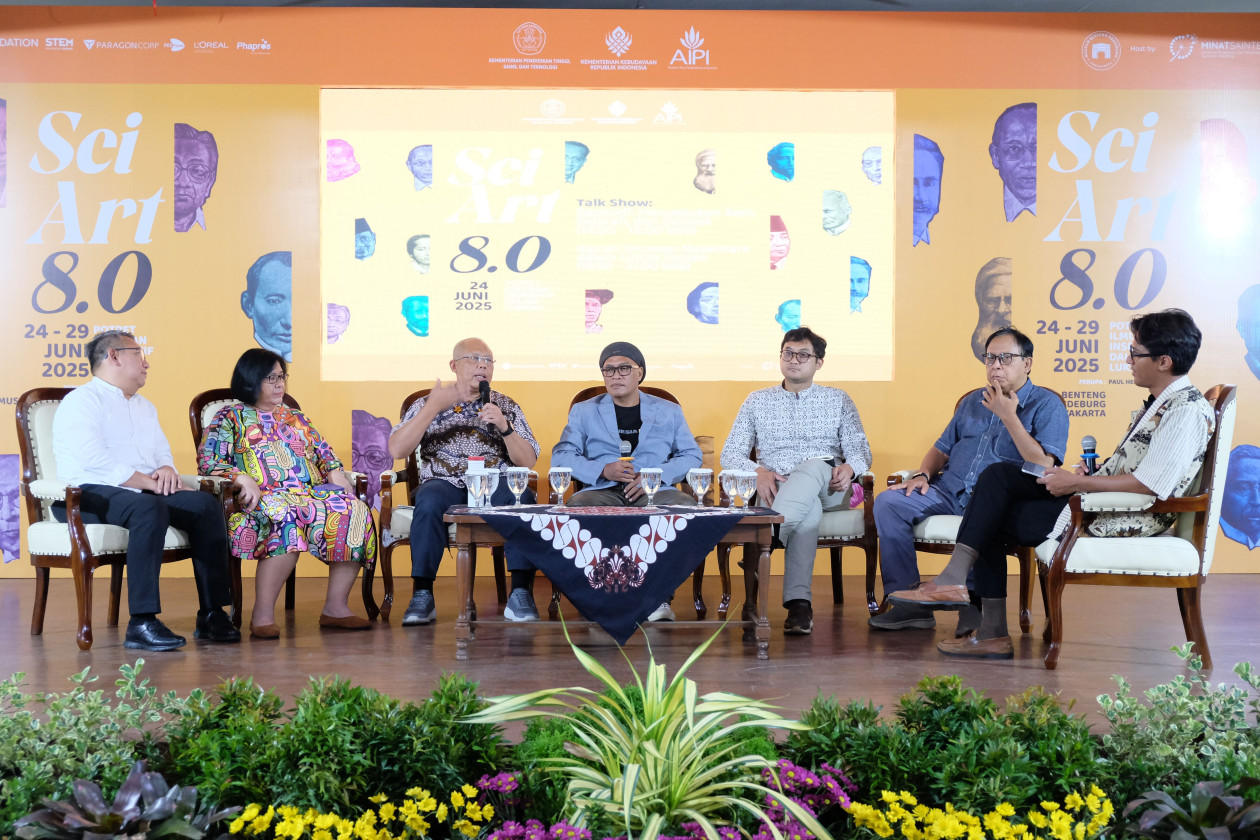
Professor Kuwat Triyana, Dean of the Faculty of Mathematics and Natural Sciences (FMIPA UGM), expressed his support for the program.
He noted that scientists often struggle to communicate their work effectively to the public.
“There is even a tendency for scientists to take pride in complexity, which further hinders public engagement,” he stated.
Professor Triyana also acknowledged the lack of historical context in the natural sciences.
He supported efforts to enrich scientific education with historical insights, particularly in subjects studied by science and engineering students.
“There needs to be more science communication experts, perhaps even through certification programs like those implemented in France,” he added.
Luthfi Adam, a historian at Monash University, echoed this sentiment, emphasizing the need for stronger connections between science and history.
For Adam, history is not only about heroic figures with weapons, but also about scholars and researchers such as those featured in the exhibition.
“It’s time for science heroes to be recognized and communicated to the public,” he remarked.
Ezki Tri Rezeki Widianti, Special Staff to the Minister of Higher Education, Science, and Technology for Public Communication and Mass Media, stated that the exhibition has excellent potential to present science in a language more accessible to the general public.
Meanwhile, Professor Fathul Wahid, Rector of the Islamic University of Indonesia, expressed concern over the diminishing public appreciation for science and scientists.
He welcomed the exhibition as an essential government initiative to rekindle enthusiasm for science and knowledge.
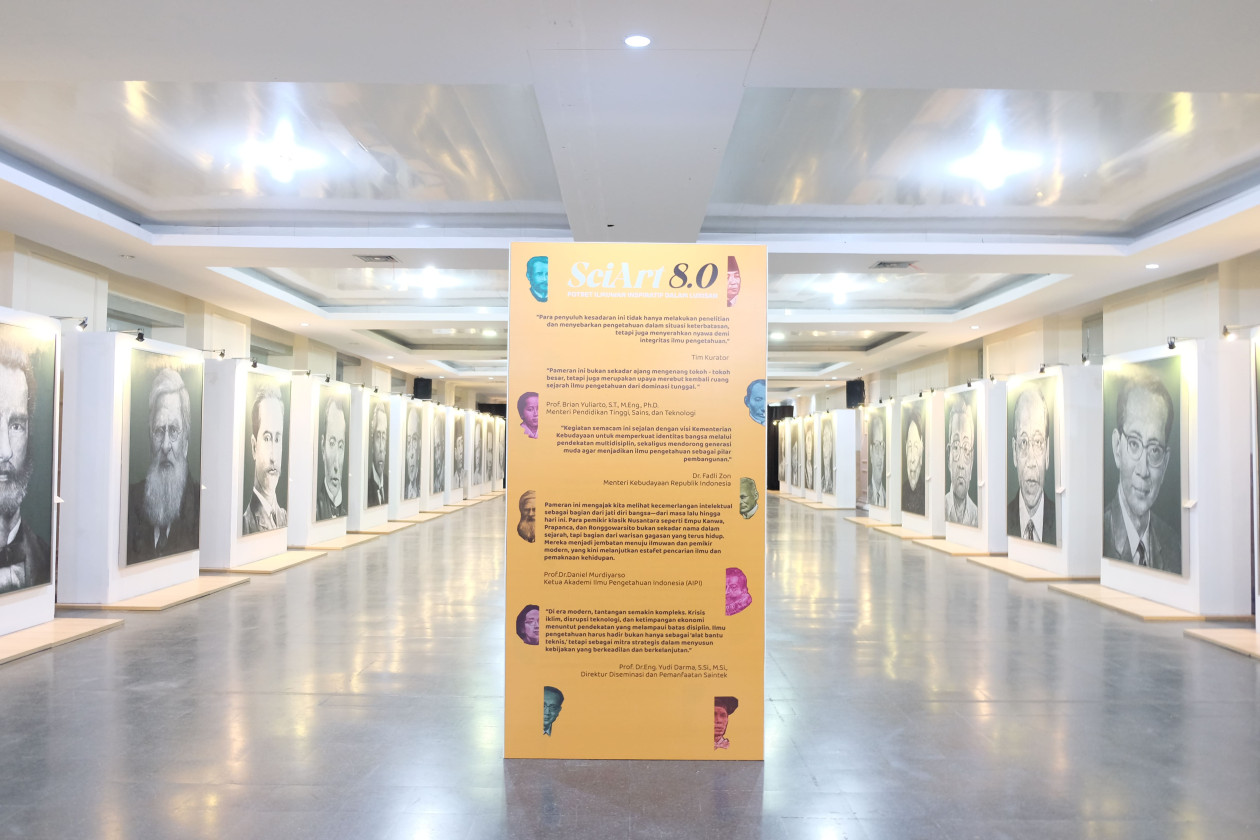
The exhibition features portraits of 29 scientists spanning generations who have shaped Indonesia’s academic landscape.
The paintings are by visual artist Paul Hendro.
According to Hendro, the portraits serve as a new medium for reconnecting the public with historical and contemporary scientific figures.
“Until now, painters have rarely depicted scientists. Most are more familiar with war heroes or independence fighters,” Hendro explained.
The SciArt 8.0 Exhibition is being held at Museum Benteng Vredeburg in Yogyakarta from 24-29 June 2025.
Author: Lazuardi
Editor: Gusti Grehenson
Post-editor: Lintang Andwyna