


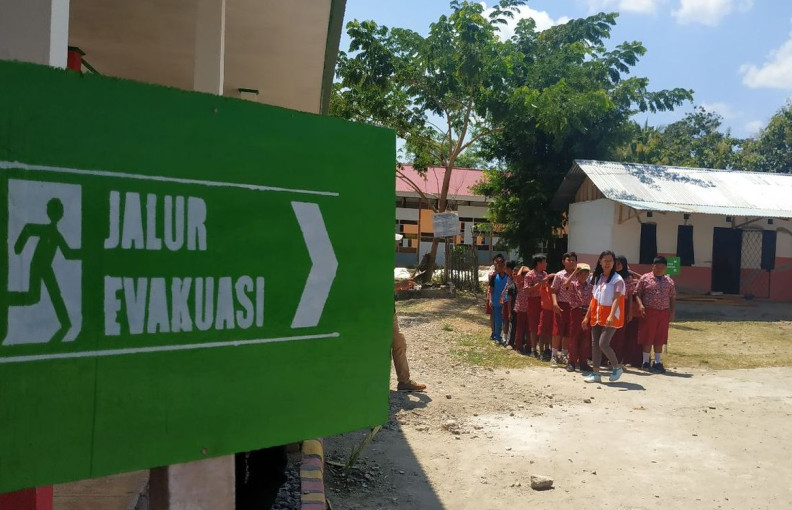
According to the World Risk Report 2023, Indonesia ranks second as the most disaster-prone country in the world, after the Philippines. However, this high level of risk has not been matched by adequate improvements in preparedness capacity. This is evident in the significant impacts of disasters that have struck several regions of Indonesia. Given these risks, Indonesia needs to shift its paradigm from reactive disaster response to proactive preparedness.
Djati Mardiatno, a Professor of Disaster Studies and an Expert Staff Member at the Center for Natural Disaster Studies of Universitas Gadjah Mada (PSBA UGM), stated that recently, the government’s attention to strengthening disaster preparedness has declined.
This is reflected in the allocation of disaster mitigation budgets, which remain smaller than those for emergency response. In fact, disaster mitigation plays a crucial role in reducing the impacts of disasters.
“Investment in disaster mitigation and preparedness will reduce the impacts of disaster events,” he said on Thursday (Jan. 15).
According to Professor Mardiatno, communities need to strengthen their preparedness capacity for disaster mitigation, especially those residing in disaster-prone areas.
Community-based disaster risk reduction is a grassroots initiative that must be supported by local authorities. Public awareness, he noted, must be accompanied by supporting facilities provided by the government.
“A multiple-helix approach in disaster management is important because disaster issues are a shared responsibility,” he explained.
He emphasized that Law No. 24 of 2007 on Disaster Management should be refined based on lessons learned from previous disaster events.
The establishment of the National Disaster Management Agency (BNPB) under this regulation requires further strengthening, as in several regions, the regulation is still considered insufficiently strategic.
“Strengthening the role of BNPB is necessary because it is a strategic institution in disaster management,” he stressed.
For Professor Mardiatno, hydrometeorological disasters driven by climate factors will continue to pose a significant threat to Indonesia in the future.
This condition requires Indonesia to intensify mitigation efforts to minimize disaster impacts, without neglecting other disaster risks, such as earthquakes.
Therefore, greater involvement of communities and academics in disaster management is essential to ensure broad-based contributions.
“The involvement of communities and academics must be expanded and intensified in disaster management,” he emphasized.
Author: Jesi
Editor: Gusti Grehenson
Post-editor: Rajendra Arya
Illustration: Kompas.com