


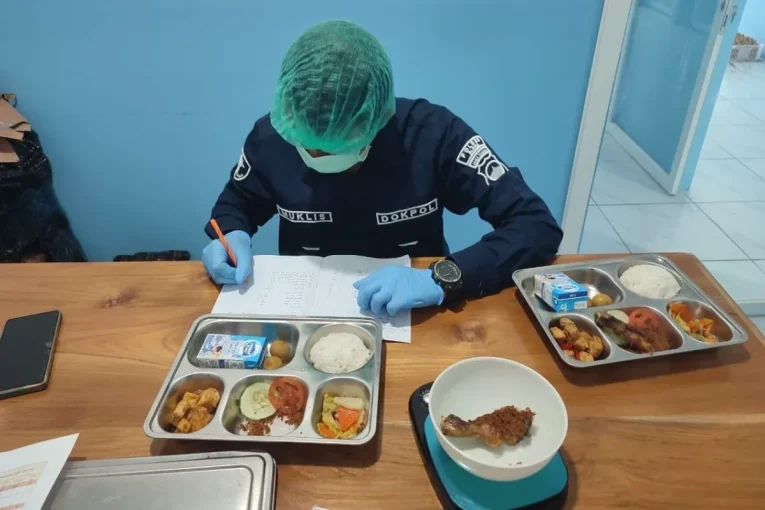
Recently, cases of food poisoning linked to the Free Nutritious Meals (MBG) program have increasingly drawn public attention. Several regions have reported suspected cases of food poisoning during implementation of the MBG program. Most recently, 803 students in Grobogan, Central Java, reported experiencing symptoms of food poisoning after consuming meals served under the Free Nutritious Meals program. The reported symptoms included dizziness, nausea, vomiting, and diarrhea.
Head of the Center for Food and Nutrition Studies, Universitas Gadjah Mada (PSPG UGM), Professor Sri Raharjo, explained that several factors can cause food poisoning.
“Food poisoning can occur due to the presence of bacteria in food ingredients that are not handled according to proper procedures,” he said on Wednesday (Jan. 21).
Although initial suspicions in this case point to the consumption of shredded meat and eggs, this has yet to be confirmed. Professor Raharjo noted that animal-based food products pose a high risk of food poisoning if processed improperly, as bacteria are naturally present in animal digestive systems.
According to Professor Raharjo, several food processing measures can be implemented to prevent such poisoning incidents, including ensuring that all food processing facilities are maintained in a clean, hygienic condition. In addition, proper food-handling techniques must be used.
“The safest food processing method is cooking at sufficiently high and evenly distributed temperatures,” he explained.
Looking ahead, he advised ensuring that the volume of meals prepared is in line with the actual capacity of the Nutrition Fulfillment Service Units (SPPG). This measure is necessary to maintain food quality so that it remains safe for consumption.
In this regard, SPPG and its partner institutions each bear responsibility for ensuring that food continues to meet established food safety standards.
In addition, he emphasized that SPPG must comprehensively supervise and document so that food safety records can be properly managed.
“Monitoring and record-keeping systems must function effectively, so that every operating SPPG has a clear track record of whether food conditions are safe or unsafe for consumption,” he said.
Professor Raharjo also observed that media coverage to date has largely focused on MBG-related food poisoning cases, even as food samples are still undergoing laboratory testing. However, the results of these tests are often not clearly or consistently followed up on.
He suggested that the media also report laboratory test results so that SPPG can gain certainty about the causes of poisoning and the preventive measures to be taken.
“The media often report that food samples are ‘being tested,’ but the results are rarely communicated to the public. This needs to be followed up so that SPPG can identify the causes and appropriate preventive actions,” he concluded.
Author: Leony
Editor: Gusti Grehenson
Post-editor: Rajendra Arya
Photograph: Antara