


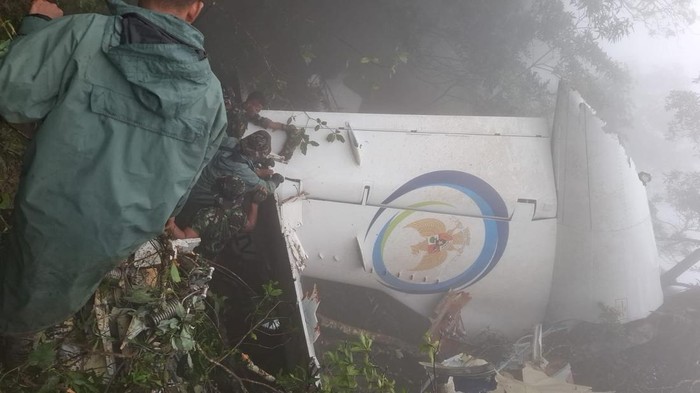
An ATR 42-500 aircraft operated by Indonesia Air Transport (IAT) crashed into Mount Bulusaraung, with debris being found on the mountain’s peak after being declared lost contact on Saturday (Jan. 17). A joint Search and Rescue (SAR) team swiftly carried out search and evacuation operations. After all victims were located and the ATR 42-500 aircraft’s black box was recovered, the search and evacuation mission was officially concluded on Friday night (Jan. 23).
The National Search and Rescue Agency (Basarnas) confirmed that a total of 10 bodies were recovered. Seven body bags resulting from the evacuation have been handed over to the Indonesian National Police’s Disaster Victim Identification (DVI) team and are still undergoing the identification process.
Three victims whose identities had been previously confirmed were released to their families. Meanwhile, the black box and aircraft debris have been submitted to the National Transportation Safety Committee (KNKT) for further analysis.
A lecturer from the Faculty of Engineering at Universitas Gadjah Mada (FT UGM), Dr. Muhammad Agung Bramantya, stated that the recovery of the ATR 42-500 black box will help determine the cause of the crash.
The Flight Data Recorder and Cockpit Voice Recorder play a crucial role in understanding the aircraft’s actual condition. Investigators can examine flight parameters while also listening to cockpit situations and communications before the incident.
“Reading the black box can take several days to up to two weeks. However, it still requires in-depth analysis by KNKT to ensure the findings are truly accurate,” Dr. Bramantya said on Monday (Jan. 26).
Based on information from KNKT, the ATR 42-500 crash was caused by a navigation error related to the surrounding terrain.
Dr. Bramantya suggested that the error was most likely triggered by severe weather conditions, including dense fog and heavy rainfall. Thick fog significantly reduces pilot visibility, forcing greater reliance on navigation instruments.
“Several systems are not yet fully automated, which may allow for misinterpretation of instruments or disruptions in communication with air traffic control (ATC),” Dr. Bramantya explained.
Furthermore, he emphasized the need for a comprehensive evaluation based on the results of the black box analysis of both the aircraft and the broader flight systems involved. The findings will provide a scientific basis for future safety recommendations.
These efforts may include improving navigation procedures, enhancing crew training to handle extreme conditions, and upgrading mitigation technologies.
“In the long term, improvements are expected in ATC systems, weather monitoring systems, as well as SAR team training and equipment readiness to strengthen response capabilities should similar incidents occur in the future,” he concluded.
Author: Jesi
Editor: Gusti Grehenson
Post-Editor: Zabrina Kumara Putri
Photograph: Detik.com