


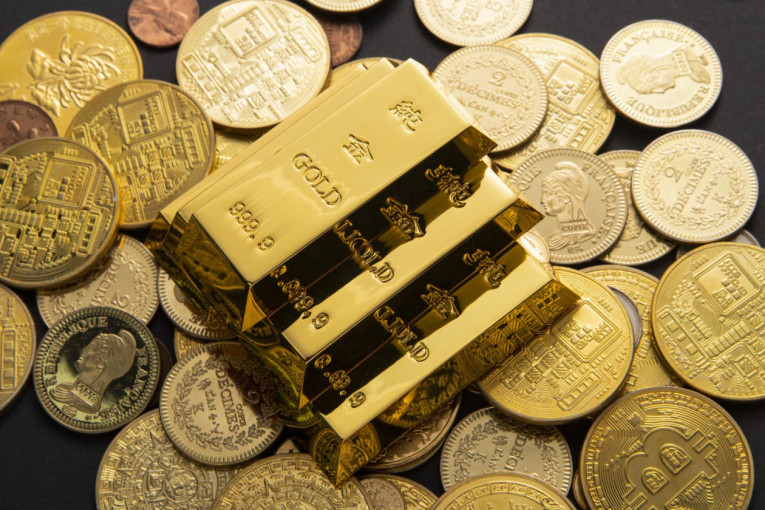
Gold prices continue to strengthen in the global market in line with rising investor demand for safe-haven assets amid global uncertainty. Data from Antam as of Jan. 28, 2026, recorded the price of gold at Rp2.968 million per gram.
An economist from the Faculty of Economics and Business at Universitas Gadjah Mada (FEB UGM), Dr. Wisnu Setiadi Nugroho, explained that the increase in gold prices is driven by multiple factors.
One of them is the policy stance of the US Federal Reserve and the weakening of the US dollar.
“The market expects a cut in US interest rates, which weakens the dollar and at the same time increases gold’s attractiveness as a safe-haven asset,” he said on Friday (Jan. 30) at FEB UGM.
Dr. Nugroho added that geopolitical uncertainty has also contributed to the current rise in gold prices.
According to him, global instability, ranging from military tensions to economic sanctions, has increased demand for gold, as it is viewed as a hedge against geopolitical risks.
Another contributing factor is demand from central banks and Exchange Traded Funds (ETFs).
Central banks in emerging economies are actively increasing their gold reserves, while institutional investors are becoming increasingly aggressive in purchasing gold through ETFs.
“Inflation and uncertainty in the stock market have made gold the preferred choice as a long-term hedge,” he added.
If global economic and political conditions remain unstable, he estimates that the upward trend in gold prices will continue. Nevertheless, a strengthening US dollar or a significant increase in US interest rates could exert downward pressure on gold prices.
Dr. Nugroho further explained why the public continues to choose gold as an investment instrument. Among the reasons are gold’s value stability and its role as an inflation hedge, its high liquidity or ease of trading, and its function as a safe-haven asset.
Another factor is that gold entails no third-party default risk, as physical gold is free from third-party default risk, unlike bonds or digital assets.
So, will gold investment remain stable?
Dr. Nugroho explained that, historically, gold prices have tended to be stable and to increase over the long term. This is because gold is protected against inflation, deflation, and economic crises.
“However, in the short term, like other investment instruments, prices will fluctuate, usually in response to interest rate policies and movements in other foreign currencies such as the USD, EUR, and GBP,” he elaborated.
Dr. Nugroho noted that global political and economic turbulence has prompted the public to diversify their portfolios by allocating to more stable assets such as gold. This situation signals an increase in global uncertainty indicators.
“Many people buying gold is also a form of response to ongoing monetary policies. Investors are looking for assets that are safe from volatility,” he said.
Reporter: FEB UGM/Kurnia Ekaptiningrum
Author: Jelita Agustine
Editor: Gusti Grehenson
Post-editor: Jasmine Ferdian
Illustration: Freepik