


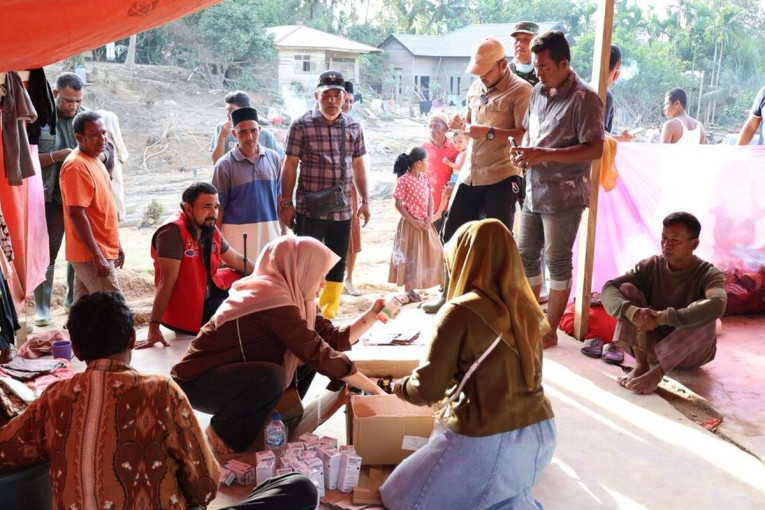
Two months after floods and landslides struck the region. Data from the Aceh Disaster Emergency Response Post show that 91,663 people from 24,280 households in Aceh are still living in evacuation shelters. This condition indicates that Aceh has yet to recover from the disaster’s impact, with many residents remaining in evacuation shelters for up to two months.
Dean of the Faculty of Psychology, Universitas Gadjah Mada (Psychology UGM), Dr. Rahmat Hidayat, stated that three psychological problems commonly emerge after a disaster.
The first is trauma resulting from direct exposure to floods or landslides. The second is the loss of family members, relatives, friends, property, and even hopes for the future. The third is the challenge of adapting to new living conditions, including staying in evacuation shelters with large numbers of others.
“Post-disaster adjustment can be seen from the extent to which normal functioning is restored. To that extent, psychological conditions can also recover,” said Dr. Hidayat on Friday (Jan. 30).
Dr. Hidayat explained that conditions in evacuation shelters significantly affect the psychological well-being of disaster survivors. Strong social networks and mutual support among survivors can have a positive impact.
The daily routines of displaced residents also affect their psychological well-being.
“A good environment provides physical comfort and safety and helps restore the social functioning of evacuees,” he explained.
According to Dr. Hidayat, a sense of safety is the key to psychological recovery among survivors. The threat of subsequent disasters significantly affects their mental condition.
Therefore, the presence of volunteers provides reassurance and helps prevent feelings of abandonment among citizens.
“The most important thing is to ensure that people do not feel abandoned or feel that they are not receiving adequate attention from the government,” he said.
Furthermore, Dr. Hidayat explained that UGM has supported survivors’ psychological recovery by collaborating with university networks and local non-governmental organizations.
The supports include training in psychological first aid, monitoring, and sustained remote support.
“We continue to be present alongside them during these difficult times, either directly or indirectly, through support for local partners who have direct access,” he said.
He added that the disaster requires a long-term response process. Therefore, the government needs to be present to reassure survivors that they are not being abandoned and are not merely treated as political objects.
Instead, the government should provide peace of mind and assurance that, as Indonesian citizens, they are protected, safeguarded, and guaranteed a sense of security in the future.
“Assistance should not only come in the form of meeting physical needs, but also through presence, in the sense of being accompanied and supported, which is something we must pay close attention to,” he expressed.
Author: Jesi
Editor: Gusti Grehenson
Post-editor: Rajendra Arya
Photograph: Kompas.com