


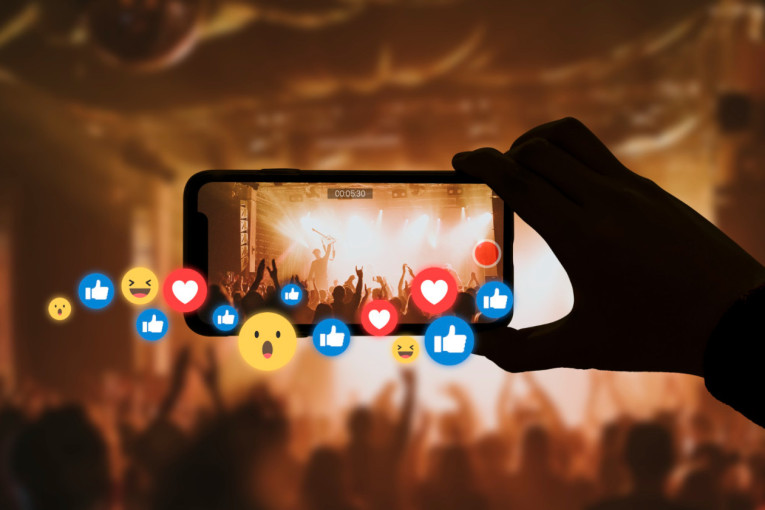
Virality on social media has become a growing obsession for parts of society in the digital era. Many people now compete to gain recognition through viral content, whether to become trendsetters or to follow widely discussed topics.
From the perspective of communication studies, this phenomenon is not merely a temporary or technical shift in communication patterns within a cultural narrative; it also plays a role in shaping meaning, beliefs, and ways of thinking in contemporary society.
A lecturer in Communication Studies at Universitas Gadjah Mada (UGM), Dr. Dian Arymami, notes that the rise of virality on social media is a result of a shift in communication ideology in the social media era. She explained that mood and style have become crucial elements in message dissemination in today’s modern communication landscape.
The media no longer operate solely through rational arguments, but through strong emotional appeal. In turn, emotions have transformed into a form of knowledge within the affective culture of digital society.
“Emotions can no longer be positioned merely as personal reactions; they have become a way for society to produce and believe in meaning, especially in the context of virality in digital media,” she explained in a press release sent to journalists on Tuesday (Feb. 2), discussing the outcomes of the Kaleidoscope 2025 public discussion titled ‘Virality of Social Media Narratives and Trusted Cultural Meanings’.
Dr. Arymami further noted that social media are designed to manage public attention and emotion, resulting in discussion spaces that often differ from the concept of a rational public sphere in classical theory.
According to her, viral spaces operate more through symbols, imagery, and representations that shape collective public perceptions. As a result, virality does not always lead to concrete action, but it can significantly influence beliefs and thought patterns.
Elaborating further, she explained that discourse in digital spaces can become hegemonic for certain groups when it intersects with fragmented desires and power relations.
Meanings circulating on social media are never singular or stable; instead, they are continuously produced and contested by various interests.
This phenomenon reflects the conditions of late modernity, characterized by accelerated information flows, fragmented experiences, and an increasing sense of alienation.
“Meaning always depends on emerging desires and the accompanying power relations, making virality an arena for contesting meaning,” emphasized the lecturer from UGM’s Faculty of Social and Political Sciences (Fisipol UGM).
Meanwhile, Daffa Lazuardy Noer Syahbana, a master’s student in UGM’s Communication Studies, highlighted the importance of distinguishing between virality and popularity in understanding today’s social media landscape.
According to him, virality refers to the rapid and massive spread of digital content within a short period, characterized by quick rises and declines, and driven by user sharing practices.
In contrast, popularity is built through planned, long-term communication strategies commonly employed by brands or public figures.
“Viral content is not designed to last; it works quickly and fluctuates,” he asserted.
He added that each social media platform has its own logic of virality, shaped by the algorithms it employs. He outlined various types of content with viral potential, ranging from social currency, triggers, and emotion, to public visibility, practical value, and stories.
“Viral content never stands alone, but it always intersects with social context, emotions, and user habits,” he explained.
In the context of recent developments, he noted that social media during the 2025-2026 period is undergoing a shift toward a more algorithm-driven phase.
Whereas social connections previously determined information flows, user behavior has now become the primary basis for content recommendations.
The phenomenon of the algorithm-driven phase is known as TikTokification. This condition leads to increased personalization while simultaneously reducing individual control over information exposure.
“Now it’s no longer about who our friends are, but what we watch, like, and stop reading that the algorithm pays attention to,” he explained.
In closing, Mufti emphasized that today’s social media ecosystem should not be viewed solely negatively, given users’ active involvement in content production and distribution.
However, he warned that without critical awareness and adequate digital literacy, users risk becoming trapped in narratives shaped by the design of media systems.
“Social media is not entirely bad, but without critical awareness, we are easily steered by narratives already designed by the system,” he cautioned.
He added that digital literacy is key to ensuring users do not remain passive consumers. Users must be able to understand and manage the power relations operating behind algorithms and social media architecture.
“This awareness enables us to step outside hegemonic logic and engage with social media more reflectively,” he concluded.
Based on the outcomes of the Kaleidoscope 2025 Discussion organized by Diskoma UGM, it was concluded that virality must be understood as a complex and non-linear cultural formation.
Amid accelerated information flows and unstable meanings, discussion participants were encouraged to adopt a more reflective approach in responding to viral trends on social media.
Author: Leony
Editor: Gusti Grehenson
Post-editor: Rajendra Arya
Illustration: Freepik