


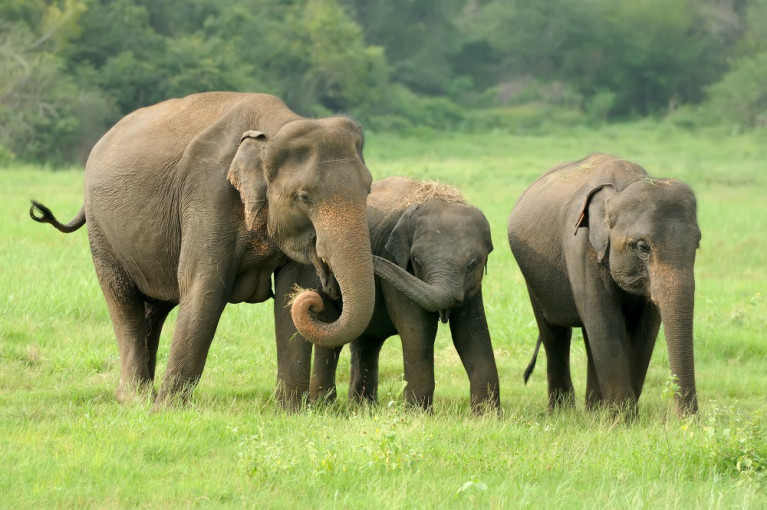
The human–elephant conflict in Way Kambas National Park (TNWK) has once again escalated. The death of Braja Asri Village Head Darusman of Way Jepara District, East Lampung, who was trampled by a wild elephant, has prompted the Lampung provincial government to build permanent boundary fences.
The construction of barriers along forest borders is deemed necessary to prevent wild elephants from leaving forest areas and damaging residents’ plantations. Through a circular letter, the government has also temporarily closed Nature Tourism Objects in TNWK, except for research, internship, and educational activities.
Raden Wisnu Nurcahyo, a Professor of Parasitology at the Faculty of Veterinary Medicine, Universitas Gadjah Mada (FKH UGM), stated that conflicts between humans and wildlife, particularly elephants, have increased over time.
The government has established facilities to train elephants to handle wild elephants that enter residential areas in regions prone to human–wildlife conflict. However, the problems have become increasingly complex due to both internal and external factors.
External factors include conflicts between humans and wildlife and the poaching of Sumatran elephants for their ivory, which is traded illegally.
Internal factors pertain to the condition of elephants captured and placed in Elephant Training Centers (PLG), which, over long periods, affect genetic diversity and population structure due to limited gene flow, increased genetic drift, and the risk of inbreeding.
“Differences in the origins of Sumatran elephants housed in PLGs can also affect the genetic diversity of this endemic Indonesian species,” he said on Tuesday (Feb. 3).
Professor Nurcahyo explained that the Sumatran elephant conflict in Way Kambas in 2025 was primarily triggered by habitat loss, deforestation, and land-use change around the national park, which has reduced food and water resources.
This habitat fragmentation has forced elephants to move into residential areas and plantations, causing material losses and resulting in fatal conflicts, including the deaths of both residents and elephants.
He reiterated that the Sumatran elephant conflict in Way Kambas is driven by habitat loss and fragmentation (deforestation) from land-use conversion around TNWK, which deprives elephants of shelter and food sources and pushes them out of their natural habitat.
The conversion of core zones into utilization zones has further limited safe spaces for elephants to forage and breed. Climate disturbances that affect the availability of water and food in forest areas also force elephants into community farmland.
Elephants require extensive habitat and possess strong spatial memory, leading them to repeatedly traverse the same routes (traditional migration paths), even when these areas have become settlements or plantations.
“Another contributing factor is poaching and the use of traps. Pressure on elephants is also driven by illegal hunting and snares, which often trigger defensive behavior that leads to conflict. These conditions peak with the destruction of agricultural land and threats to the lives of residents in buffer villages, prompting demands for the construction of permanent defensive walls or boundary fences,” he explained.
As part of conflict resolution efforts, Professor Nurcahyo emphasized the need for an integrated strategy, particularly the construction of 70 kilometers of permanent boundary infrastructure, the installation of GPS collars, and habitat restoration.
These efforts include embankments, electric fences, and the active participation of partner communities, forest police, and the Indonesian National Armed Forces (TNI) and National Police (Polri) to ensure that elephants remain within protected areas.
Such conflict-resolution strategies can be implemented by constructing permanent barriers, embankments, or canals along the 70-kilometer TNWK border to restrict elephant movement.
Adaptive mitigation is required through a combination of physical solutions tailored to the level of risk in each area, such as electric fencing, embankments, and wire barriers, to maximize effectiveness.
In addition, habitat restoration efforts should continue through ecosystem restoration and food enrichment to ensure elephants’ needs are met within the park, thereby reducing their drive to leave their habitat.
“I believe it is also necessary to strengthen intensive and technology-based security measures, including installing GPS collars on wild elephants to monitor their movements, deploying trained elephants and officers for herding, and fostering multi-stakeholder collaboration involving local communities, forest police partners (MMP), the TNI, and Polri in patrols, supported by cross-sectoral financing schemes between the government and development partners,” he concluded.
Author: Agung Nugroho
Post-editor: Jasmine Ferdian
Illustration: Freepik