


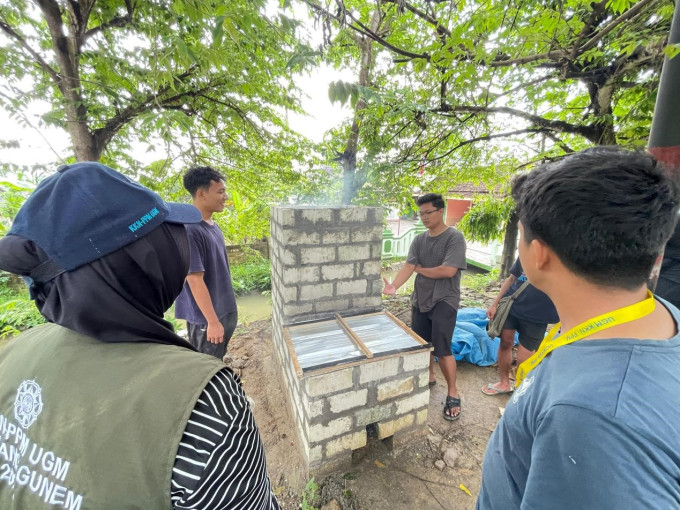
UGM Community Service Program (KKN-PPM UGM) students from the Gumilang Gunem unit conducted an outreach program to introduce a simple, low-pollution waste incineration technology in Panohan Village, Gunem Sub-district, Rembang Regency, Central Java. The outreach and demonstration of the simple incinerator provide a solution to village-scale waste management challenges, using readily available materials such as lightweight bricks, cement, sand, and iron.
Hafiz Dika Maulana, a member of the KKN-PPM UGM team, said the outreach on incinerator technology aimed to raise public awareness of proper waste management to help keep the environment clean and healthy.
The event was attended by the Head of Panohan Village, Amir Fuad, along with village officials and locals.
“The outreach and demonstration of the incinerator by UGM students are intended to provide village officials with an understanding of the function, working mechanism, and benefits of the incinerator in waste management, which will then be disseminated to the wider community,” Maulana said in a statement released on Tuesday (Feb. 3).
During the activity, KKN-PPM UGM students Muhammad Yassir Faruq Arzamy, Hafiz Dika Maulana, and Kemal Firdaus Ahmad provided explanations and hands-on demonstrations of how to use the incinerator.
“This incinerator functions to burn waste more completely, thereby significantly reducing waste volume and minimizing pollution from combustion residues, which ultimately supports environmental cleanliness and public health in the village,” Maulana explained.
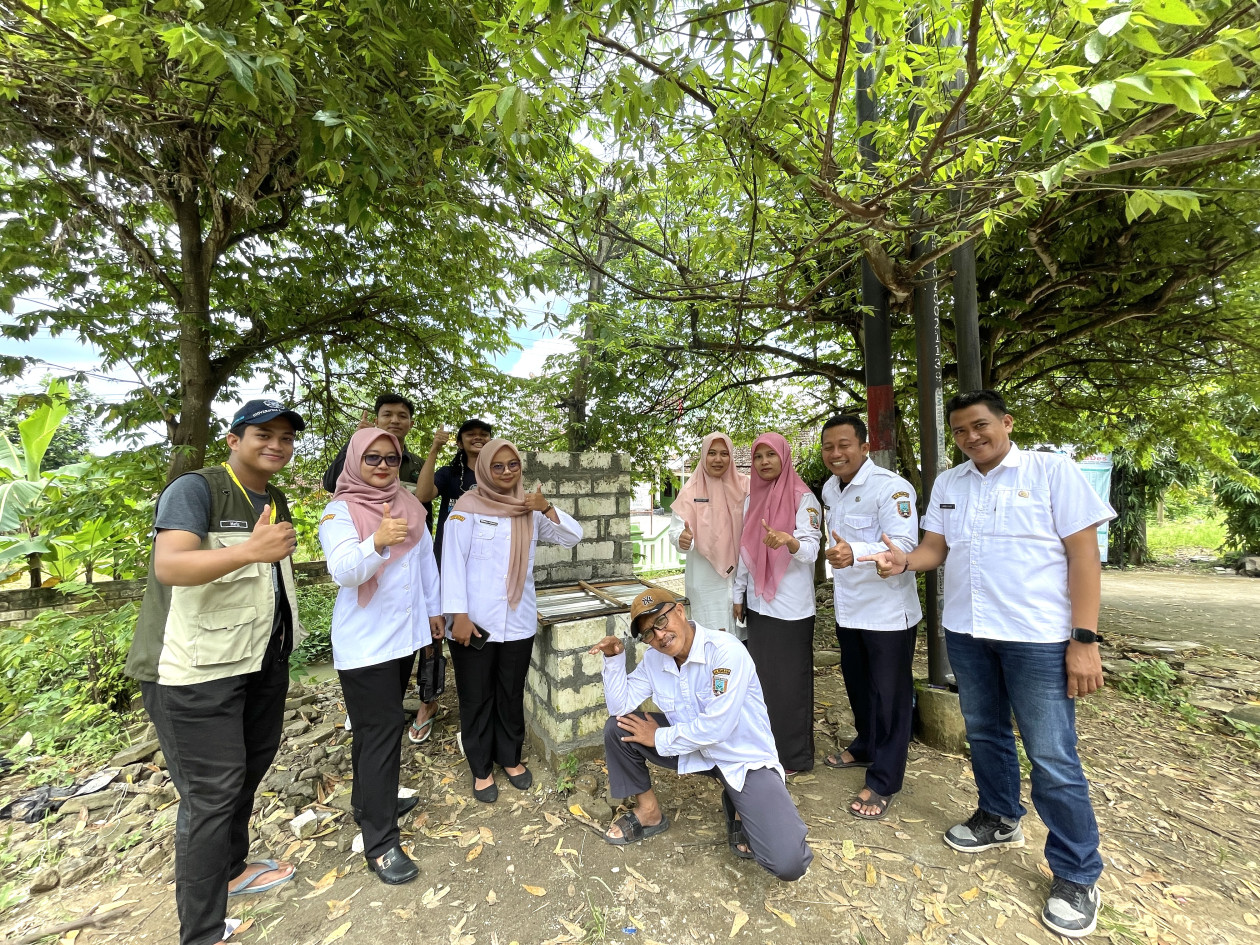
Head of Panohan Village, Amir Fuad, welcomed the simple technological innovation developed by the KKN-PPM UGM students. He expressed hope that the technology would help Panohan residents manage their waste more effectively.
“We warmly welcome the UGM students to introduce and directly demonstrate this low-smoke waste incinerator. Thank you, as this tool provides a safer alternative for waste burning with controlled smoke, so it does not disturb the respiratory health of people nearby,” he said.
In addition to waste management initiatives, the Gumilang Gunem team conducted community service by organizing a Science Festival at Demaan State Elementary School.
Through this program, students were expected not only to learn science from textbooks but also to practice it directly in the field.
Activities included demonstrations of chemical reactions simulating volcanic eruptions, mathematics and natural science quizzes in a competitive format, and the construction of water rockets assembled from used plastic bottles, PVC pipes, and pumps.
Most students said they were delighted to witness hands-on science practices in the field.
For many of them, this was their first experience, allowing them to directly observe how physical concepts work in real life, such as rockets launching straight or veering off course, which then became topics for discussion.
The UGM students also gave pupils the freedom to experiment, and when mistakes occurred, they were not immediately corrected; instead, they were used as entry points for discussion.
“From there, simple chemical reaction concepts are introduced not as memorization, but as observable processes,” said Ananda Shabrina Putri Gunawan, Coordinator for Demaan Village of the Gumilang Gunem team.
Ananda Shabrina added that the festival was designed to challenge the notion that science is a rigid subject. The students wanted elementary school pupils in Demaan to experience the process firsthand.
“Let them try, make mistakes, and then try again. From there, curiosity grows,” she added.
Shodiq Mulyo, Head of Demaan State Elementary School, expressed his gratitude for the science practice activities provided to students. The school viewed this practical approach as bringing a fresh perspective to learning.
“This experimental method and the competitions organized by UGM students have encouraged pupils to be more confident in asking questions and expressing their opinions,” he explained.
The Demaan Elementary School Science Festival and the waste management initiative using the incinerator are part of Gumilang Gunem’s flagship programs.
Dr. Sailal Arimi, the Field Supervisor of the Gumilang Gunem team, said he was pleased to see knowledge learned on campus being directly applied by students to elementary school pupils in Demaan.
Of the 120 work programs implemented, each student proposed five programs, while a total of 24 UGM students participated in KKN activities in Gunem Sub-district.
Other programs carried out included mapping the potential of village micro, small, and medium enterprises (MSMEs), producing religious tourism content in Panohan, raising awareness of the dangers of cyberbullying, providing education on the risks of drugs and smoking, producing mocaf flour, and improving literacy through letter-writing activities addressed to national leaders.
“I am grateful that the students are learning while applying their knowledge, interacting directly with the community, and hopefully the community benefits from the work of UGM students,” Dr. Arimi said.
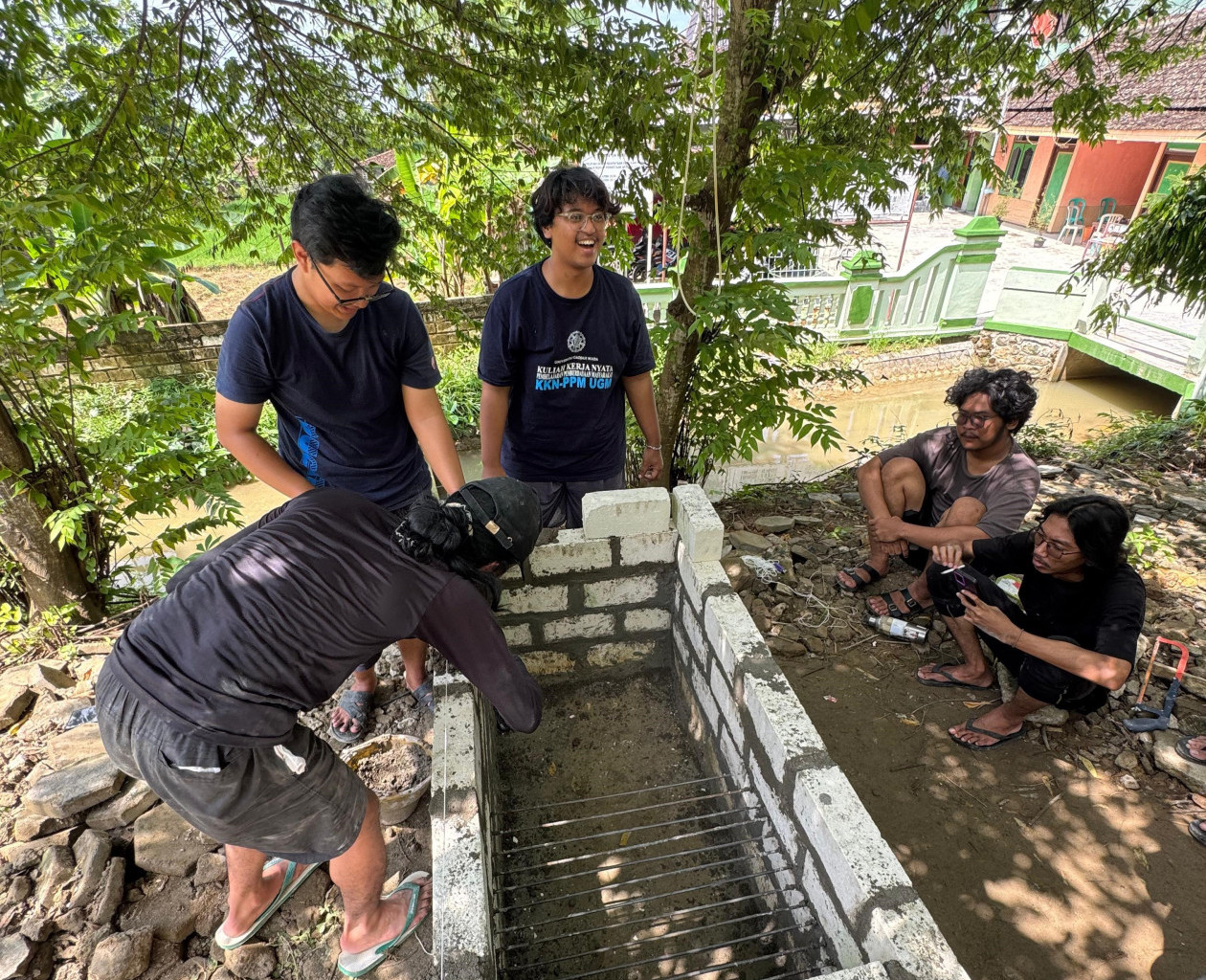
Dr. Arimi noted that the work programs initiated by the Gumilang Gunem team addressed urgent issues faced by the community. Waste problems, he explained, are among the contributing factors to floods, air pollution, unsightly environments, and other issues.
“With this incinerator, we hope communities accustomed to burning waste can be assisted through the use of this tool. As for the Science Festival at Demaan Elementary School, we all hope it can bring science out of textbooks and into the direct experiences of elementary school students,” he concluded.
Author: Agung Nugroho
Post-editor: Jasmine Ferdian