


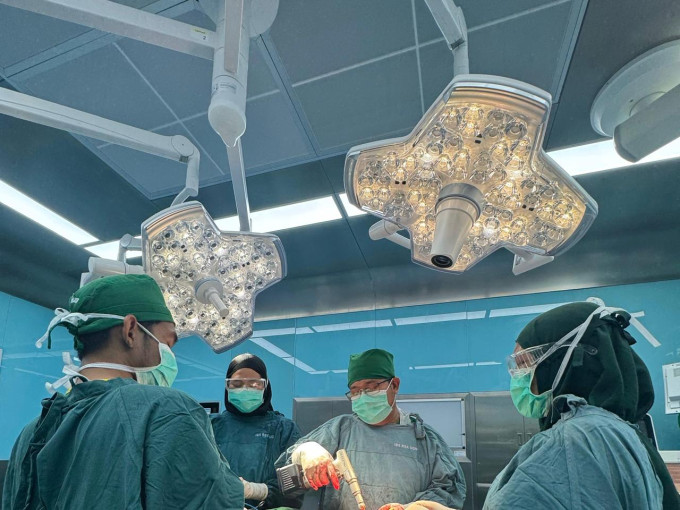
Cancer is one of the leading causes of death in Indonesia, ranking third after stroke and heart disease. Data from GLOBOCAN and the Ministry of Health show that cancer-related deaths in Indonesia reach approximately 234,000–242,000 cases each year. The cancer burden remains high, as many cases are diagnosed at an advanced stage, limiting treatment options and affecting therapeutic outcomes.
Low public awareness of early symptoms and limited early detection further complicate cancer management efforts. In this context, World Cancer Day, observed on Feb. 4, 2026, serves as a moment for reflection on the challenges of cancer control in Indonesia. At this stage, the role of oncology subspecialist surgeons becomes crucial in determining appropriate treatment strategies.
An oncology subspecialist surgeon at Universitas Gadjah Mada Academic Hospital (RSA UGM), R. Wahyu Kartiko Tomo, emphasized that effective cancer management requires timely intervention, a scientific approach, and a well-prepared health care system.
Tomo noted that the cancers most frequently requiring surgical treatment in Indonesia are still dominated by breast cancer, colorectal cancer, thyroid cancer, head and neck cancers, and gynecological cancers.
He argued that these types of cancer are often found among people of productive age, resulting in broad social impacts. When patients present with advanced disease, surgical procedures become more complex and carry higher risks.
“Most patients come in at an advanced stage, which makes the surgical procedures performed more complex,” Tomo said on Thursday (Feb. 5).
He stressed that early detection is vital to the success of cancer surgery. At an early stage, cancer is still localized, allowing for curative surgical intervention. This condition offers better outcomes and a lower risk of complications. Conversely, delayed diagnosis limits the available treatment options.
“At an early stage, cancer allows for curative surgery with a much better chance of survival,” Tomo said.
In daily practice, the challenges of cancer management do not stop at medical aspects alone. Tomo explained that patients often arrive in a deteriorated general condition, making both surgical procedures and recovery more difficult.
Psychological factors affecting patients and their families also influence medical decision-making. Furthermore, limitations in supporting facilities and cross-disciplinary coordination remain unresolved challenges.
“The biggest challenge is that patients come in late with a general condition that has already declined,” he said.
To date, public fear of cancer surgery remains a major obstacle. Many patients hesitate to undergo surgical treatment due to exposure to incomplete or misleading information. The myth that surgery accelerates the spread of cancer is still widely encountered.
According to Tomo, evidence-based education needs to be strengthened from the outset.
“Surgery, when performed with the right indications and techniques, is actually one of the main pillars of cancer treatment,” he said.
Advances in medical technology, he added, have brought significant changes to the practice of oncologic surgery. Minimally invasive surgical techniques and multimodal approaches help improve patient safety.
Postoperative recovery has become faster and is associated with better functional outcomes. Tomo noted that the goal of cancer surgery has now shifted toward preserving patients’ quality of life.
“The goal of oncologic surgery today is to maintain patients’ function and quality of life,” he explained.
On the occasion of World Cancer Day, Tomo urged the public to be more vigilant about their health. Cancer is no longer a disease that inevitably leads to death if detected early. Awareness of symptoms and the willingness to undergo screening need to be increased.
He believes that early medical consultation offers better outcomes.
“Early detection saves lives, provides opportunities for more effective therapy, and opens the door to longer life expectancy for cancer patients,” he concluded.
Author: Triya Andriyani
Post-editor: Jasmine Ferdian
Photograph: RSA UGM