


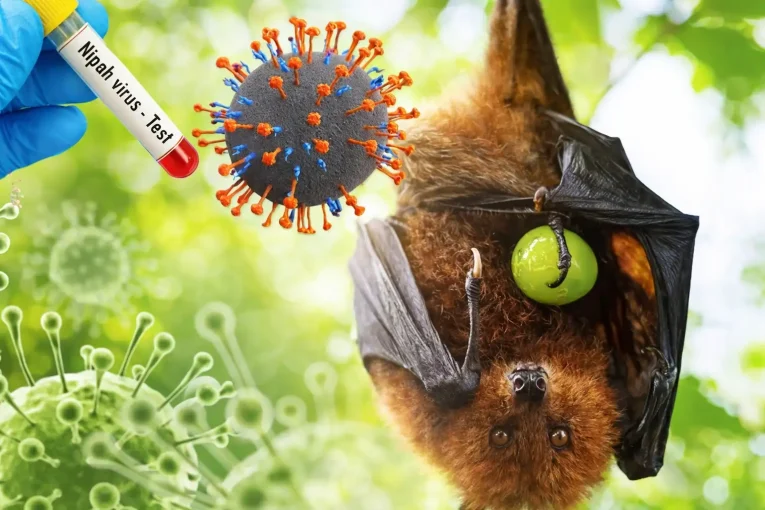
Nipah virus outbreaks have once again drawn attention. This zoonotic disease, with a high fatality rate, has raised concerns because the infection can attack the nervous system and cause severe complications, including death. Although no cases have been reported in Indonesia to date, similarities in ecological factors with affected countries underscore the need for vigilance; this underscores the importance of medically based explanations so that the public can understand the risks proportionally.
A lecturer at the Department of Microbiology, Faculty of Medicine, Public Health, and Nursing, Universitas Gadjah Mada (FK-KMK UGM), as well as a Clinical Microbiology Specialist at RSA UGM, Dr. M. Edwin Widyanto Daniwijaya, stated that mortality from the Nipah virus is strongly influenced by health system preparedness and the speed of clinical management. In several outbreaks, the number of deaths recorded was far higher than the number of confirmed cases.
“The case fatality rate of the Nipah virus is estimated to range from 40 to 75 percent, depending on the health system and clinical management,” said Dr. Daniwijaya on Tuesday (Feb. 10).
In addition to its high fatality rate, the Nipah virus can attack the central nervous system and cause rapid clinical deterioration. The infection can progress to encephalitis, or severe inflammation of brain tissue, accompanied by serious neurological symptoms.
This condition is often marked by decreased consciousness and seizures within a short period of time. The resulting neurological damage can ultimately lead to death.
“This virus can attack the brain and trigger decreased consciousness, seizures, and even death in a relatively short time,” Dr. Daniwijaya explained.
Furthermore, the early symptoms of Nipah virus infection are often nonspecific, making early recognition difficult. Dr. Daniwijaya explained that in the initial phase, complaints resemble those of common viral infections.
This condition puts many cases at risk of delayed clinical diagnosis. Delayed recognition of the disease increases the risk of deterioration.
“Patients usually experience fever, headache, muscle pain, nausea, vomiting, and sore throat,” he said.
As the disease progresses, symptoms can be severe within days. Patients may develop disorientation, decreased consciousness, and seizures as signs of nervous system involvement. In some cases, respiratory distress may also occur. Dr. Daniwijaya emphasized that rapid deterioration poses a major challenge in clinical management.
“The disease course can worsen quickly, which is why vigilance from the early phase is crucial,” he noted.
Regarding the potential emergence of the Nipah virus in Indonesia, Dr. Daniwijaya stated that no human cases have been reported. Nevertheless, risk factors still need to be considered, as Indonesia lies within an ecological region similar to endemic countries.
The presence of natural reservoirs of the Nipah virus in Southeast Asia is one important factor. In addition, outbreaks continue to be reported in several neighboring countries.
“The potential for spillover remains, even though the current risk is still considered low,” Dr. Daniwijaya explained.
He further noted that if patients with symptoms suggestive of Nipah virus infection are identified, referral hospitals will follow protocols for managing emerging infectious diseases. Initial steps include case identification based on exposure history and patient travel.
Immediate isolation proceeds with the application of standard and transmission-based precautions. Health workers are also required to use complete personal protective equipment.
“Initial management includes isolation, rapid reporting, molecular laboratory testing, and intensive supportive therapy,” he said.
He emphasized that Indonesia has an emerging infectious disease surveillance system and a referral hospital across various regions. Experience in handling the COVID-19 pandemic and avian influenza has further strengthened the national health system’s preparedness.
Nevertheless, strengthening the capacity of isolation facilities and human resources is still needed in several areas. Vigilance must be accompanied by proportional public education.
“The public does not need to panic, but should remain alert by implementing simple preventive measures,” Dr. Daniwijaya advised.
Author: Triya Andriyani
Post-editor: Jasmine Ferdian
Illustration: vietnam.vn