


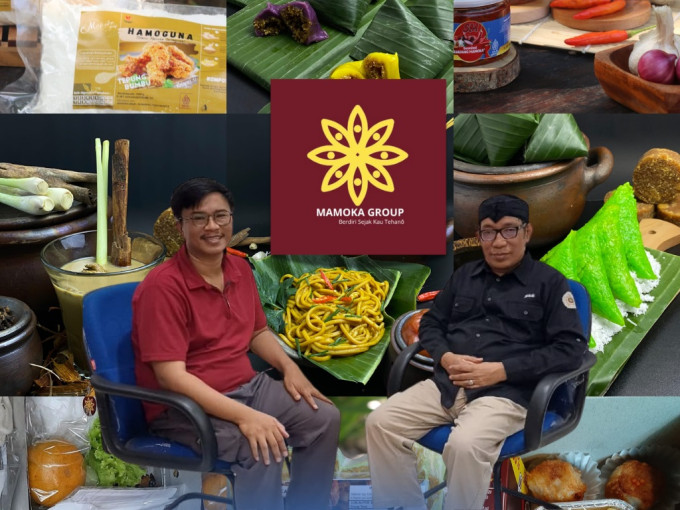
Anselmus Wau, known as Hans, never expected the COVID-19 pandemic would change the course of his life. At that time, widespread layoffs occurred, including at his workplace, and around the same period, his mother passed away. He then took the bold step of starting a small-scale food business, choosing cassava chips as his first product based on market segmentation considerations.
His business has continued to grow under the umbrella of MAMOKA Group, a micro, small, and medium enterprise (MSME) based in Depok District, Sleman Regency, Yogyakarta.
The alumnus of the Department of Social Development and Welfare, Faculty of Social and Political Sciences, Universitas Gadjah Mada (Fisipol UGM), admitted that he entered entrepreneurship amid despair after being laid off, driven by the courage to make decisive choices.
“The COVID-19 pandemic in early 2020 became a turning point in my life. I was laid off due to workforce reductions, and almost at the same time, my mother passed away. This situation forced me to take over the role of the family’s breadwinner, including financing my siblings’ education. The severance pay I received was certainly insufficient to support long-term needs,” he said when met at a corner of the campus on Wednesday (Feb. 11).
Born in Nias, North Sumatra, and now firmly settled in Yogyakarta, he expressed gratitude for his passion for cooking and for the courage to try new things. At the beginning of his business journey, he deliberately chose savory and spicy chip flavors.
“I chose this because sweet-flavored products already had too many competitors,” he explained.
Hans openly acknowledged that he started his business from scratch, and the initial capital of MAMOKA Group did not rely on conventional business funding. The severance pay he received was not used as production capital but rather to meet daily living expenses.
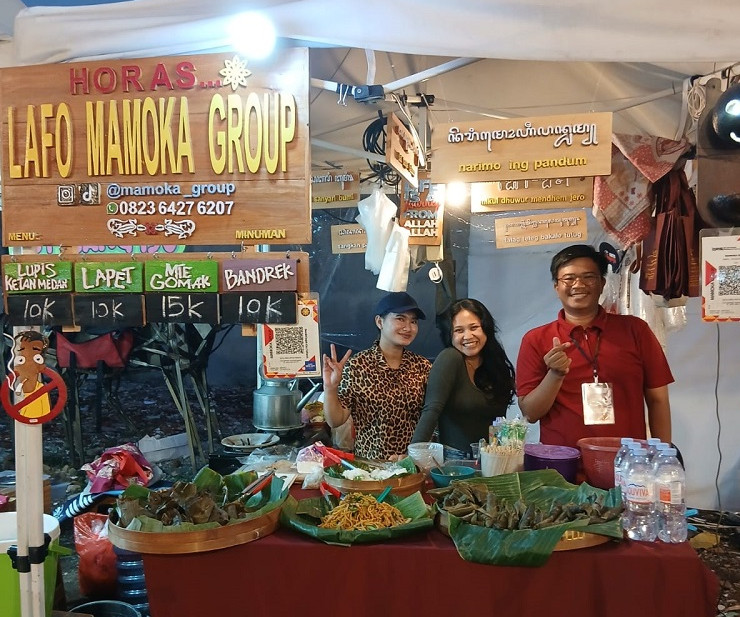
In its early stages, cassava chip production was carried out gradually using a simple system. Initially, MAMOKA Group’s monthly sales ranged from 500 to 1,000 packs, all distributed through a consignment system within its network of friends in the Greater Jakarta area.
“At that time, sales had not even targeted the Yogyakarta market,” he noted.
Over time, Hans began considering product sustainability. He realized that the sweet-and-spicy flavor trend could potentially lead to market saturation, prompting the creation of MAMOKA’s chili sauce products.
“Unfortunately, this product did not receive optimal market response, especially as it coincided with social distancing measures that shifted consumers toward online platforms,” he said.
Facing these challenges, Hans pivoted his business strategy. To maintain his signature spicy, savory taste, he introduced Ayam Geprek MAMOKA and began operating through GoFood. This move proved effective, as demand increased rapidly, encouraging him to formalize various business permits. He subsequently processed intellectual property rights, halal certification, and other legal requirements.
Expansion continued. He also partnered with GrabFood and ShopeeFood for digital sales, and at its peak, online orders reached around 100 portions per day.
“There were even times when we received an average of five orders per minute, especially during National Online Shopping Day (Harbolnas). Diverse consumer demand led to further innovation. From boxed rice orders came the ‘Catering MAMOKA’ Rice Box, followed by the ‘Mela Mela MAMOKA’ Snack Box targeting events and group consumption,” he explained.
After succeeding with ready-to-eat food products that gained market recognition, Hans revived MAMOKA’s chili sauce products. This time, the chili sauce was packaged as a Yogyakarta specialty souvenir with a distinctive spicy-savory flavor unlike mainstream products. MAMOKA chili sauce is now available in several well-known souvenir shops, including Hamzah Batik, Raminten, and Jogja Mart.
“Several ministries have visited MAMOKA Group,” he added.
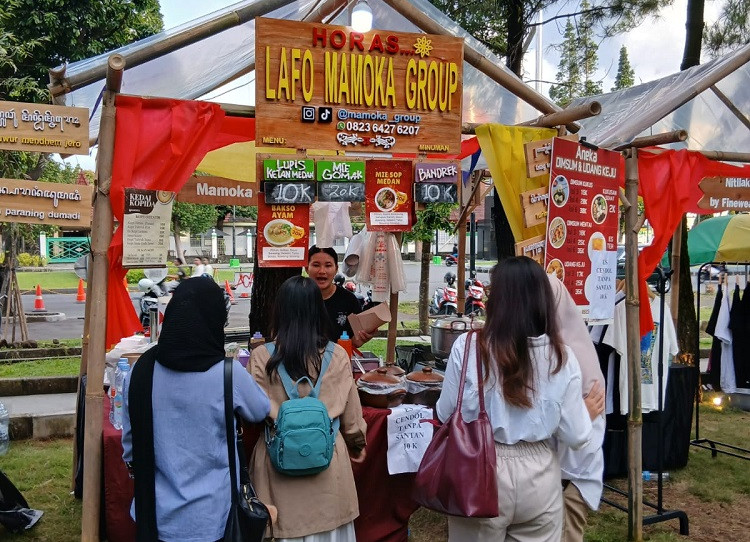
Innovation at MAMOKA did not stop there. Responding to market demand for traditional fresh foods, Hans introduced North Sumatran specialties, including Mie Gomak, Miso (Mieso), Lapet, Lupis, and Bandrek.
These products received an enthusiastic response, particularly when marketed at Pasar Kangen, where total sales reached 3,000 pieces. The uniqueness of the products is reinforced by the use of authentic North Sumatran ingredients, such as andaliman pepper, cumin, and kaffir lime leaf powder.
“We do this to preserve authentic flavors and meet market expectations,” he said.
MAMOKA Group continues to grow and currently uses Tokopedia and Shopee as sales channels, while branding is managed actively on Instagram and WhatsApp Business.
Ayam Geprek MAMOKA has even been recognized as one of the most delicious ayam geprek outlets around UGM, and its quality was once reviewed by the national media outlet Kompas.
Hans’s success demonstrates that a background in the social sciences can integrate with business innovation rooted in food, culture, and digital technology.
The story of MAMOKA Group shows that resilience, innovation, and collaboration with higher education institutions can give rise to MSMEs that deliver tangible social and economic impact. It stands as proof that community engagement and entrepreneurship can go hand in hand, creating value for society at large.
Author: Agung Nugroho
Post-editor: Rajendra Arya