


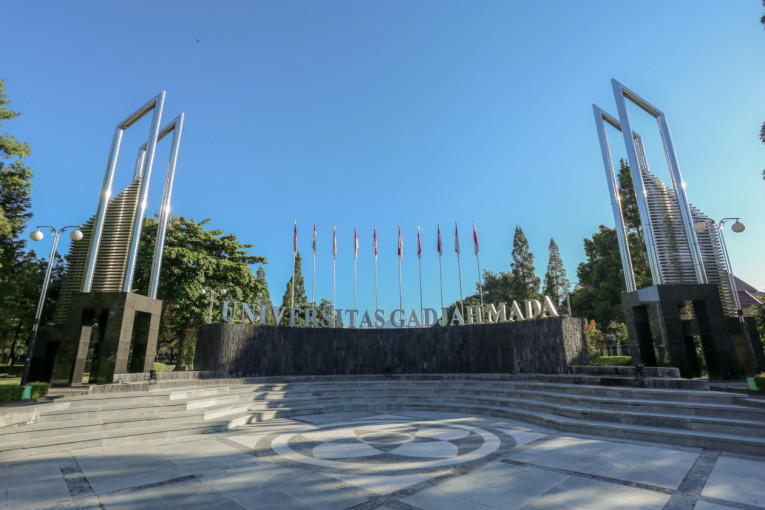
The Faculty of Social and Political Sciences at Universitas Gadjah Mada (Fisipol UGM) has once again achieved outstanding results in the QS World University Rankings (WUR) by Subject 2026.
Two academic fields under Fisipol have successfully entered the global top 100 and 200. Development Studies recorded a significant rise, placing in the top 50–100 worldwide. Meanwhile, Politics & International Studies has consistently remained in the top 150–200 globally.
In Development Studies, UGM ranks first in Indonesia, followed by the University of Indonesia (UI), which ranks second nationally and is placed in the 101–150 global range. Meanwhile, in Politics & International Studies, UGM also ranks first in Indonesia, followed by UI, Airlangga University (Unair), and Hasanuddin University.
The Vice Dean for Academic and Student Affairs at Fisipol UGM, Professor Poppy Sulistyaning Winanti, stated that this achievement is not the result of a single study program but rather the outcome of interdisciplinary collaboration.
“The QS by Subject classification does not rigidly align with the structure of study programs at UGM. For example, Development Studies encompasses various programs with similar concentrations. This demonstrates that the interdisciplinary and multidisciplinary approach at UGM has been relatively successful,” she said on Tuesday (Apr. 7).
Professor Poppy emphasized that a collaborative mindset must continue to be strengthened to enhance academic contributions and global reputation. She explained that several strategic initiatives have been consistently undertaken to boost international recognition while directly benefiting the academic community, such as Fisipol UGM’s active participation in the Global Humanities Alliance (GHA).
“Fisipol is part of a global humanities alliance involving eight universities from various countries. We have developed a range of collaborations, including organizing seminars, bidding for research grants, and more,” she explained.
Furthermore, Professor Poppy noted that through the GHA alliance, Fisipol UGM also develops research aligned with the faculty’s main research themes.
“Several strategic issues that form the focus of joint studies with international partners include sustainability, responses to climate change, democracy, public humanities, and the decolonization of knowledge,” she added.
Meanwhile, to strengthen its internal academic ecosystem, Fisipol UGM regularly invites leading global experts as guest lecturers. This initiative aims to expand research networks while showcasing the faculty’s academic excellence.
“The presence of visiting fellows is an important instrument for building our academic reputation. In addition, we continue to develop various joint course programs by inviting experts as guest lecturers,” she explained.
Furthermore, in observing the results across each subject, Professor Winanti acknowledged that the greatest challenge lies in improving the H-index and international publication productivity.
To address this, she explained that the faculty has implemented a competitive research grant scheme for more than 10 years that requires collaboration with reputable international researchers or lecturers.
“The outcomes of these collaborative research efforts will contribute to improving the H-index of Fisipol UGM lecturers,” she added.
In addition, to keep pace with the evolving times, Fisipol UGM continues to accelerate digital transformation, particularly in bringing international experts into the classroom. Professor Poppy explained that since the pandemic, Fisipol UGM has developed its own Learning Management System (LMS) called Focus.
“When international lecturers teach classes, we also manage them online. These sessions are digitized through Focus for both immediate learning needs and long-term use,” she concluded.
Moreover, as it continues to advance its international reputation, Fisipol UGM emphasized that such achievements should not cause the university to overlook its fundamental role. Professor Poppy stressed that efforts to improve global rankings and to deliver tangible contributions to society must go hand in hand.
“Global reputation is important. However, it does not mean we neglect the role of higher education in addressing real societal challenges. All must support one another in line with the values of the tridharma of higher education,” she concluded.
Author: Aldi Firmansyah
Editor: Gusti Grehenson
Post-editor: Jasmine Ferdian
Photo: UGM Public Relations