


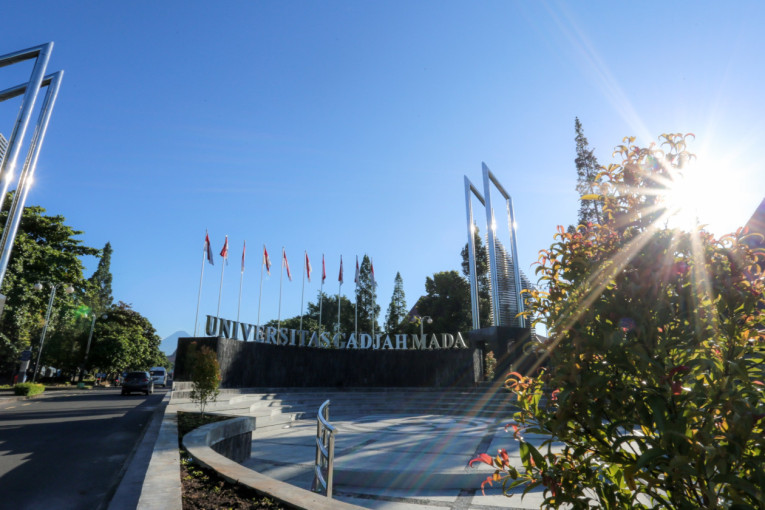
Universitas Gadjah Mada has once again achieved a remarkable milestone on the international stage. In the QS World University Rankings (WUR) by Subject 2026, Anthropology secured a position within the world’s top 51–100. This achievement reaffirms UGM’s standing as one of the leading centers for anthropological studies globally. At the national level, UGM ranks first, followed by Universitas Indonesia (ranked 51–100 globally) in second place and Universitas Airlangga (ranked 101–200 globally) in third place.
Responding to this achievement, the Head of the Department of Anthropology at the Faculty of Cultural Sciences UGM (FIB UGM), Dr. Agung Wicaksono, expressed his gratitude and appreciation for the hard work of the entire academic community. He outlined several key factors driving this accomplishment. One of the most crucial policies is granting faculty members the freedom to develop their research and publications.
“One of the keys to this success is allowing our lecturers the freedom to focus on what they are passionate about. Our faculty can focus on developing their areas of expertise in line with their individual interests. The impact of this knowledge is reflected in community service, education, and research,” he explained on Friday (Apr. 10).
Furthermore, international research collaboration has become a fundamental pillar. The Department of Anthropology has established global partnerships built on extensive academic experience.
“Our staff maintains collaborations with international colleagues to ensure sustainability. This contributes positively to research quality and yields strong outcomes. Knowledge is constantly evolving and plays a role in preparing future generations, so the exchange of knowledge is essential, especially at the international level,” he said.
Regarding funding, he acknowledged that high-quality research cannot exist without adequate support. As part of its internationalization efforts, the department has partnered with several international companies to support globally oriented research funding. In terms of education, the Department of Anthropology has consistently updated its curriculum, aiming for 10-30% revisions to each course and incorporating the latest references.
“We recognize that the world continues to change, and so does the way we understand reality. Therefore, every course must be updated with the latest references. We also promote internationalization through the International Undergraduate Program (IUP) and by inviting lecturers from abroad,” he added.
In recent years, publication achievements in the Department of Anthropology have focused on long-term flagship research that has gradually developed.
“Anthropological research takes time. Academic work is built over the long term. All of this forms our strong foundation,” he noted.
In terms of community service, the Department of Anthropology has successfully developed an integrated social engagement program grounded in research outcomes.
“Our community service is built on research. Issues in villages are addressed through research-based community service. Therefore, community service must be integrated with research,” he emphasized.
Dr. Wicaksono shared his impressions and message regarding this latest achievement. He expressed pride in the hard work of both lecturers and students.
“This achievement proves that our collective efforts have a meaningful impact. We will continue to foster an international academic environment, as this is the key to remaining competitive and recognized globally,” he concluded.
Author: Diyana Khairunnisa
Editor: Gusti Grehenson
Post-editor: Jasmine Ferdian
Photo: Donnie