


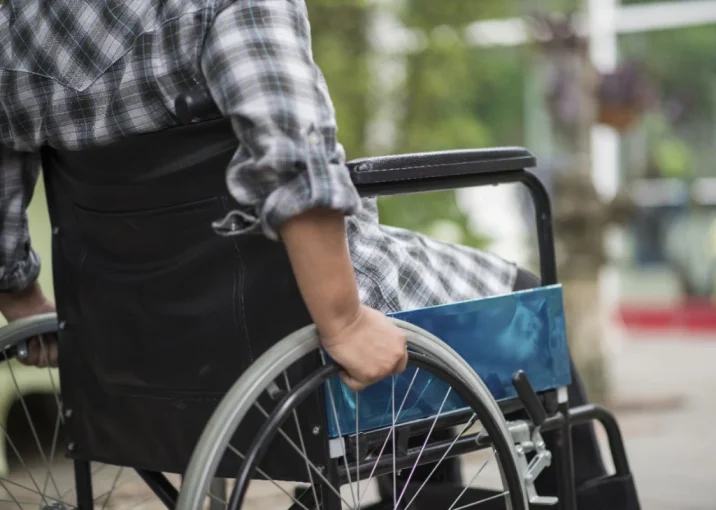
Universitas Gadjah Mada (UGM) continues to commit to being an inclusive campus by developing public information services that are friendly to all groups of society, including persons with disabilities. Accessibility is not merely the provision of facilities, but ease of access designed based on users’ actual needs through appropriate assessment processes. This way, the services provided can truly ensure equal opportunities for persons with disabilities.
UGM Secretary, Dr. Andi Sandi Antonius Tabusassa Tonralipu, emphasized that inclusivity is an important factor contributing to UGM’s reputation and global recognition. According to Andi Sandi, the success of UGM as a national university is measured not only by academic achievement but also by its ability to provide an open learning space for all groups. An inclusive approach requires a shift in perspective toward disability.
“If previously people assessed one’s ability based on visual or physical aspects, now we must look at logical ability, thinking capacity, and individual potential. “ This is not easy, but it is the direction we must take,” said Andi Sandi when opening the workshop titled “Inklusivitas dan Aksesibilitas dalam Layanan Informasi Publik” (Inclusivity and Accessibility in Public Information Services) on Thursday (Jun. 18) in the Multimedia Room at the UGM Central Office.
Andi Sandi also highlighted the importance of public communication in building an inclusive culture. Every piece of information published by the university must reflect the values of equality, diversity, and respect for individual rights.
“Whatever we do will impact the institution’s image. Therefore, the communication we build must reflect UGM’s vision and mission as a truly inclusive, safe, resilient, and sustainable campus,” he said.
Furthermore, he encouraged all work units within UGM to strengthen synergy in delivering services that are friendly to all members of society.
“We cannot work in isolation. Inclusivity must become a shared spirit embedded in every policy, service, and campus activity. In this way, UGM can continue to grow as a university that provides equal space for all its members,” he added.
Head of the UGM Disability Services Unit (ULD), Dr. Wuri Handayani, emphasized that disability is a sensitive issue that requires proper understanding in policy formulation and public service delivery. According to Wuri, inclusivity and accessibility are interrelated and inseparable.
“Inclusion is the goal to be achieved, namely, ensuring that everyone from diverse backgrounds, including persons with disabilities, can participate and feel valued through empowerment. Meanwhile, accessibility is the means or steps to achieve that goal,” she explained.
In the same session, participants were also given an overview of the various challenges that persons with disabilities face in accessing digital services. A part-time staff member of the UGM Disability Services Unit (ULD), who is blind, shared her experience in completing an online registration process.
“The captcha code still does not have an audio feature, making it difficult for blind users. This issue reminds me of the difficulties I experienced four years ago when registering,” she said.
This experience serves as an important reminder that digital transformation must go hand in hand with accessibility principles to avoid creating new barriers for vulnerable groups.
In a session on inclusive communication, Wuri emphasized the importance of using language that respects the dignity of persons with disabilities. Inclusive communication is not merely about word choice but also about how information is delivered to be digestible for everyone.
“We need to use clear language, provide accessible information, and avoid terms that are degrading or pitying. The correct term to use is ‘disability,’” she explained.
Furthermore, Wuri stated that prospective students with disabilities should receive clear information on admission processes, study program characteristics, and available support during their studies. Such information is essential for prospective students to assess the alignment between their needs and the learning process they will undertake.
She also highlighted good practices implemented by several universities worldwide, which use academic achievement as the primary basis for student selection.
“The basis of admission assessment should be academic merit. The university’s responsibility is to ensure that when someone has adequate academic ability, the institution can provide the necessary facilities and support,” she said.
Wuri emphasized the importance of providing more comprehensive guidance on the learning process for each study program, rather than merely lists of physical or health requirements.
“Students with disabilities need a clear understanding of the learning process in a study program so they can anticipate the needs and abilities required to follow it,” she explained.
In her presentation, Wuri also reminded participants that the development of national regulations reflects an expanded understanding of disability. Constitutional Court Decision Number 130/2025, for example, recognizes certain chronic illnesses as physical disabilities when they have been medically assessed and cause limitations in daily activities. This paradigm shift shows that inclusivity must be understood more broadly and applied across all aspects of public services, including higher education.
Wuri encouraged all units within UGM to make inclusivity part of the organizational culture rather than merely an administrative obligation.
“UGM’s current tagline reflects its commitment to becoming an inclusive, safe, resilient, and sustainable campus. Hopefully, these inclusive values become part of every policy and activity we carry out,” she said.
Through this initiative, UGM reaffirms its efforts to build a higher education ecosystem that is increasingly open, accessible, and equitable for all members of the academic community. Strengthening the accessibility of public information services is expected to become a concrete step toward creating an inclusive academic environment and supporting the full participation of persons with disabilities in higher education.
Author: Jelita Agustine
Editor: Gusti Grehenson
Post-editor: Jasmine Ferdian
Photo: UGM Public Relations