


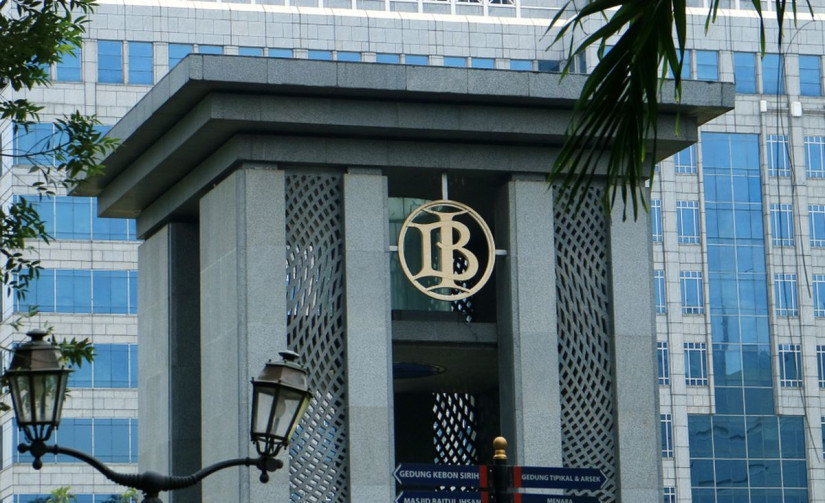
After Perry Warjiyo resigned as Governor of Bank Indonesia (BI), the central bank faces the ongoing challenge of defending the rupiah against the US dollar while safeguarding domestic economic stability. Perry Warjiyo’s unexpected resignation sparked widespread speculation and concern. The leadership transition comes amid continued global economic uncertainty.
Amid pressure on the rupiah and volatility in international financial markets, the public is questioning BI’s future monetary policy direction and whether its new leadership can preserve national economic stability. As concerns have grown, the market reportedly responded negatively.
Yudhistira Hendra Pramana, S.E., M.Sc., Ph.D., an economist at the Department of Economics and Business, UGM Vocational College (SV UGM), explained the market’s negative reaction as rational updating, an adjustment of expectations based on new information relevant to market participants.
Such a response is common after a senior public official resigns. Uncertainty over the reasons for Perry Warjiyo’s resignation has led investors to await the government’s decision on the new Governor of Bank Indonesia.
“We should understand this negative response as rational updating rather than panic. This pattern consistently emerges when senior officials resign, and the market will wait for the government’s next move, in this case, who will replace Perry Warjiyo,” he said on Monday (Aug. 3).
According to Yudhistira, continued volatility in the rupiah exchange rate has compounded the situation. This has increased both the cost of capital and the hedging costs businesses incur to protect import transactions from exchange rate fluctuations.
Nevertheless, these concerns are only part of a broader picture, as the situation remains unresolved. Market participants are waiting not only for Perry Warjiyo’s successor but also for the monetary policy direction the new governor will pursue over the short, medium, and long term, including the implementation of the latest Law on Financial Sector Development and Strengthening (P2SK).
“The market is waiting for Perry Warjiyo’s successor and for the future policy direction over the short, medium, and long term, including the implementation of the latest P2SK Law,” he said.
From a legal perspective, Yudhistira views BI as an independent institution that supports economic growth and faces no legal issues. The central bank’s primary mandate to maintain rupiah stability should be carried out through a policy mix aligned with the government’s broader economic policies. Therefore, preserving monetary stability should not come at the expense of economic growth.
“BI’s priority remains stabilizing the rupiah, but its policy mix should not sacrifice economic growth. This is what we refer to as growth-friendly stability,” he said.
Yudhistira argued that the government’s most urgent task is to appoint a permanent Governor of BI. The successor must possess the capacity, credibility, and experience necessary to maintain market confidence amid ongoing economic uncertainty.
BI’s independence must continue to be safeguarded so that its monetary policies remain focused on maintaining rupiah stability while supporting sustainable economic growth. In Yudhistira’s view, the principle of growth-friendly stability provides an important foundation for balancing monetary stability and economic expansion.
Discussing BI’s role within the national financial system, Pramana explained that the central bank’s primary responsibility under Law No. 3 of 2004 is to maintain rupiah stability. However, Law No. 4 of 2026 revised the law, expanding BI’s mandate to include safeguarding payment system and financial system stability to support sustainable economic growth.
As a result, BI now has multiple objectives that directly affect the public, making questions about its independence increasingly relevant.
“BI now has multiple objectives that directly affect the public, making people naturally question its independence,” he said.
BI’s policy instruments are shaped by the responsibilities assigned under Law No. 4 of 2026 on the P2SK, including foreign exchange intervention, which affects businesses and imports. Likewise, the central bank’s payment-system and foreign-exchange policies influence the preparation of the state budget through exchange-rate assumptions; these policies ultimately have direct implications for the public.
Yudhistira stressed that BI must preserve the independence mandated by Law No. 3 of 2004. The central bank’s independence encompasses five dimensions: objectives, policy instruments, personnel, budget, and accountability. Independence in policy instruments, personnel, and budgeting must be protected to ensure BI can conduct monetary policy free from external intervention.
Meanwhile, regarding objectives and accountability, Yudhistira argued BI’s policies should remain aligned with national development priorities to avoid policy overlap.
He emphasized regularly evaluating the central bank’s performance to ensure its independence contributes positively to national economic development.
Given current global and domestic economic conditions, Yudhistira said BI’s next governor appointment deserves close attention. If the nomination process is perceived as nepotism, the market is likely to react negatively.
He also urged close monitoring of global developments, particularly the US Federal Open Market Committee’s (FOMC) decision to keep interest rates at 3.5-3.75 percent amid concerns about inflationary pressures from the US-Iran conflict. These conditions could keep the US dollar strong over the coming months, placing continued pressure on the rupiah.
Yudhistira believes this pressure may prompt BI to raise the BI Rate to prevent capital outflows. The government should carefully consider implementing the burden-sharing mechanism under the P2SK Law’s crisis clause, which could further pressure BI’s independence, particularly its policy instruments.
“The BI Rate is likely to increase to around 6–6.5 percent to contain capital outflows. Another issue that deserves attention is the burden-sharing mechanism under the P2SK crisis clause, which could put pressure on BI’s independence, particularly its policy instruments,” he concluded.
Author: Zabrina Kumara
Editor: Gusti Grehenson
Post-editor: Jasmine Ferdian
Photo: Shutterstock