Recent News
FEB UGM installs 17 infiltration wells on campus as part of its “save water” campaign to support sustainable groundwater conservation.
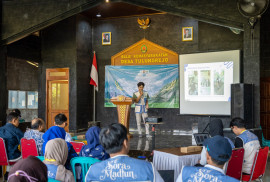
FIB UGM’s 2025 Festival Bulan Bahasa “Pusaka Baswara” celebrates the spirit of Bahasa Indonesia and its literary legacy for the world.
GAMAFORCE of Universitas Gadjah Mada secures its 8th overall title at the Kontes Robot Terbang Indonesia (KRTI) 2025, highlighting Indonesian aerospace research excellence.
Universitas Gadjah Mada honours the life and legacy of Professor Nursamsi Pusposendjojo, a beloved scholar of plant pathology, at the age of 82.
UGM students convey social and political criticism through monologue performances at the 2025 Porsenigama festival.
The UGM Faculty of Philosophy and Temanggung artists held the Second Karawitan Festival to preserve Indonesia’s traditional music.
Experts highlight Indonesia’s vast potential for carbon trade and call for stronger governance to ensure transparency and accountability.
UGM students showcased their creativity in Porsenigama’s photography contest, capturing emotional moments through lenses at Wisdom Park.
UGM Vocational College celebrates its 16th anniversary by reinforcing its commitment to impactful and globally relevant applied education.
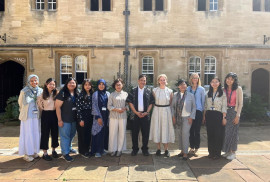
UGM Biology student researches nutmeg plants at Leiden University’s Naturalis Center and Hortus Botanicus to enhance collaboration.
Over 1,100 participants joined the Korpagama Fun Walk at UGM to celebrate the organization’s 20th anniversary and UGM’s 76th anniversary.
The Feed Director of the Ministry of Agriculture earns a cum laude doctorate from UGM with research on livestock vessels and animal welfare.
Influenza cases surge by 55% in Indonesia. UGM’s expert calls for enhanced surveillance, vaccination, and public awareness to prevent the transmission of the disease.
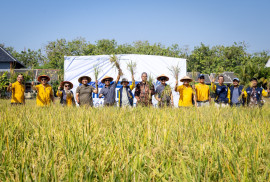
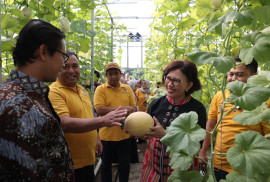
UGM research team promotes circular economy collaboration between oil palm and cattle farming to boost sustainability in North Konawe’s transmigration area.
Experts emphasize the importance of evidence-based and inclusive data systems in strengthening Indonesia’s poverty alleviation and social protection policies.
UGM’s expert highlights the dangers of microplastics found in rainwater, urging stronger awareness and preventive action to protect human health.
UGM Professor Gabriel Lele highlights that the reduction of regional transfer funds reflects weak fiscal independence and centralization of control.
UGM economist Dr. Wisnu Setiadi Nugroho criticizes Indonesia’s employment policies as being short-term and insufficient to address youth unemployment.
Amanda Eka Lupita, 22, graduated from UGM’s master’s program in Plant Pest Science, earning recognition as the university’s youngest graduate.
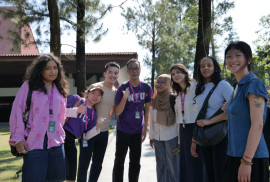
UGM Faculty of Biology collaborates with 77 schools from 19 provinces to expand access to education and career pathways through international programs.
UGM economist Dr. Evi Noor Afifah urges the government to focus on quality, timely, and targeted spending amid rising idle regional funds.
At only 25, Rizky Aflaha becomes UGM’s youngest Ph.D. in Physics, proving that strategy, discipline, and confidence drive academic success.
UGM environmental expert Prof. Djati Mardiatno explains that Indonesia’s extreme heat is caused by solar movement, urban heat islands, and low green space coverage.
UGM researcher identifies genetic variants linked to microtia, paving the way for precision medicine and genomic research in Indonesia.
UGM historian Dr. Nur Aini Setiawati highlights that throughout Indonesia’s industrial history, wealth has often benefited only a few.
UGM students empower Donoharjo Village through the Gemilang Desa program, integrating innovation, health, and youth collaboration for rural progress.
UGM accounting lecturer Dr. Arika Artiningsih outlines the characteristics and warning signs of fraud in both the business and government sectors.
UGM energy economist Dr. Fahmy Radhi warns that threats against private gas stations could harm Indonesia’s overall investment climate.
UGM encourages the preservation of classical batik through innovation, digital technology, and the empowerment of MSMEs to sustain cultural heritage.
UGM student team develops eco-friendly hydrogel scaffold from water hyacinth and microalgae to accelerate diabetic wound healing.