


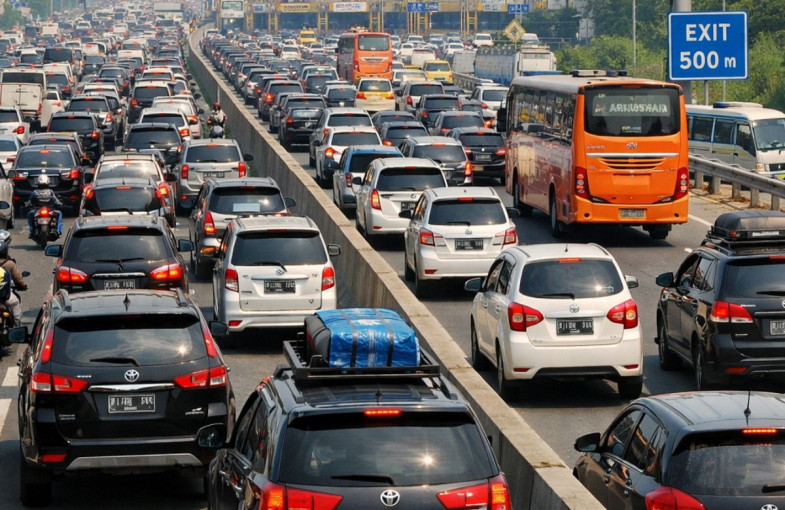
The Ministry of Transportation of the Republic of Indonesia predicts that the number of travelers during the 2026 Eid homecoming season will reach approximately 143.9 million people. This figure represents a decline of around 1.7 percent compared to the previous year. Meanwhile, the peak outbound travel period is expected to occur twice, on March 14–15 and March 18, 2026, while the peak return flow is predicted to take place on March 24, 2026.
The main destinations for travelers are Central Java, East Java, West Java, the Special Region of Yogyakarta (DIY), and South Sulawesi. To ensure smooth and comfortable travel during the holiday migration, the government has implemented several strategies, including activating monitoring posts for 18 days from March 13 to 30, 2026, and introducing a Work From Anywhere (WFA) policy on March 16–17, 2026, to reduce congestion. In addition, free homecoming transportation services will also be provided.
Researcher at the UGM Center for Transportation and Logistics Studies (Pustral), Dwi Ardianta Kurniawan, said the government has optimized road infrastructure on both arterial roads and toll highways. During the 2026 Eid homecoming season, PT Jasa Marga has prepared four new functional toll road sections within the Trans-Java network that travelers can use free of charge. The opening of these functional routes is specifically designed to reduce congestion at critical bottleneck points and accelerate traffic distribution.
“The hope is that travel time for land transportation can be significantly reduced to accommodate the mobility of hundreds of millions of travelers,” Kurniawan said on Friday (Mar. 13).
Considering the high demand for rest areas, Kurniawan explained that the government has also paid extra attention to supporting facilities along the homecoming routes. The Ministry of Transportation (Kemenhub) has collaborated with the Ministry of Religious Affairs of the Republic of Indonesia (Kemenag RI) to utilize around 6,859 mosques along the routes as additional rest areas. Several other facilities will also operate 24 hours a day from seven days before Eid until seven days after.
“All of these preparations serve as strategic alternatives for travelers when official toll road rest areas experience vehicle congestion. They also ensure that every driver still has space to rest and perform prayers comfortably,” he explained.
To maintain road safety during the homecoming flow, Kurniawan advised bus operators and private vehicle users to ensure their vehicles are technically ready before departure. According to him, technical readiness is a non-negotiable requirement given the dynamic weather conditions and long travel routes. Therefore, travelers should conduct a thorough inspection of vital vehicle components, including tire tread thickness and proper air pressure, fully functioning braking systems, and optimal levels and quality of all vehicle fluids, such as engine oil, radiator coolant, and brake fluid.
“Ignoring technical readiness is equivalent to creating a major opportunity for fatal accidents on the road,” he said.
Safety, Kurniawan added, is also closely related to driver fatigue management. Being behind the wheel for hours can reduce concentration levels and increase the risk of microsleep, which he noted is one of the major contributors to accidents on toll roads.
“Consistently apply safe driving standards. Take a rest for at least 15–30 minutes after driving for a maximum of four consecutive hours. Use toll road rest areas or the thousands of mosques prepared by the government to stretch, drink water, and regain focus before continuing the journey,” he suggested.
Regarding travel comfort, Kurniawan acknowledged that travelers in 2026 will benefit greatly from increasingly precise traffic information technology. To avoid getting stuck in traffic jams, travelers can use real-time digital navigation applications to monitor their routes. He emphasized the importance of adjusting departure schedules based on official information from the Indonesian National Police Traffic Corps (Korlantas Polri) regarding traffic engineering measures, such as one-way systems, contraflow, or operational restrictions for freight trucks.
“This will help ensure that traveling outside peak periods makes the journey feel much smoother and less stressful,” he said.
According to Kurniawan, the essence of the Eid homecoming tradition is to celebrate the holiday and reconnect with family safely. With improved road infrastructure and additional rest area facilities, travelers should also maintain awareness by obeying traffic signs and practicing proper driving etiquette. With well-prepared vehicles, disciplined fatigue management, and careful route planning, the homecoming journey can become a safe and comfortable experience that ultimately leads to joyful reunions in one’s hometown.
Equally important, he noted, is managing comfort inside the vehicle cabin. This becomes especially crucial when traveling with children or elderly passengers. Drivers should ensure the air conditioning system functions properly so that air circulation remains comfortable during daytime travel.
“Essential supplies should also be organized carefully, including a first-aid kit with personal medications, sufficient snacks and drinking water, and entertainment options to maintain passengers’ mood even when facing queues at toll gates,” he added.
Author: Agung Nugroho
Post-editor: Jasmine Ferdian
Photo: Berita Senator