


Secretome is a fluid produced by stem cells that contains proteins and growth factors. In theory, this fluid can support tissue regeneration, wound healing, and the treatment of degenerative diseases. However, most of its applications are still at the research stage and lack clear safety and effectiveness regulations.
Currently, many illegal practices have emerged, potentially posing a latent threat to public health. Therefore, further research and firm regulations are needed to govern the development and legal utilization of secretome in hospitals.
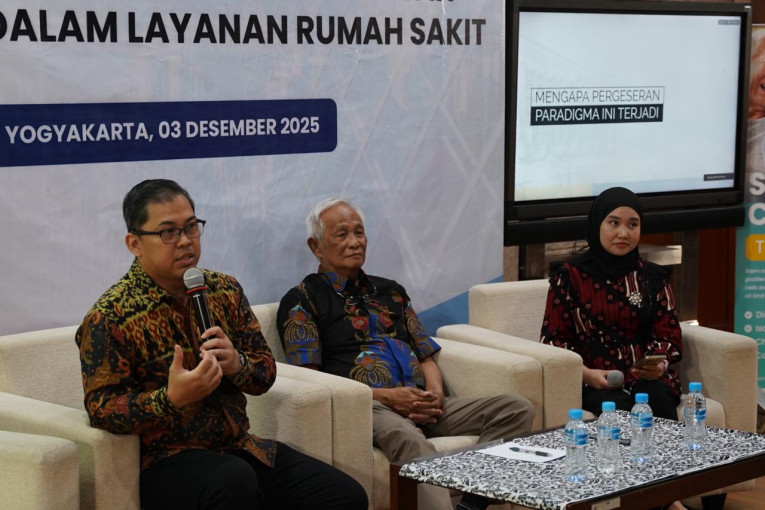
This issue was highlighted at the Seminar on the Development and Utilization of Secretome in Hospital Services held on Wednesday (Dec. 3) at the auditorium of the Faculty of Medicine, Public Health, and Nursing, Universitas Gadjah Mada (FK-KMK UGM).
Professor Y. Widodo Wirohadidjojo from the Department of Dermatology and Venereology, FK-KMK UGM, stated that stem cell technology is part of the evolution of regenerative therapy to address skin aging. This is because stem cell derivatives can delay the mechanisms of skin aging.
“In our view, secretome is somewhat outdated in the international arena. We are now moving more toward exosomes. That is why my discussion focuses on stem cells in aging skin,” he said.
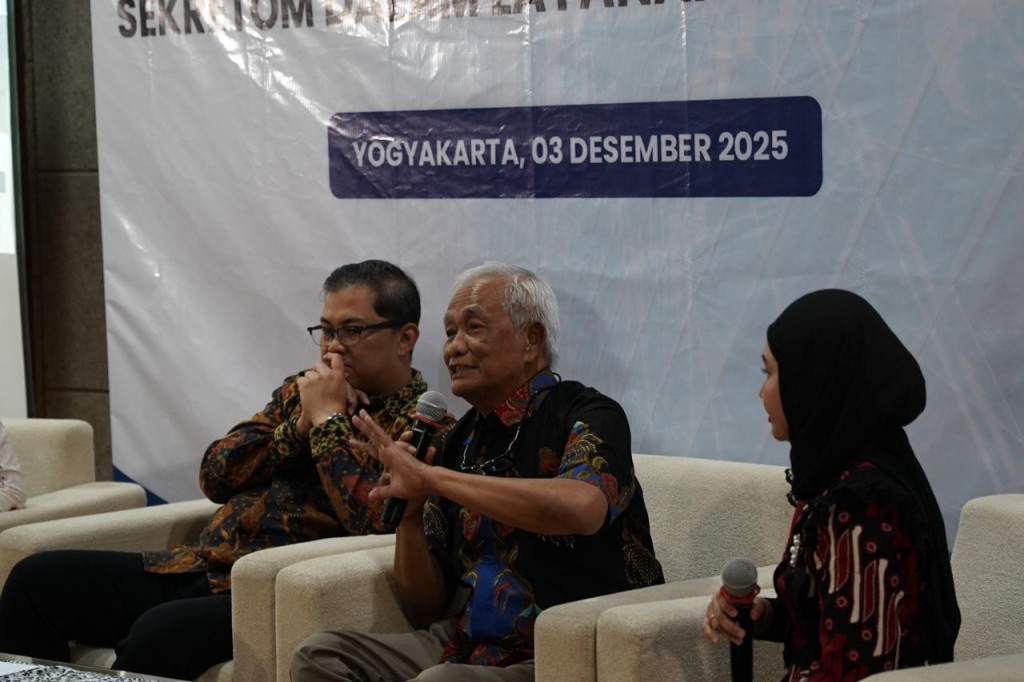
Meanwhile, in the field of orthopedics, Lutfi Hidayat, an orthopedic specialist at UGM Academic Hospital (RSA UGM), explained that orthopedics has traditionally been tasked with reconnecting bones. However, developments in stem cell technology can optimize the body’s biological response, enabling faster, stronger, and more natural healing.
“Healing actually already occurs in phases within the body. The question is how to accelerate it while still respecting the body’s natural processes, so that function improves. So we hope that from previously being ‘carpenters,’ we now become more like ‘farmers,’ because we take care of seeds (cells), fertilizers (secretome/exosomes), and so on,” he explained.
Dermatology and venereology lecturer at Diponegoro University, Holly Ametati, shared her clinical experience using secretome gel in wound healing.
She presented the results of using the gel in cases of pemphigus vulgaris, pyoderma gangrenosum, pressure ulcers, burn injuries, and allergic contact dermatitis. All five case studies demonstrated positive outcomes in the wound healing process.
Dr. Andreasta Meliala, Head of the UGM Integrated Health Services Bureau, stated that the use of stem cells in hospital services should be expanded so that more people from various backgrounds can benefit. Therefore, hospitals can facilitate the development of stem cells in clinical services.
“Collaboration across science and technology sectors, regulatory facilitation, and strong partnerships are key. We also hope that in the next five to ten years, we will see products that can be produced at more affordable prices,” he concluded.
Author: Leony
Editor: Gusti Grehenson
Post-editor: Rajendra Arya
Photographer: Salwa