


The Indonesian Ministry of Energy and Mineral Resources (ESDM) reported that as of mid-2025, the reclamation of former mining land had reached 5,739.39 hectares, or 80.43% of the 7,135-hectare target. From 2021 to 2024, mining companies’ compliance with reclamation obligations has continued to improve. Reclamation efforts have been carried out not only on former mining sites but also on other areas such as overburden disposal sites, roads, processing plants, and supporting facilities.
Land degradation from mining often reaches a severe stage, where the soil loses its natural ability to support life. In such conditions, human intervention becomes crucial for restoring the land and returning it to a more viable state. This recovery process is driven by research and community service initiatives that significantly improve soil conditions.
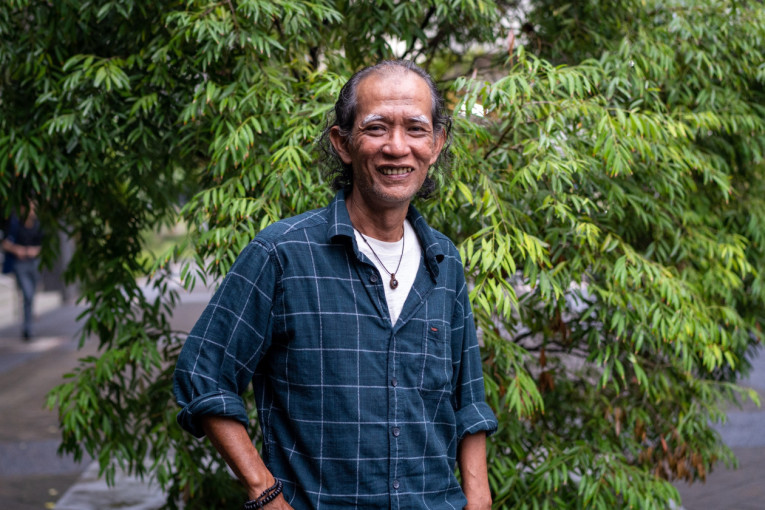
One tangible example of this effort is Agus Affianto, a lecturer at the Faculty of Forestry, Universitas Gadjah Mada (Forestry UGM), widely known as Picoez. Together with his team, he developed a rehabilitation model for tailing areas—former tin mining sand—in Manggar Village, East Belitung Regency.
According to Picoez, the former mining land near the “Laskar Pelangi Elementary School” is categorized as extreme and difficult to restore into productive land.
“Based on previous studies, even grass requires up to 20 years to grow naturally,” he explained.
Through a community service scheme involving multiple stakeholders, the team established demonstration plots as trial media for rehabilitation. However, the characteristics of the tailing soil and the surrounding geography posed significant challenges.
Sand temperatures at the site can reach up to 62.4 degrees Celsius between 10:00 and 10:30 a.m., making direct planting nearly impossible.
“The sandy soil’s inability to retain water causes it to become acidic when it rains,” he added.
Following discussions with various parties, Picoez and his team developed a compost-block-based method over an approximately 10-hectare area as a trial for rehabilitation, in collaboration with the Faculty of Forestry and the East Belitung Regency government.
“The compost is compacted and used as an initial planting medium to improve the soil’s ability to retain moisture,” he said.
Several plant species, including dragon fruit, longan, pine, and guava, were introduced with the expectation that they would produce litter and organic matter as the foundation of a new ecosystem. Picoez emphasized that the successful rehabilitation of extreme land cannot rely on conventional approaches. He outlined four key stages that determine success.
The first stage is “planting for survival,” ensuring that plants can withstand the conditions with the help of compost blocks containing organic materials such as fermented animal manure. The second stage focuses on maintaining plant survival through intensive monitoring, for instance, by preserving moisture around the plant stems using banana trunk pieces during the dry season.
“The third stage aims to improve plant quality through proper fertilization, while the final stage ensures that plants can provide tangible benefits, such as producing fruit,” he explained.
He stressed that the process requires time and cannot be achieved instantly.
“We cannot address extreme conditions with ordinary approaches or within a short timeframe,” he said.
Success depends not only on technical aspects but also on partnerships with local communities and the extent to which the program delivers real benefits to them. According to him, the most important aspect is ensuring that land recovery efforts also serve as community service benefiting local residents.
“What is often overlooked in current rehabilitation schemes is the pre-rehabilitation condition, particularly the community. It is not only about applying techniques but also about ensuring the benefits for them,” he noted.
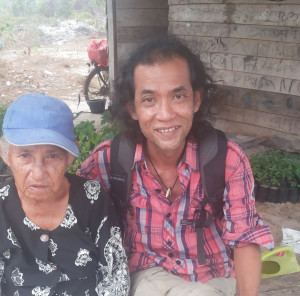
Amid these challenges, there are also inspiring stories from local residents that have deeply moved Picoez and his team. He recounted the experience of an elderly resident, Nek Inah, who remained enthusiastic about growing watermelons despite having her harvest stolen just before Eid al-Fitr.
When asked whether she would continue, she expressed strong optimism about the efforts she had nurtured from the beginning. According to Picoez, such resilience has become a source of motivation for the team to continue their rehabilitation work.
He added that, naturally, the area still holds the potential to return to a dense forest. However, without human intervention, the process could take decades. Therefore, their approach aims to accelerate natural recovery through planned and sustainable human assistance.
“What we are doing is helping nature recover faster with human support so it can restore itself,” he explained.
After years of effort, the land managed by Picoez and his team remains relatively well-maintained, contributing to both productivity and the surrounding ecosystem.
“Seeing plants grow and provide benefits to the community brings its own sense of fulfillment. It proves that sincere efforts for the environment will never be in vain,” he said.
Based on the latest updates from Picoez, the area continues to be developed by the local government in collaboration with the community, though not as intensively as before.
“We appreciate that this rehabilitation model has been adopted in other regions with similar conditions by various parties,” he concluded.
Author: Zabrina Kumara
Editor: Gusti Grehenson
Post-editor: Zahra
Photo: Donnie and Agus Affianto Doc.